James Smith, a British Royal Navy officer active from 1782 to 1848, appears in historical and literary discussions as a figure of intellectual eccentricity and practical creativity. Authors such as Augustus De Morgan emphasize his paradoxical fascination with mathematical mistakes, while L. Carroll Judson presents him as an original thinker with a whimsical yet formidable presence.
Virginia Watson interprets his interactions with Indigenous peoples through a colonial perspective, and Leslie Stephen observes his self-taught academic endeavors. These differing portrayals converge into an image of a man whose legacy connects naval service, intellectual inquiry, and the intricacies of 18th- to 19th-century cultural and scientific developments.
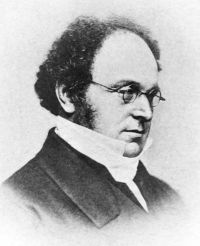 Augustus De Morgan,
A Budget of Paradoxes — 1857-1859
(1872)
Augustus De Morgan,
A Budget of Paradoxes — 1857-1859
(1872)