“ John Splendid. I read that one autumn in Argyle—slowly—about two chapters a day, making it last as long as I could.""Isn't it fine?" said Jean. "John Splendid, who never spoke the truth except to an enemy! Do you remember the scene with the blind widow of Glencoe? And John Splendid was so gallant and tactful: 'dim in the sight,' he called her, for he wouldn't say 'blind' ”
John Splendid
Definition and stakes
The theme of “John Splendid” has been addressed by authors such as O. Douglas and Louisa May Alcott. It is often associated with terms like love, Mr., prince, Falstaff and Lord.
Quotes about “John Splendid”
“ It lay in the clear, grey forenoon like a garden of fairydom to the view—the whin-bushes at a distant glance floating on billows of snow, touched at their lee by a cheering green, hung to the windward with the silver of the snow, and some of them even prinked off with the gold flower that gives rise to the proverb about kissing being out of fashion when the whin wants bloom. ”
“ All about the house, with its numerous corners, turrets, gussets, and corbie-stepped gables, the fury of the world rose and wandered, the fury that never rests but is ever somewhere round the ancient universe, jibing night and morning at man's most valiant effort. ”
“ Ever must I be fronting the great dumb sorrow of the universe, thinking of loves undone, of the weakness of man, poor man, a stumbler under the stars, the sickening lapse of time, the vast and awesome voids left by people dead, laughter quelled, eyes shut for evermore, and scenes evanished. ”
“ A sea more lonely than any ocean the most wide and distant, where no ship heaves, and no isle lifts beckoning trees above the level of the waves; a sea soundless, with no life below its lamentable surface, no little fish or proud leviathan plunging and romping and flashing from the silver roof of fretted wave dishevelled to the deep profound. ”
“ Let no one, remembering the charm of an autumn field in his youth, test its cheerfulness when he has got up in years. For he will find it lying under a sun less genial than then; he will fret at some influence lost; the hedges tall and beautiful will have turned to stunted boundaries upon his fancy; he will ache at the heart at the memory of those old careless crops and reapers when he sits, a poor man or wealthy, among the stubble of grass and youth. ”
“ Little farms lay in the heart of the forest of Creag Dubh,—or rather more on the upper edge of it,—their fields scalloped into the wood, their hills a part of the mountains that divide Loch Finne from Lochow. To-day their roof-trees lay humbled on the hearth, the gable-walls stood black and eerie, with the wind piping between the stones, the cabars or joists held charred arms to heaven, like poor martyrs seeking mercy. ”
“ I have seen the hunter in them and the shepherd too, coarse men in life and occupation, come sudden among the blowing rush and whispering reed, among the bog-flower and the cannoch, unheeding the moor-hen and the cailzie-cock rising, or the stag of ten at pause, while they stood, passionate adventurers in a rapture of the mind, held as it were by the spirit of such places as they lay in a sloeberry bloom of haze, the spirit of old good songs, the baffling surmise of the piper and the bard. ”
Marie Conway Oemler, Slippy McGee, Sometimes Known as the Butterfly Man
“ John, I know that if I could have had another child that, after Armand, I'd love best and respect most and be proudest of in this world, it would be you. Yes, you. John Flint, you are the best man, and the bravest and truest and most unselfish, and the finest gentleman, outside of my husband and my son, that I have ever known. What makes it all the more wonderful is that you're a genius along with it. I am proud of you, and glad of you, and I admire and love you with all my heart. And I really wish you'd call me mother. You should have been born a De Rancé! ”
 J. Meade Falkner,
The Lost Stradivarius
(1895)
J. Meade Falkner,
The Lost Stradivarius
(1895)
“ John reached his rooms shortly before eleven o'clock. He was at once sad and happy—sad at our departure, but happy in a new-found world of delight which his admiration for Constance Temple opened to him. He was, in fact, deeply in love with her, and the full flood of a hitherto unknown passion filled him with an emotion so overwhelming that his ordinary life seemed transfigured. He moved, as it were, in an ether superior to our mortal atmosphere, and a new region of high resolves and noble possibilities spread itself before his eyes. ”
William Hazlitt, The Collected Works of William Hazlitt…
“ One of the topics of exulting superiority over others most common in Sir John’s mouth is his corpulence and the exterior marks of good living which he carries about him, thus ‘turning his vices into commodity.’ He accounts for the friendship between the Prince and Poins, from ‘their legs being both of a bigness’; and compares Justice Shallow to ‘a man made after supper of a cheese-paring.’ There cannot be a more striking gradation of character than that between Falstaff and Shallow, and Shallow and Silence. It seems difficult at first to fall lower than the squire ”
 Charles Major,
Dorothy Vernon of Haddon Hall
Charles Major,
Dorothy Vernon of Haddon Hall
“ After John had waited a weary time, the form of the girl appeared above the crest of the hill. She was holding up the skirt of her gown, and glided over the earth so rapidly that she appeared to be running. Beat! beat! oh, heart of John, if there is aught in womanhood to make you throb; if there is aught in infinite grace and winsomeness; if there is aught in perfect harmony of color and form and movement; if there is aught of beauty, in God's power to create that can set you pulsing, beat! for the fairest creature of His hand is hastening to greet you. ”
Amanda McKittrick Ros, Irene Iddesleigh
“ On being introduced to all those outside his present circle of acquaintance on this evening, and viewing the dazzling glow of splendour which shone, through spectacles of wonder, in all its glory, Sir John felt his past life but a dismal dream, brightened here and there with a crystal speck of sunshine that had partly hidden its gladdening rays of bright futurity until compelled to glitter with the daring effect they soon should produce. ”
T. W. Speight, The Heart of a Mystery
“ As it happened, one of the first people whom John recognized on alighting at Ashdown station was Edward Hazeldine. They had travelled by the same train without either being aware of the other's presence. Edward saw John at the same moment. He was a little surprised at seeing him there, but at once went up and shook hands with him."Glad to see you, Mr. Brancker," he said, heartily. "Hope you are getting on all right in your new berth and that the work is to your liking. I suppose you have come down to spend the week-end with your people." ”
 Abbie Farwell Brown,
John of the Woods
Abbie Farwell Brown,
John of the Woods
“ For he saw his boy fast growing into the man he had hoped him to be, the copy of his father, beloved John. With the silver Cross on his bosom, the strange, merry smile ever on his face, and a kind word always on his lips, John ministered to all who needed him; and he went far and wide to find them. He was always happy, whatever he might be doing; alone with the Hermit and his animal friends; helping the troubled and the ailing; wandering with Brutus and the wolf through the still lonely parts of the wood; studying the never-failing wonders of the Kingdom in the Forest. ”
Abbie Farwell Brown,
John of the Woods
“ Now, with a happy face, John himself stepped forward and showed his skill and strength and grace. He turned somersaults backward and forward; he stood upon his head and danced upon his hands. He did all the old tricks which he had learned of the tumblers, and more of his own invention, till the people shouted rapturously, "Bravo! Bravo! Hurrah for our John!"With his eye on the Prince, John began to caper at his merriest. He danced high, leaping like a grasshopper, and seeming to bound like thistledown. All the while his eyes twinkled, and the people laughed with delight. ”
Sir Thomas Dick Lauder, Legendary Tales of the Highlands…
“ Many is the time that I have listened to him, with boyish wonder, as, with lightning in his eye, he fought over again his battles of Culloden, Bunker’s Hill, and Ticonderoga. As John had no children, his intended heir was a nephew. His greatest desire in life was to marry him to a grand-daughter of his old departed benefactress, the Pensassenach. He offered to settle his whole fortune, which was not small, on the young lady, if she would only marry his nephew; and John’s wife did all in her power to back up the proposal. ”
 Dinah Maria Mulock Craik,
John Halifax, Gentleman
Dinah Maria Mulock Craik,
John Halifax, Gentleman
“ He called me aside, explained to me, and asked my advice and consent, as Abel Fletcher's son, to a plan that had come into his mind. It was to write orders, which each man presenting at our mill, should receive a certain amount of flour. "Do you think your father would agree?" "I think he would." "Yes," John added, pondering—"I am sure he would. And besides, if he does not give some, he may lose all. But he would not do it for fear of that. No, he is a just man—I am not afraid. ”
T. W. Speight, The Heart of a Mystery
“ His sister was not long in perceiving that something was the matter, and had little difficulty in worming out of him the cause of his unwonted depression of spirits; for John was one of those men to whom it is a relief to unburthen themselves to someone, and who find it next to impossible to live without the sympathy of those with whom their affections are bound up. ”
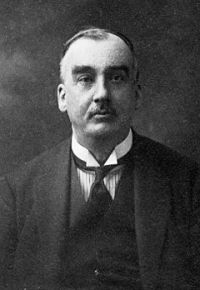 John Meade Falkner,
The Lost Stradivarius
John Meade Falkner,
The Lost Stradivarius
“ I saw by Foster's face that the master's malady was no longer a secret even from the servants. I shall not harass my own feelings nor yours, my dear Edward, by entering into further details of your father's illness, for such it was obvious his indisposition had become. It was the only consolation, and that was a sorry one, that we could use with Constance, to persuade her that John's estrangement from her was merely the result or manifestation of some physical infirmity. He obviously grew worse from week to week, and his treatment of his wife became colder and more callous. ”
T. W. Speight, The Heart of a Mystery
“ Sweet put his head into the office where the two men were at work. "Mr. Hazeldine has come, sir," he said, addressing himself to Mr. Brancker. "I thought you might perhaps have something you wanted to see him about.""I don't think I shall trouble him to-night," answered John; "he will be tired, and what matters I have to see him about will keep till morning."Sweet disappeared and shut the door."If I were in Mr. H.'s place, I'd take care not to work as hard as he does," remarked Ephraim."When a man's heart is in what he does, as Mr. Hazeldine's is, hard work becomes a pleasure." ”
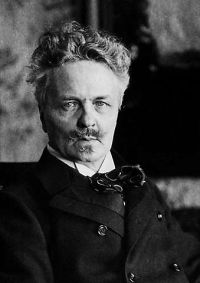 August Strindberg,
The Son of a Servant
August Strindberg,
The Son of a Servant
“ John was now his own master; he came and went, and did what he liked. His father's housekeeper was sympathetic with him, and they never quarrelled. He avoided intercourse with his school-fellows, shut himself in his room, smoked, read, and meditated. He had always heard that knowledge was the best thing, a capital fund which could not be lost, and which afforded a footing, however low one might sink in the social scale. ”
J. Walker McSpadden, Robin Hood
“ But this foolhardy deed was his undoing, for just as the arrow left the string, the good yew bow that had never before failed him snapped in twain. “Woe worth, woe worth thee, wicked wood, that ere thou grew on a tree!” cursed Little John, and planted his feet resolutely in the earth resolved to sell the path dearly; for the soldiers were now so close upon him that he dared not turn. And a right good account of himself he gave that day, dealing with each man as he came up according to his merit. ”
Stuart J. Reid, Lord John Russell
“ Good sense, a considerable power of discrimination, a highly cultivated mind, a great equality of temper, are the characteristics of Lord John Russell, and these peculiarly fit him for taking a distinguished part in public life.’ Lady Blessington adds that the only obstacle, in her opinion, to Lord John’s success lays in the natural reserve of his manners, which might lead people ‘to think him cold and proud.’ This is exactly what happened, and only those who knew Lord John intimately were aware of the delicate consideration for others which lurked beneath his somewhat frigid demeanour. ”
 Eden Phillpotts,
Orphan Dinah
(1920)
Eden Phillpotts,
Orphan Dinah
(1920)
“ In secret certain of John's acquaintance smiled, and while expressing a sympathy with him, yet felt none, but rather satisfaction that a man so completely armed at all points, so successful and superior, should receive his first dose of reality in so potent a shape. The matter ran up and down on the tongues of those interested. His mother and sister supported Johnny in this great tribulation, the first with dignity, the second with virulence, hardly abated when she found herself more furious than John himself. ”
 Isabel Ecclestone Mackay,
The Window-Gazer
Isabel Ecclestone Mackay,
The Window-Gazer
“ Spence was honestly sorry for John—that is, he would be when he had time to consider John's case. But John, too, would be all right presently. (Why under heaven do trains need to wait ten minutes while silly people walk on platforms without hats?) John would marry a nice girl. Not a girl like Desire—not that type of girl at all. Someone quite different, but nice. A fair girl, like that nurse he had had in his office. John might be very happy with a wife like that ... It was not until the fourth night out that the professor remembered the packet from Li Ho. ”
William Hazlitt, Hazlitt on English Literature: An Introduction to the Appreciation of Literature
“ Sir John is old as well as fat, which gives a melancholy retrospective tinge to the character; and by the disparity between his inclinations and his capacity for enjoyment, makes it still more ludicrous and fantastical.The secret of Falstaff’s wit is for the most part a masterly presence of mind, an absolute self-possession, which nothing can disturb. His repartees are involuntary suggestions of his self-love; instinctive evasions of everything that threatens to interrupt the career of his triumphant jollity and self-complacency. ”
Dinah Maria Mulock Craik,
John Halifax, Gentleman
“ I should not 'respect myself' if I believed otherwise." "Eh?"—my father absolutely dropped his pipe in amazement. "Then, thee thinkest thyself already quite a gentleman?" "As I told you before, sir—I hope I am." "Fit to associate with the finest folk in the land?" "If they desire it, and I choose it, certainly." Now, Abel Fletcher, like all honest men, liked honesty; and something in John's bold spirit, and free bright eye, seemed to-day to strike him more than ordinarily. "Lad, lad, thee art young. But it won't last—no, it won't last." ”
Mrs. George Sheldon Downs, Redeemed
“ When, during the last year before his return to America, the great teacher passed from his sight, it seemed to John that he had lost a dear father as well as a wise counselor. Now, with name and fame established, with an enviable social position attained, together with an assured competence, he had come back to his own country, his heart beating high with the hope of a blessed reunion with his dear ones—a hope that had been suddenly dashed to earth during his recent interview with Helen ”
 George Manville Fenn,
To The West
George Manville Fenn,
To The West
“ Mr John shrugged his shoulders, and gave his wife and brother-in-law a half-sad, half-laughing look.“I am not surprised,” he said, “I always was the most unlucky of men.”“Nothing of the kind, sir,” retorted Mr Raydon. “You have had as much good fortune as other men—quite as much as I have. My dear John,” he added more gently, “we men have a bad habit of forgetting the good in our lives, and remembering all the bad. My dear fellow, half your troubles have been caused by your want of energy.” ”
 Robert Bellarmine,
Sermons from the Latins
(1902)
Robert Bellarmine,
Sermons from the Latins
(1902)
“ As in his dungeon he bends his neck to the executioner's axe, John is a sublime figure of faith and hope and love — of faith, for he believed when doubt would have triumphed in most men — of hope, for he trusted when it seemed hope had fled — of charity, for he gave the highest proof of love by giving his life for his friend. ”
Abbie Farwell Brown,
John of the Woods
“ He grew wise in the lore of flowers and herbs, and could tell where each one grew and when it blossomed, and which ones, giving their life-blood for the sake of men, could cure disease and bring comfort to the ailing. At night they watched the moon and the far-off, tiny stars. These, too, became friends, many of them known to John by name. He loved each one, for the Hermit said that they also were his brothers and sisters, like the birds and beasts and fishes; all being the children of that Father who had made this beautiful world to be the home where all should live together. ”

