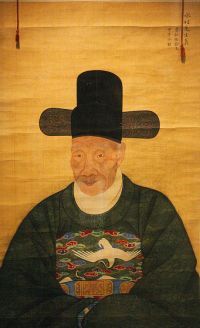
Kangxi

Definition and stakes

Charles Morris,  Historic Tales: The Romance of Reality…

“ Kanghi, the second Manchu emperor, and one of the greatest of the rulers of China, having completed the conquest of the Chinese themselves, turned his attention to the nomadic hordes who threatened the tranquillity of his reign. He was one of their own race, a man of Tartar blood, and many of the desert tribes were ready to acknowledge his supremacy, among them the Khalkas, who prided themselves on direct descent from Ghengis and his warriors, but had lost all desire to rule the earth and were content to hold their own among the surrounding tribes. ”

Source: Gutenberg

Demetrius Charles Boulger,  China

“ His adherents deserted him, many rebel officers sought to come to terms with the Manchus, and Kanghi's armies gradually converged on Wou Sankwei from the east and the north. Driven out of Szchuen, Wou Sankwei endeavored to make a stand in Yunnan. He certainly succeeded in prolonging the struggle down to the year 1679, when his death put a sudden end to the contest, and relieved Kanghi from much anxiety; for although the success of the Manchus was no longer uncertain, the military skill of the old Chinese warrior might have indefinitely prolonged the war. ”
Source: Gutenberg

Charles Morris,  Historic Tales: The Romance of Reality…

“ His thirst for power now showed itself in encroachments upon the lands of neighboring clans. The Manchus were at that time embarrassed by the rebellion of Wou Sankwei, and the opportunity seemed excellent for an invasion of the district of the Khalkas, firm friends of the Manchu power. He also sent troops towards the Chinese frontier, fear of whom forced many of the tribesmen to cross the border and seek the emperor's aid. Kanghi could then only give them lands within his realm, being too much occupied at home to be able to do more than send spies into the steppes. ”
Source: Gutenberg

Get perspective with Kwize: daily news enlightened by great literature