King Ahab of Israel

Definition and stakes

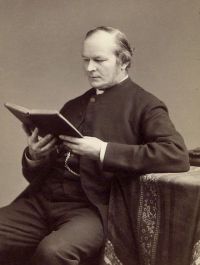
Portrait of Alexander Maclaren Alexander Maclaren Expositions of Holy Scripture

Ahab, King of Israel, was but a poor creature, and, like most weak characters, he turned out a wicked one, because he found that there were more temptations to do wrong than inducements to do right. Like other weak people, too, he was torn asunder by the influence of stronger wills. On the one side he had a termagant of a wife, stirring him up to idolatry and all evil, and on the other side Elijah thundering and lightning at him; so the poor man was often reduced to perplexity. Once in his lifetime he did behave like a king, with some flash of dignity. My text comes from that incident.
Source: Gutenberg

Max Duncker The History of Antiquity, Vol. 2…

The death of such a brave warrior as Ahab was a heavy blow to the kingdom of Israel. We are not told by what sacrifices Ahaziah, the son of Ahab and Jezebel, had to purchase peace; we only know that the Moabites revolted from Israel on the news of the death of Ahab, and that Mesha no longer paid the tribute which he and his father had paid to Omri and Ahab. In any case it was a great relief for Israel when Shalmanesar, king of Assyria, in the years 851 and 850 B.C., turned his arms against Hamath and Damascus.
Source: Gutenberg

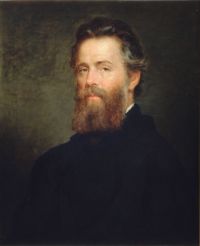
Portrait of Franz Delitzsch Franz Delitzsch Biblical Commentary Old Testament… (1869)

There is no ground for detecting any cunning, vafrities, on the part of Ahab in these words, as some of the older commentators have done, as though he wished thereby to divert the predicted evil from himself to Jehoshaphat. but we may see very clearly that Ahab had good reason to be anxious about his life, from the command of the Syrian king to the captains of his war-chariots (1Ki 22:31) to fight chiefly against the king of Israel.
Source: Wikisource

Get perspective with Kwize: daily news enlightened by great literature