Kufic script

Definition and stakes

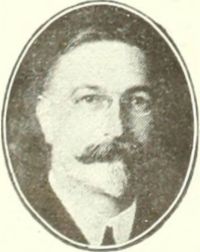
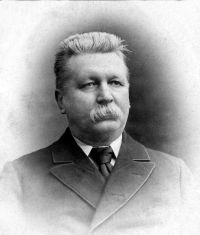
Portrait of Bernard Quaritch Bernard Quaritch,  Palæography: Notes upon the History of Writing (1894)

“ It was probably about the beginning of the Christian era that the demotic finally disappeared before the Coptic, an alphabet derived from the Greek, of which Plate 3 gives an example. The Arabic heading which accompanies the Coptic rubric above the Psalm that begins below (the 118th ριη) , is in a hand of the latter part of the fifteenth century. Notwithstanding the lateness of the specimen, the script takes its proper place here as representing a script of the first century. ”
Source: Wikisource

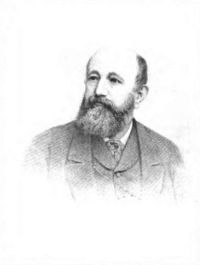
Portrait of Herbert Spencer Herbert Spencer,  Scriptorium/Archives/2010-04

“ Unprintables and invisibles are never really a concern to me, it is only the visible cruft that I dislike. It is unusual for invisible cruft to confuse that often. Apart from that, if you do know the characters that are regularly appearing in your works, we can readily & easily do a [search and remove] script that can be added via Pathoschild's regex gadget to your left toolbar by editing your monobook.js. Something like a line rm cruft that you would click once per page and voila, cruft removal. You would need to identify the cruft symbols to be removed so we could search for them. ”
Source: Wikisource

Portrait of Bernard Quaritch Bernard Quaritch,  Palæography: Notes upon the History of Writing (1894)

“ Arabic writing occupied not only all the seats in which Phœnician letters had been used fifteen centuries before, but even a far larger area. The writing and the language were used and known from Seville to the frontiers of India. Soon after, India likewise fell a prey; and Arabic letters have been used there ever since by the Mohammadan population. The elegant script called Talik, which was peculiar to the Persians (but has been borrowed in India) , was developed in the fourteenth century. ”
Source: Wikisource

Get perspective with Kwize: daily news enlightened by great literature