Cursive

Definition and stakes

Fourteenth Century Verse & Prose

“ The one, cursive and flourished, is common in charters, records, and memoranda; see C. H. Jenkinson and C. Johnson, Court Hand, 2 vols., Oxford 1915. The other, in which the letters are separately written, with few flourishes or adaptations of form in combination, is the 'book hand', so called because it is regularly used for literary texts. Between the extreme types there are many gradations; and fifteenth-century copies, such as the Cambridge MS. of Barbour's Bruce, show an increasing use of cursive forms, which facilitate rapid writing. ”
Source: Gutenberg

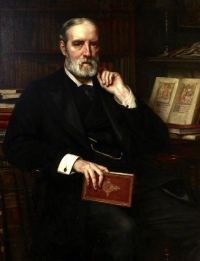
Portrait of Edward Clodd Edward Clodd,  The Story of the Alphabet

“ The Cursive or running characters are the originals of our small types, and were used for correspondence and other purposes where rapid writing was an object, abbreviations, which are the forerunners of our modern "shorthand," being sometimes employed. Out of this cursive hand there arose a variety of hand-writings, the most important among these being the Irish "semi-uncial." The appearance of this script in that island is one of the problems of graphiology. "No Irish hand is known out of which it could have arisen. ”
Source: Gutenberg

Get perspective with Kwize: daily news enlightened by great literature