“ No joys too blissful o'er her life to shed.And thus the land became a Paradise, A new-made Eden, redolent of joy, Where beauty blossom'd under sunny skies, And peaceful pleasure reign'd without alloy.THE LAND'S END. I stood on the Land's End, alone and still. Man might have been unmade, for no frail trace Of mortal labour startled the wild place, And only sea-mews with their wailing shrill, Circled beneath me over the dark sea, Flashing the waves with pinions snowy white, That glimmer'd faintly in the gloomy light Betwixt the foaming furrows constantly. ”
Land's End
Definition and stakes
Land’s End, a geographical and symbolic threshold, has long captivated writers as a liminal space where nature’s untamed force meets human introspection. While a 2015 virtual reality game shares its name, literary portrayals—especially those by W.H. Hudson—highlight its rugged Cornish terrain, presenting it as a place of solitude, natural beauty, and existential contemplation.
Hudson’s vivid descriptions of windswept cliffs and lone travelers contrast with Leslie Stephen’s reflective comparison to Mont Blanc, underscoring the site’s dual nature as both a physical boundary and a metaphor for life’s impermanence. These diverse viewpoints unite in portraying Land’s End as a reflection of the human experience, where the sublime and the personal intertwine.
Quotes about “Land's End”
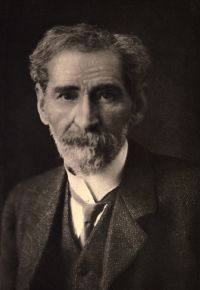
W. H. Hudson,
The Land's End: A Naturalist's Impressions In West Cornwall…
“ Although the vague image of an imagined Land's End fades from the mind and is perhaps lost when the reality is known, the ancient associations of the place remain, and, if a visit be rightly timed, they may invest it with a sublimity and fascination not its own. I loitered many days near that spot in midwinter, in the worst possible weather, but even when pining for a change to blue skies and genial sunshine I blessed the daily furious winds which served to keep the pilgrims away, and to half blot out the vulgar modern buildings with rain and mist from the Atlantic. ”
W. H. Hudson,
The Land's End: A Naturalist's Impressions In West Cornwall…
“ Her cheerfulness makes one's eyes moisten—that one day at the Land's End, when her life's work was over, when in spite of her years and weak nerves she ventured painfully down and out among those rough crags, assisted by her guide and companion, for one grand ten minutes on the outermost rock—the fulfilment of a dream of fifty years! ”
Leslie Stephen,
Studies of a Biographer
(1902)
“ Another set of walks may, perhaps, appeal to more general sympathy. The voice of the sea, we know, is as powerful as the voice of the mountains; and, to my taste, it is difficult to say whether the Land's End is not in itself a more impressive station than the top of Mont Blanc. The solitude of the frozen peaks suggests tombstones and death. The sea is always alive and at work. ”
W. H. Hudson,
The Land's End: A Naturalist's Impressions In West Cornwall…
“ But the sea and its colour and the joy of a vast expanse would not have drawn me so often to the castled forelands nor held me so long but for the birds that haunted them, seeing that this visible world is to me but a sad and empty place without wonderful life and the varied forms of life, which are in harmony with it, and give it a meaning, and a grace and beauty and splendour not its own. ”
W. H. Hudson,
The Land's End: A Naturalist's Impressions In West Cornwall…
“ There he will remain motionless and contented for ever in that remote desert land where is no sound of singing bird nor of running water nor of rain or wind in the grey ancient trees: waking and sleeping he will rest there, dreaming little and thinking less, while year by year and age by age the memory of the world of passion and striving of which he was so unutterably tired grows fainter and fainter in his mind. ”
W. H. Hudson,
The Land's End: A Naturalist's Impressions In West Cornwall…
“ Cliff scenery and headlands—The Land's End sentiment—Pilgrims and how they are affected—Wilkie Collins—The child's vision—Books on Cornwall—A Trip to the Far West—Sir Humphry Davy—Wesley—Winter nights at the Land's End—Lighthouses—Associations and speculations—The scene of great tragedies in the past. EVERY day, even in winter, if the weather be not too bad, but chiefly during the nine months from March to November, pilgrims come to this wind-swept, wave-beaten point to gaze and set their feet upon the little rocky promontory of the Land's End. ”
W. H. Hudson,
The Land's End: A Naturalist's Impressions In West Cornwall…
“ He does not see before him a beautiful blessed land bright with fadeless flowers, nor a great multitude of people in shining garments and garlands who will come down to the shore to welcome him with sounds of shouting and singing and playing on instruments of divers forms, and who will lead him in triumph to the gardens of everlasting delight and to mansions of crystal with emerald and amethyst colonnades and opal domes and turrets and pinnacles. ”
W. H. Hudson,
The Land's End: A Naturalist's Impressions In West Cornwall…
“ No person will greet him there; he will land and go up alone into that empty and solitary place, a still grey wilderness extending inland and upward hundreds of leagues, an immeasurable distance, into infinity, and rising to mountain ridges compared with which the Himalayas are but mole-hills. ”
W. H. Hudson,
The Land's End: A Naturalist's Impressions In West Cornwall…
“ The black, frowning, wave-beaten cliffs on the one hand, the hills and moors on the other, treeless, strewn abundantly with granite boulders, rough with heath and furze and bracken, the summits crowned with great masses of rock resembling ancient ruined castles. Midway between the hills and the sea, half a mile or so from the cliffs, are the farms, but the small houses and walled fields on the inhabited strip hardly detract from the rude and savage aspect of the country. Nature will be Nature here, and man, like the other inhabitants of the wilderness, has adapted himself to the conditions. ”
Daniel Defoe,
From London to Land's End
“ Penzance is the farthest town of any note west, being 254 miles from London, and within about ten miles of the promontory called the Land’s End; so that this promontory is from London 264 miles, or thereabouts. This town of Penzance is a place of good business, well built and populous, has a good trade, and a great many ships belonging to it, notwithstanding it is so remote. Here are also a great many good families of gentlemen, though in this utmost angle of the nation ”
Daniel Defoe,
From London to Land's End
“ Nor is the Lizard Point less useful (though not so far west) than the other, which is more properly called the Land’s End; but if we may credit our mariners, it is more frequently first discovered from the sea. ”
Sir William Francis Butler,
The Wild North Land
“ I drew rein a moment on the ridge, and looked wistfully back along the forest trail.Before me spread civilization and the waters of the Pacific; behind me, vague and vast,337 lay a hundred memories of the Wild North Land.* * * * *For many reasons it is fitting to end this story here. Between the ridge on the west shore of the Frazer and those scattered wooden houses on the east, lies a gulf wider than a score of valleys. On one side man—on the other the wilderness; on one side noise of steam and hammer—on the other voice of wild things and the silence of the solitude. ”
W. H. Hudson,
The Land's End: A Naturalist's Impressions In West Cornwall…
“ Such days are apt to be warmer here than in other parts; even the adder, hibernating in his deep dark den beneath the rocks, is stirred by the heavenly influence, and crawls forth on a midwinter day to lie basking in the delicious beams. And the entire visible world, sea and land, is a glittering serpent, its discontent now forgotten, slumbering peacefully, albeit with wide-open eyes, in the face of the sun. ”
W. H. Hudson,
The Land's End: A Naturalist's Impressions In West Cornwall…
“ And in a sense they are waves, formed of sand which the ocean brings out of its depths and exposes at low water, to be swept up by the everlasting winds and heaped in hills along the sea-front; and no sooner are the hills built than the wind unbuilds them again, carrying the yellow dust further inland to build other hills and yet others, burying the green farm-lands and houses and entire villages in their desolating progress. ”
W. H. Hudson,
The Land's End: A Naturalist's Impressions In West Cornwall…
“ And by and by, after travelling half a dozen miles, they find themselves in a land unlike any place they know; inhabited, for there are a few small sad-looking granite cottages and farms and hamlets, but of a rude and desolate aspect, and therefore in harmony with their emotions and preconceived ideas about the place. ”
Daniel Defoe,
From London to Land's End
“ For as our mariners, knowing by the soundings when they are in the mouth of the Channel, do then most naturally stand to the southward, to avoid mistaking the Channel, and to shun the Severn Sea or Bristol Channel, but still more to avoid running upon Scilly and the rocks about it, as is observed before—I say, as they carefully keep to the southward till they think they are fair with the Channel, and then stand to the northward again, or north-east, to make the land, this is the reason why the Lizard is, generally speaking, the first land they make, and not the Land’s End. ”
W. H. Hudson,
The Land's End: A Naturalist's Impressions In West Cornwall…
“ I knaw—I'll tell you. It means that the land's here and can't be hidden and can't be taken out of the country, and them who own it and them that make their living out of it can be robbed better than anybody else. ”
W. H. Hudson,
The Land's End: A Naturalist's Impressions In West Cornwall…
“ Where the soil is favourable and the flowers abundant the band is very conspicuous, and in places where the land slopes to the cliff it broadens and occupies the ground to a breadth of fifty to a hundred yards or even more, then narrows again and pursues its way, following the numberless indentations of the coastline, climbing up and down the steep slopes and sides of gullies and fading and almost vanishing on the barren heath on the highest cliffs. ”
W. H. Hudson,
The Land's End: A Naturalist's Impressions In West Cornwall…
“ After crossing two or three such fields you come upon an unreclaimed patch, or belt, where grey-lichened rocks are mixed with masses of old furze bushes, and heath and tussocks of pale brome-grass. A lonely, silent, peaceful place, where, albeit a habitation of man for untold centuries, it is wild Nature still. ”
W. H. Hudson,
The Land's End: A Naturalist's Impressions In West Cornwall…
“ There were days at the headland when I observed a goodish number of elderly men among the pilgrims, some very old, and this at first surprised me, but by and by it began to seem only natural. I was particularly impressed one day at noon in early spring in clear but cold weather with a biting north-east wind, when I found six or seven aged men sitting about on the rocks that lie scattered over the green slope behind the famous promontory. ”
Stella Benson,
This Is the End
“ There was only one shadow by the quarry for the moon to cast upon the thyme. There was no voice but the voice of the sea. No passing but the peaceful passing of the lambs disturbed the thistles and the foxgloves.The sea rose like a wall across the night, a wall that shut half of life away. The sky fell like a curtain on the land, but there was no piece to be played, so the curtain was never raised.One man waited all the night through, like a child waiting for the fairies. The sea grew calmer and calmer, the tide went down, and the cove spread out its long sands like fingers into the sea. ”
W. H. Hudson,
The Land's End: A Naturalist's Impressions In West Cornwall…
“ This being the nature of the country the farmer can but hedge his land and fields with stone: he is in a measure compelled to do so, since the earth is full of it and the land strewn with boulders; to make a field he must remove it and bestow it somewhere. Now after centuries of this process of removing and piling up stones, the farm land has become covered over with a network of these enduring hedges, or fences, intersecting each other at all angles ”
Daniel Defoe,
From London to Land's End
“ There was a calculation made of what increase there would be, both of wealth and people, in twenty years in this town; what a vast consumption of provisions they would cause, more than the four thousand acres of land given them would produce, by which consumption and increase so much advantage would accrue to the public stock, and so many subjects be added to the many thousands of Great Britain, who in the next age would be all true-born Englishmen, and forget both the language and nation from whence they came. ”
Laurence Hope, India's Love Lyrics
“ The Plains How one loves them These wide horizons; whether Desert or Sea,— Vague and vast and infinite; faintly clear— Surely, hid in the far away, unknown "There," Lie the things so longed for and found not, found not, Here. Only where some passionate, level land Stretches itself in reaches of golden sand, Only where the sea line is joined to the sky-line, clear, Beyond the curve of ripple or white foamed crest,— Shall the weary eyes Distressed by the broken skies,— Broken by Minaret, mountain, or towering tree,— Shall the weary eyes be assuaged,—be assuaged,—and rest. ”
Daniel Defoe,
From London to Land's End
“ But it is more remarkable still how a great part of these Downs comes, by a new method of husbandry, to be not only made arable (which they never were in former days) , but to bear excellent wheat, and great crops, too, though otherwise poor barren land, and never known to our ancestors to be capable of any such thing—nay, they would perhaps have laughed at any one that would have gone about to plough up the wild downs and hills where the sheep were wont to go. But experience has made the present age wiser and more skilful in husbandry ”
Robert W. Service,
Songs of a Sourdough
“ Shooting the wrath of my rapids, scaling my ramparts of snow; Ripping the guts of my mountains, looting the beds of my creeks, Them will I take to my bosom, and speak as a mother speaks. [15] I am the land that listens, I am the land that broods; Steeped in eternal beauty, crystalline waters and woods. Long have I waited lonely, shunned as a thing accurst, Monstrous, moody, pathetic, the last of the lands and the first; Visioning camp-fires at twilight, sad with a longing forlorn, Feeling my womb o'er-pregnant with the seed of cities unborn. ”
Ethel Gwendoline Vincent, Forty Thousand Miles Over Land and Water
“ The vast expanse of waterless, wasteless sand, parched and glaring, weary even unto death, where life can have no attraction left for man or beast, where all is desolate and dead to life. How intense then must be the longing for the "shadow of the Great Rock in the weary land!" ”
John William De Forest, Overland: A Novel
“ His obedient Afreets toiled on, denuding the plateaux of their soil, washing it away from every slope and peak, pouring it year by year into the cañons, and whirling it on to the ocean. The rivers, the brooklets, the springs, and the rains all joined in this eternal robbery. Little by little an eighth of a continent was stripped of its loam, its forests, its grasses, its flowers, its vegetation of every species. What had been a land of fertility became an arid and rocky desert. ”
Henry Lawson,
Joe Wilson and His Mates
“ By homestead, hut, and shearing-shed, By railroad, coach, and track— By lonely graves of our brave dead, Up-Country and Out-Back: To where ‘neath glorious clustered stars The dreamy plains expand— My home lies wide a thousand miles In the Never-Never Land. It lies beyond the farming belt, Wide wastes of scrub and plain, A blazing desert in the drought, A lake-land after rain; To the sky-line sweeps the waving grass, Or whirls the scorching sand— A phantom land, a mystic land! ”
Henry Kendall, The Poems of Henry Kendall
“ Deserts thorny, hot and thirsty, where the feet of men are strange, And eternal Nature sleeps in solitudes which know no change. Weakened with their lengthened labours, past long plains of stone and sand, Down those trackless wilds they wandered, travellers from a far-off land, Seeking now to join their brothers, struggling on with faltering feet, For a glorious work was finished, and a noble task complete. ”
George Allan England,
Darkness and Dawn
“ Naked and ugly the country stretched away, away to its black horizon, ridge after ridge of rolling land stubbled with sparse, limbless trunks and carpeted with cinders.A dead world truly, it seemed--how infinitely different from the lush, green beauty of the territory south of the New Hope, a region Stern still could make out as a bluish blur, far to southward, through his binoculars. ”
Algernon Blackwood,
Pan's Garden
(1912)
“ The endless repetition of sweeping vale and plateau brought infinity within measurable comprehension. He grasped a definite meaning in the phrase 'world without end': the Desert had no end and no beginning. It gave him a sense of eternal peace, the silent peace that star-fields know. Instead of subduing the soul with bewilderment, it inspired with courage, confidence, hope. Through this sand which was the wreck of countless geological ages, rushed life that was terrific and uplifting, too huge to include melancholy, too deep to betray itself in movement. ”
Felix Dahn, The Scarlet Banner
“ Like the sand of our deserts we wander before the wind, but we shall not pass away; we always return. The land of the sun belongs to the sons of the sun. And, as the sand of the desert covers and buries the proud stone buildings of the Romans, so shall we, ever returning, bury the alien life which forces itself into our country, where it can never thrive. ”