Lobelia

Definition and stakes

The Oxford Book of American Essays

“ We go out of our way to touch at a spring run in the edge of the woods, and are lucky to find a single scarlet lobelia lingering there. It seems almost to light up the gloom with its intense bit of color. Beside a ditch in a field beyond, we find the great blue lobelia, and near it, amid the weeds and wild grasses and purple asters, the most beautiful of our fall flowers, the fringed gentian. What a rare and delicate, almost aristocratic look the gentian has amid its coarse, unkempt surroundings! ”

Source: Gutenberg

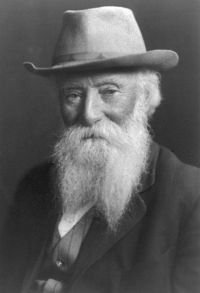
Portrait of Henry David Thoreau Henry David Thoreau,  Summer in Massachusetts: From the Journal of Henry D. Thoreau… (1884)

“ The spikes of the pale lobelia, some blue, some white, passing insensibly from one to the other, and especially hard to distinguish in the twilight, are quite handsome now in moist ground, rising above the grass. The prunella has various tints in various lights, now blue, now lilac. As the twilight deepens into night, its color changes. It always suggests freshness and coolness from the places where it grows. I see the downy heads of the senecio gone to seed, thistle-like, but small. ”
Source: Wikisource

Friedrich A. Flückiger,  Pharmacographia (1879)

“ Botanical Origin—Lobelia inflata L., an annual herb, 9 to 18 inches high, with an angular upright stem, simple or more frequently branching near the top, widely diffused throughout the eastern part of North America from Canada to the Mississippi, growing in neglected fields, along roadsides, and on the edges of woods, and thriving well in European gardens.
History—Lobelia inflata was described and figured by Linnæus [1460] from specimens cultivated by him at Upsala about 1741, but he does not attribute to the plant any medicinal virtues.
”
Source: Gutenberg

Get perspective with Kwize: daily news enlightened by great literature