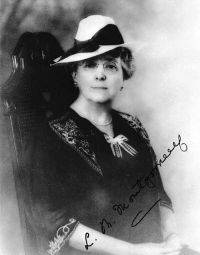
“ Some day your heart may be cold and sad, and the memory of what you have just seen may warm and cheer it Miss Lou, you brave, noble little child-woman, didn't you see that my love was your servant—that it merely gives you power over me? Even as my wife you would be as free as I would be. Now good-by. We part here and not before others. Chunk is yonder with my horse. Be just as happy as you can whether we ever meet again or not. ”
Lou
Definition and stakes
Lou, a unisex given name originating from diminutives of Louis, Louise, or Lewis, has been examined in literature as a symbol of duality and autonomy. Authors such as Edward Payson Roe depict Lou as a determined, self-reliant character, merging fragility with inner fortitude, as illustrated in “Miss Lou,” where she challenges societal norms with quiet resistance.
Clive Holland emphasizes her refinement and appeal, presenting her as a contradiction of convention and youthful charm in My Japanese Wife. Carl Van Vechten, in The Tattooed Countess, juxtaposes Lou’s ordinary life with philosophical reflections, highlighting her contentment despite social limitations. These depictions together reveal Lou as a name that goes beyond gender, representing both uniqueness and the conflicts inherent in social roles.
Quotes about “Lou”
“ Sounds of renewed life came from all directions; the troopers rolled up their blankets, and went to look after their horses; Mrs. Baron bustled about, giving directions for breakfast; Chunk and Zany worked under her eye as if they were what she wished them to be, the automatic performers of her will; Aun' Suke fumed and sputtered like the bacon in her frying-pan, but accomplished her work with the promptness of one who knew that no excuses would be taken from either master or mistress; Miss Lou dusted the parlor, and listened stolidly to the gallantries of her cousin. ”
by Clive Holland, My Japanese Wife (1902)
“ I assert this to myself whenever the thought of Lou crosses my mind. I am compelled to do so to lay the ghost of Lou’s outraged sense of propriety, for, truth to tell, she is very proper over some things, a somewhat hide-bound devotee of society etiquette with the responsibilities of a rapidly up-growing daughter. What a child Mousmé is! And yet there is an indefinable charm inseparable from womanhood about her. She was pouting just now because the camellia she had stuck in the front of her gown had fallen in a shower of scarlet petals into a tiny cup of tea on her knees. ”