Louis XVI of France

Definition and stakes

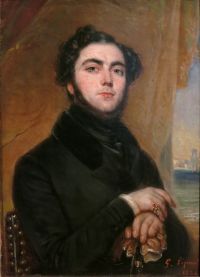
Portrait of Eugène Sue Eugène Sue The Sword of Honor; or, The Foundation of the French Republic

As it came in sight the people cried with one voice, "Long live the law! Long live the Nation!" Then the storm broke over Paris, and amidst such exclamations, mingled with the crashing of thunder, Louis XVI entered as a prisoner the palace of his fathers.
Such was the blindness of the Assembly in its bourgeois egotism, in its mistrust of the people, in its absurd hatred of republican government, that it still thought to impose upon France the authority of this King, disgraced, despised even by his own partisans, and convicted of perjury, treason, and conspiracy with the foreigner.
Source: Gutenberg

Various Court Memoirs of France Series…

Indeed, could Louis XVI. have foreseen—when, in order not to expose the character of his predecessor and to honour the dignity of the throne and monarchy of France, he destroyed the papers of his grandfather—what an arm of strength he would have possessed in preserving them, against the accusers of his unfortunate Queen and himself, he never could have thrown away such means of establishing a most honourable contrast between his own and former reigns. His career exhibits no superfluous expenditure. Its economy was most rigid. No sovereign was ever more scrupulous with the public money.
Source: Gutenberg

Anonymous Cassell's History of England, Vol…

But it was not to Great Britain only that this want of generosity was shown. No people rejoiced more vehemently than they did—none, indeed, so much—over the fall and execution of Louis XVI. of France, the one monarch of Europe who had been their chief benefactor, without whose powerful aid they would have fought and struggled in vain, and who had, in fact, lost his crown and his head, and his empire to his family, by sending his soldiers to learn Republicanism amongst them.
Source: Gutenberg

Get perspective with Kwize: daily news enlightened by great literature