Macedonian phalanx

Definition and stakes

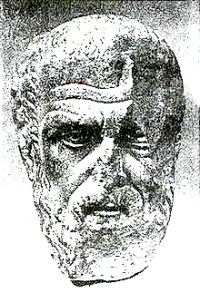
Portrait of Plutarch Plutarch,  Plutarch's Lives — Flamininus (1859)

“ For the Macedonian phalanx is like some single powerful animal, irresistible so long as it is embodied into one, and keeps its order, shield touching shield, all as in a piece; but if it be once broken, not only is the joint-force lost, but the individual soldiers also who composed it; lose each one his own single strength, because of the nature of their armor; and because each of them is strong, rather, as he makes a part of the whole, than in himself. ”
Source: Wikisource

Polybius,  The Histories of Polybius, Vol…

“ Of course those generals who employ the phalanx must march over ground of every description, must pitch camps, occupy points of advantage, besiege, and be besieged, and meet with unexpected appearances of the enemy: for all these are part and parcel of war, and have an important and sometimes decisive influence on the ultimate victory. And in all these cases the Macedonian phalanx is difficult, and sometimes impossible to handle, because the men cannot act either in squads or separately.Flexibility of the Roman order. ”
Source: Gutenberg

Livy,  From the Founding of the City… (1905)

“ On the former occasion, when they failed to maintain their hold on the pass leading into Epirus, he pointed out that the fault lay, first, with those who had been careless in their outpost duties and then in the behaviour of the light infantry and the mercenaries in the actual battle. But the Macedonian phalanx stood its ground, and on favourable ground and in a fair field would always remain unbeaten. The phalanx consisted of 16,000 men, the flower of the military strength of his dominions. ”
Source: Wikisource

Get perspective with Kwize: daily news enlightened by great literature