“ MAGDALENE.—This college is the only old one on the outer side of the river. It stands on the more historic part of Cambridge; but although an abbey hostel was here in Henry VI.'s time, it was not until 1542, after the suppression of Crowland Abbey, to which the property belonged, that Magdalene was founded by Thomas, Baron Audley of Walden. In the first court of ivy-grown red brick is the rather uninteresting chapel, and on the side facing the entrance the hall stands between the two courts. ”
Magdalene College, Cambridge
Definition and stakes
The theme of “Magdalene College, Cambridge” has been addressed by authors such as M. A. R. Tuker, A. Hamilton Thompson, Charles William Stubbs, W. W. Rouse Ball and Robert Forsyth Scott. It is often associated with terms like university, Oxford, Magdalen, England and school.
Quotes about “Magdalene College, Cambridge”
A. Hamilton Thompson, Cambridge and Its Colleges
“ During the century, Magdalene has had some reputation as a fashionable college; but the amusing American critic, Mr Everett, spoke of it somewhat unjustly when he said that [210] “it is a favourite home for young men who are of the opinion, either from conjecture or experience, that other colleges are too strict for them.” It has, like other small colleges, produced an excellent percentage of scholars and learned men. ”
“ MAGDALEN COLLEGE (1) SITE AND BUILDINGS "Where yearly in that vernal hour The sacred city is in shades reclining, With gilded turrets in the sunrise shining: From sainted Magdalene's aerial tower Sounds far aloof that ancient chant are singing, And round the heart again those solemn memories bringing." ISAAC WILLIAMS. Macaulay was too good a Cambridge man to appreciate an Oxford college at its full worth ”
Henry Pidgeon, Memorials of Shrewsbury
“ Chad’s church, on the 12th of August, according to the will of the founder, to commemorate his birth-day.Two exhibitions of £40 a-year each are founded for students of St. Mary Magdalene College, Cambridge, eligible to those who have been originally scholars in the school and born in Frankwell, and educated at the Free Schools.The charity is governed by fourteen trustees; and the revenues, by proper management, are considerable. Well may it be said, after reading this noble bequest—“Behold what blessing wealth to life can lend.” ”
“ The mastership of the college is in the gift of the{130} owner of Audley-End (now Lord Braybrooke) . Nothing of the xv century building remains. A window of Pugin’s adorns the chapel [221] replacing the old altar-piece which is now in the library. The combination room leads from the musicians’ gallery of the pleasant hall, the only instance of this arrangement in Cambridge. [222] In the time of Fuller, Magdalene was a college of reading men: “The scholars of this college, though farthest from the schools, were in my time the first to be observed there, and to as good purpose as any.” ”
Baron Thomas Babington Macaulay Macaulay, The History of England, from the Accession of James II…
“ At the time of the general visitation in the reign of Henry the Eighth the revenues were far greater than those of any similar institution in the realm, greater by nearly one half than those of the magnificent foundation of Henry the Sixth at Cambridge, and considerably more than double those which William of Wykeham had settled on his college at Oxford. In the days of James the Second the riches of Magdalene were immense, and were exaggerated by report. The college was popularly said to be wealthier than the wealthiest abbeys of the Continent. ”
“ Clare in 1326, King's Hall in 1337, Pembroke in 1347, Gonville Hall in 1348, Trinity Hall in 1350, and Corpus Christi in 1352. These constitute the first period of college-founding, separated from the succeeding by nearly a century.The second period began in 1441 with King's, and ended with St. John's in 1509. After an interval of thirty-three years the third period commenced with Magdalene, and concluded with Sidney Sussex in 1595. A fourth group is composed of the half-dozen colleges belonging to last century. ”
1911 Encyclopedia Britannica (1911)
“ He received several grants of monastic estates, including the priory of Christ Church in London and the abbey of Walden in Essex, where his grandson, Thomas Howard, earl of Suffolk, built Audley End, doubtless named after him. In 1542 he re-endowed and re-established Buckingham College, Cambridge, under the new name of St Mary Magdalene, and ordained in the statutes that his heirs, “the possessors of the late monastery of Walden,” should be visitors of the college in perpetuum. ”
A. Hamilton Thompson, Cambridge and Its Colleges
“ In this respect, he imitates Parker’s bequest to Corpus. “And that for a yet further security herein, the sd two colleges of Trinity and Magdalen have a reciprocall check upon one another; and that college, wch shall be in present possession of the sd Library, be subject to an annual visitation from the other, and to the forfeiture thereof, to the like possession and use of the other, upon conviction of any breach of their sd covenants.”John Jackson died in 1724, and the precious legacy passed to Magdalene. Its value is incontestable, and no treasure is to this day more jealously guarded. ”
A. Hamilton Thompson, Cambridge and Its Colleges
“ He is equally well known as parish priest, cathedral dignitary, novelist and poet, and Professor of Modern History. The roll of living members includes the name of Professor Alfred Newton (* Lowes Dickinson) , and the genial and kindly influence of the late Mr Frank Pattrick (* Dickinson) , Tutor and President of the college, is gratefully remembered by the latest and youngest of those who have pursued their studies at Magdalene. ”
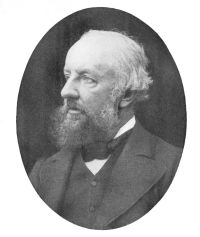 John Willis Clark,
Dictionary of National Biography…
(1893)
John Willis Clark,
Dictionary of National Biography…
(1893)
“ Lightfoot, who died in 1675, as ‘very lately Master’ (nuperrimè magister) , and does not mention his successor. It was therefore probably drawn in 1676. A similar inscription on the view of Pembroke mentions that it was taken when the master, Nathaniel Coga, was vice-chancellor, i.e. in 1681–2; the view of the south side of King's College Chapel is dedicated to Provost Page, who died in 1681; the view of Trinity Hall and the plan of Cambridge are dated 1688; and lastly, the view of Magdalene College mentions Gabriel Quadring as master, who was not elected until 1690. ”
Thomas Finlayson Henderson, Dictionary of National Biography… (1887)
“ He was educated at Richmond grammar school, Yorkshire, and Christ's College, Cambridge, where he obtained a fellowship. In 1746 he was appointed master of Magdalene College. He received the degree of LL.D. in 1748, when he served the office of vice-chancellor, and was appointed one of the king's chaplains. In 1749 he received the degree of D.D., and was appointed rector of Kirkby-over-Blow, Yorkshire. The following year he was appointed to the prebendal stall at Durham, and in 1758 official to the dean and chapter. He died in 1760. ”
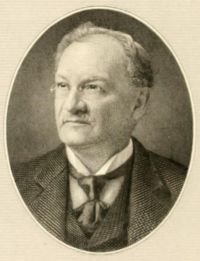 Joel Cook,
England, Picturesque and Descriptive…
Joel Cook,
England, Picturesque and Descriptive…
“ Sepulchre's Church, obtaining its name from its circular Norman nave, this being one of the four "Temple churches" still remaining in England. Across the Cam stands Magdalene College, founded in 1519 by Baron Thomas Audley of Walden. Within the building behind it are the literary collections of Samuel Pepys, who was secretary to the Admiralty in the reigns of Charles II. and James II., together with the manuscript of his famous diary, a book of marvellous gossip, recording the peccadilloes of its author, the jealousy of his wife, and the corruptions of the court. ”
John William Edward Conybeare, Highways and Byways in Cambridge and Ely
“ To experts well acquainted with both places the minute shades of difference are of extreme interest; but to the average visitor the places are as like as twin sisters. The very names of the Colleges are the same in no less than a third of the cases. If there is a Trinity at Cambridge there is also a Trinity at Oxford, if there is a Magdalen at Oxford there is a Magdalene at Cambridge; while St. John's, Jesus, Corpus Christi, and Pembroke are all in like manner duplicated. And, both at Oxford and Cambridge, Colleges are named from Queens ”
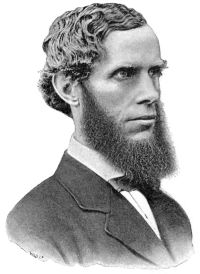 George C. Brodrick,
A history of the University of Oxford
(1900)
George C. Brodrick,
A history of the University of Oxford
(1900)
“ There were to be forty scholars, being clerks, bound to study without intermission, twenty-four of whom were to cultivate Arts and philosophy or theology, and sixteen the canon or civil law. Magdalen College was founded in 1457 by William of Waynflete, Bishop of Winchester, upon a plan borrowed from New College, but without the peculiar feature of organic connection with a public school, though its founder had been himself the head-master both of Eton and of Winchester. There are clear traces in the statutes of the coming Renaissance. ”
William John Robertson, Public School History of England and Canada (1892)
“ His next step was an attack on the Universities of Oxford and Cambridge, about the only places in England where a good education could be obtained. The clergy and the sons of the nobles and gentry were educated there, but no student could take a degree or hold an office in these colleges unless he belonged to the English Church. James wished to open the Universities to Roman Catholics, and so placed at the head of one college a Roman Catholic, and when a vacancy occured in the headship of Magdalen College, he told the Fellows to elect Dr. ”
Walter W. Moore, A Year in Europe
“ It has, in the chapel of King's College, a building of marvellous beauty; Oxford cannot match it, nor can it be matched anywhere in England save by that "miracle of the world," the Chapel of Henry VII., in Westminster Abbey. The roll of Cambridge's alumni is illustrious to a degree, having such names as Bacon, Erasmus, Newton, Milton, Cromwell, Macaulay, Byron, Thackeray, Tennyson, Wordsworth, Harvey (discoverer of the circulation of the blood) , Darwin, and many, many others equally well known.Cambridge more Progressive than Oxford. ”
Various, Appletons' Popular Science Monthly…
“ The Fellows are in most cases chosen from those men who have achieved the greatest success in an honor course. At Cambridge College individualism has progressed so far that the Fellows of, say, Magdalen must be Magdalen men, the students of Queens', St Catherine's, or any other being ineligible save for their own fellowships. Oxford obtains perhaps better men on the whole by throwing open the fellowships of each particular college to the graduates of all, thus producing a wider competition. ”
Baron Thomas Babington Macaulay Macaulay, Critical, Historical, and Miscellaneous Essays…
“ But we believe that it has principally originated in the jealousy of those who are attached to Cambridge and Oxford, either by their interests, or by those feelings which men naturally entertain towards the place of their education, and which, when they do not interfere with schemes of public advantage, are entitled to respect. Many of these persons, we suspect, entertain a vague apprehension, scarcely avowed even to themselves, that some defects in the constitution of their favourite Academies will be rendered more glaring by the contrast which the system of this new College will exhibit. ”
Baron Thomas Babington Macaulay Macaulay, Miscellaneous Writings and Speeches…
“ The academical authorities at Cambridge and Oxford stand in a parental relation to the student. They undertake, not merely to instruct him in philology, geometry, natural philosophy, but to form his religious opinions, and to watch over his morals. He is to be bred a Churchman. At Cambridge, he cannot graduate, at Oxford, I believe, he cannot matriculate, without declaring himself a Churchman. The College is a large family. An undergraduate is lodged either within the gates, or in some private house licensed and regulated by the academical authorities. ”
Various, Appletons' Popular Science Monthly…
“ The characteristic peculiar to Cambridge and Oxford, and which distinguishes them not only from American but also from all other universities in England and elsewhere, is the college system. Thus Cambridge is a collection of eighteen colleges which, though nominally united to form one institution, are really distinct, inasmuch as each is a separate community with its own buildings and grounds, its own resident students, its own lecturers, and Fellows—a community which is supported by its own moneys without aid from the university exchequer, and which in most matters legislates for itself. ”
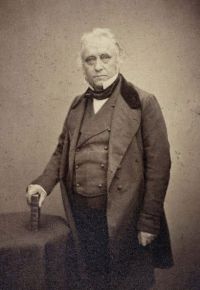 Thomas Babington Macaulay,
The History of England from the Accession of James II…
Thomas Babington Macaulay,
The History of England from the Accession of James II…
“ The nature of the academical system of England is such that no event which seriously affects the interests and honour of either University can fail to excite a strong feeling throughout the country. Every successive blow, therefore, which fell on Magdalene College, was felt to the extremities of the kingdom. ”
A. Hamilton Thompson, Cambridge and Its Colleges
“ Milton, whose life is very largely bound up with Cambridge, brings us to another critical point in University history. It is difficult to estimate the attitude of Cambridge as a whole to the Civil Wars. Oxford remained faithful to the King, but, while Cambridge possessed no college so unanimously loyal as St John’s at Oxford, there were one or two colleges, such as Sidney and Emmanuel, whose sympathies were undeniably Puritan. An University cannot help a certain amount of conservatism, and Cambridge sacrificed a great deal in the Stewart cause. ”
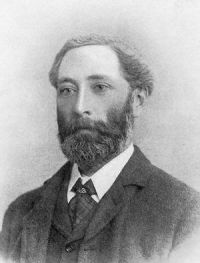 W. W. Rouse Ball,
Cambridge Papers
W. W. Rouse Ball,
Cambridge Papers
“ Nearly all the original members of Trinity had been educated at Cambridge, they were familiar with its traditions, and even the buildings they occupied were associated with the college life of earlier times. It was intended that the Society should promote the reformed religion and the new learning, but there is no reason to suppose that in establishing it, it was wished or proposed to alter the existing practice about the tuition, guidance, and care of the younger students. ”
 Leslie Stephen,
Dictionary of National Biography…
(1896)
Leslie Stephen,
Dictionary of National Biography…
(1896)
“ He made bequests to King's College, Cambridge, established a fellowship at Jesus College, and was also a liberal benefactor to both the universities and to the abbey of Waltham. He founded three public lectures, viz. in humanity, logic, and philosophy, to be read in the common schools of the university of Cambridge for ever. ”
1911 Encyclopædia Britannica, Volume 10… (1911)
“ It is not known at what school he was educated, nor at what college, though the presumption is in favour of Magdalen, Oxford, whence he drew so many members of his subsequent foundation, Corpus Christi. He also appears to have studied at Cambridge, but nothing definite is known of the first thirty-five years of his career. ”
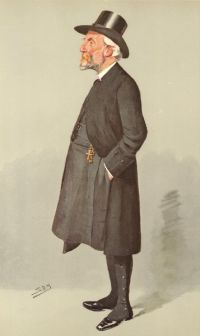 Charles William Stubbs,
Cambridge and Its Story
Charles William Stubbs,
Cambridge and Its Story
“ Whether the newly-created Lord of Walden regarded himself as inheriting also the Monks’ rights and responsibilities in connection with the Cambridge college or not, or whether, being an old man now and infirm and with no male heir, he thought to find some solace for his conscience in the thought of himself as the benefactor and founder of a permanent college, I cannot say. ”
A. Hamilton Thompson, Cambridge and Its Colleges
“ Such Gilds became common in Cambridge as in every town during the Middle Ages; they were the great aids to municipal life, and we shall find that some of them grew rich and powerful enough to found a College on their own account.Our business is, however, with the University. One cannot fix a deliberate date of foundation. Universities, like every other great design, have small beginnings, and the origin of schools at Cambridge was probably insignificant. Cambridge is on the border of the Fenland, and the [3] Fenland contained the richest abbeys in England. ”
A. Hamilton Thompson, Cambridge and Its Colleges
“ The same desire which led to the foundation of Selwyn and Keble led to the passing of a grace by the Senate of both Universities, by which students were allowed to become members of the University without joining any particular college. Unattached students now form a considerable element at both Oxford and Cambridge. ”
Charles William Stubbs,
Cambridge and Its Story
“ The arrival of the charter was soon followed by the news of the Lady Margaret’s noble benefactions—consisting of many manors in the four counties of Cambridge, Norfolk, Leicester, and Essex—which thus exalted the humble and struggling Society of God’s House, under its new designation of Christ’s College, into the fourth place in respect of revenue, among all the Cambridge colleges.The building of the College seems to have gone on uninterruptedly between 1505 and 1511. The amount spent by the Foundress during her lifetime is not ascertainable ”
Various, Blackwood's Edinburgh Magazine…
“ Before, however, we offer any conjectures as to the probable effect of these yet untried changes, we must remind our readers of a certain characteristic of the Cambridge system, which is important in estimating the internal relations of the late reforms. The academic life of Cambridge circulates through two concurrent systems, which we may term the university and the collegiate system. The university is one corporation, and each individual college is altogether another. ”
Related terms
Authors who wrote about “Magdalene College, Cambridge”
M. A. R. TukerA. Hamilton ThompsonCharles William StubbsW. W. Rouse Ball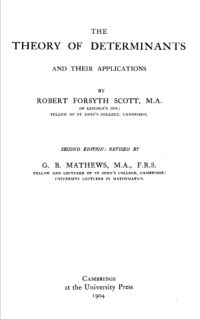 Robert Forsyth ScottJohn William Edward ConybeareAlice GardnerJ. WellsVarious
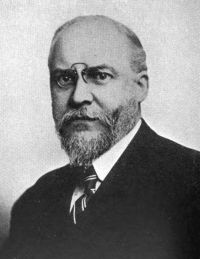 William Raimond BairdLeslie StephenThompson CooperCecil Headlam
 Laurence HuttonSamuel Haughton
 A. Hamilton GibbsGeorge C. Brodrick
 Orison Swett Marden
 Jean WebsterJohn Willis Clark
Charles William StubbsW. W. Rouse BallRobert Forsyth ScottJohn William Edward ConybeareAlice GardnerJ. WellsVariousWilliam Raimond BairdLeslie StephenThompson CooperCecil HeadlamLaurence HuttonSamuel HaughtonA. Hamilton GibbsGeorge C. BrodrickOrison Swett MardenJean WebsterJohn Willis Clark