Maltese cross

Definition and stakes

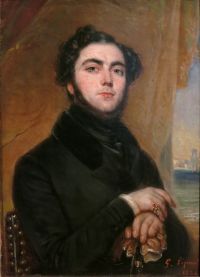
Portrait of Eugène Sue Eugène Sue The Knight of Malta

The Bohemian uttered a cry of joy as he perceived the little embossed silver casket of which we have spoken, and on which was marked a Maltese cross. This casket, which was quite heavy, was fastened no doubt by a secret spring, as neither key nor lock could be discovered.
“I have my fine part of the booty, now let us run to help Captain Pog in taking his. Ah, ah!” added he, with a diabolical laugh, as he beheld the bay and the city wrapped in profound stillness, “soon Eblis will shake his wings of fire over that scene. The sky will be in flames, and the waters will run with blood!”
Source: Gutenberg

Roswell Park The Evil Eye, Thanatology, and Other Essays

That the Cross was originally a phallic emblem is proven, among other things, by the origin of the so-called Maltese Cross, which originally was carved out of solid granite, and represented by four huge phalli springing from a common center, which were afterward changed by the Knights of St. John of Malta into four triangles meeting at a central globe; thus we see combined the symbol of eternal and the emblem of constantly renovating life. The reason why the Maltese Cross had so distinctly a phallic origin, and why the Knights of St.
Source: Gutenberg

W. Cope Devereux Fair Italy, the Riviera and Monte Carlo

It struck me that the Maltese cross may have been the shape of the most ancient Christian temples, the more orthodox Latin cross shape being afterwards developed by the lengthening of the nave. The date of this unique little church is said to be very ancient, and probably stands on the site of the temples of Diana.
Perhaps the place was made even more interesting to me, by the fact of my thoughts being brought back [20] from the dark ages by observing a christening going on in one of the dimly lighted aisles
Source: Gutenberg

Get perspective with Kwize: daily news enlightened by great literature