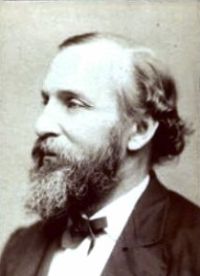
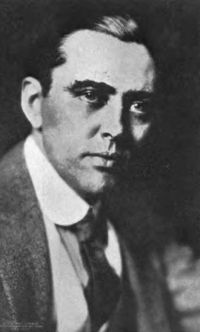
“ The Miamis—a tribe of the Algonquin family in powerful league with the Shawnees, Wyandots, Potawatomies and the Ottawas—were determined to keep the white man off the prime hunting grounds that lay between the Great and Little Miami rivers. ”
Miamis
Definition and stakes
The Miami are a Native American nation originally inhabiting north-central Indiana, southwest Michigan, and western Ohio, speakers of the Miami–Illinois language. Historically divided into subgroups such as the Piankeshaw and Wea, they were later unified under the Atchakangouen (Crane Band). Displaced by U.S. expansion, their descendants now primarily reside in Oklahoma and Indiana.
Authors like Charles R. Poinsatte traced their migration, driven by trade and conflict, while Elmore Barce emphasized their resistance to land encroachment. Henry Gannett observed their reduced population and assimilation. These accounts collectively highlight the Miami’s enduring cultural resilience amid displacement and the pressures of assimilation.
Quotes about “Miamis”
Charles R. Poinsatte, Outpost in the Wilderness: Fort Wayne…
“ This migration of the Miamis was a gradual process and can be traced from northern Illinois and southern Wisconsin around the head of Lake Michigan to their old settlements on the Wabash, Maumee, and Miami rivers. The Miamis were persuaded to move for a number of reasons—the hostility of the Fox Indians, the advantages in trade and protection furnished by their proximity to Detroit, and finally the abundance of fur, especially beaver, to be found in the area south and southwest of Lake Erie. ”
Elmore Barce, The Land of the Miamis
“ On August 18th and August 27th, 1804, Governor William Henry Harrison, as Indian agent for the United States government, bought a large tract of land in southern Indiana, between the Wabash and the Ohio rivers, from the Delaware and Piankeshaw tribes. The right to make this purchase was disputed by Captain William Wells, the Indian agent at Fort Wayne, and by the Little Turtle, claiming to represent the Miamis, and it was claimed among other things, that the lands bought were frequented as a hunting ground by both the Miamis and Potawatomi, and that they went there to hunt buffalo. ”
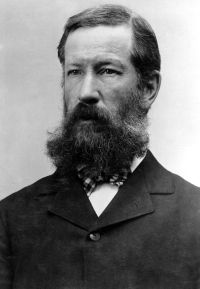
Elmore Barce, The Land of the Miamis
“ Forage entirely destroyed; horses failing and cannot be kept up; provisions from hand to mouth." The Little Turtle was again on the watch. A hostile army was entering the sacred domain of the Miamis. Indian scouts and runners were constantly lurking on the skirts of the army. ”
Benjamin Drake, Life of Tecumseh, and of His Brother the Prophet
“ By an artifice of Little Turtle, these three bands were passed on general Wayne as distinct tribes, and an annuity granted to each. The Eel river and Weas, however, to this day call themselves Miamis, and are recognized as such by the Mississinaway band. The Miamis, Maumees or Tewicktowes, are the undoubted proprietors of all that beautiful country which is watered by the Wabash and its branches; and there is as 160 little doubt that their claim extended at least as far east as the Scioto. They have no tradition of removing from any other quarter of the country ”
Henry Gannett,
Encyclopædia Britannica, Ninth Edition
(1881)
“ They are now living in a civilized manner, and are engaged very largely in lumbering. Their number is now about 1445, and is said to be diminishing rapidly. The Miamis were first found in eastern Wisconsin, and were estimated at 8000 in number. They were a warlike race, continually engaged in broils with their neighbours, the Iroquois, Sioux, and French, in which they lost heavily. In the Revolution and the war of 1812, like most of the Indian tribes, they sided with the English. After the latter war they fought among themselves, reducing their numbers greatly. ”
Elmore Barce, The Land of the Miamis
“ The mountain ranges stood as barriers in the way, unless the headwaters of such rivers as the Potomac and the James, could be connected by canals and portages with the headwaters of the Ohio and its tributaries. If this could be accomplished, and if the headwaters of the Miami, Scioto and Muskingum, could be connected in turn with those of the Cuyahoga, the Maumee and the Wabash, then all was well, for this would furnish an outlet for the commerce of the west through the ports and cities of the Atlantic seaboard. ”
Elmore Barce, The Land of the Miamis
“ Clair, writing to the Secretary of War from Pittsburg, said that the western tribes, meaning those under the influence of the Miami chiefs, had been so successful in their depredations on the Ohio river, their settlements were so distant and "their country so difficult," that they imagined themselves to be perfectly safe, and that as they were able by these incursions "to gratify at once their passions of avarice and revenge, and their desire for spirituous liquors, every boat carrying more or less of that commodity, few of them may be expected to attend ”
Elmore Barce, The Land of the Miamis
“ The water communication with Lake Erie by means of the Wabash and Miami, with Lake Michigan [Pg 343] and the Illinois by the Tippecanoe, is a great convenience. It is immediately in the center of the back line of that fine country which he wishes to prevent us from settling, and above all, he has immediately in his rear a country that has been but little explored, consisting principally of barren thickets, interspersed with swamps and lakes, into which our cavalry could not penetrate, and our infantry only by slow and laborious marches. ”
George W. Bush,
Presidential Radio Address
(2007)
“ Miami is home to people whose families have been in our country for generations -- and to people who have only just arrived. This diversity is one of the great strengths of that city -- and it is one of the great strengths of our country. ”
James Nelson Barker, The Indian Princess; Or, La Belle Sauvage
“ I am his lover. [Still looking after Rolfe. Miami. [Stamps with anger.] Hear me! In what do the red yield to the white men? and who among the red men is like Miami? While I was yet a child, did the dart which my breath blew through my sarbacan ever fail to pierce the eye of the bird? What youth dared, like Miami, to leap from the precipice, and drag the struggling bear from the foaming torrent? Is there a hunter—is there a warrior—skilful and brave as Miami? Come to my cabin, and see the scalps and the skins that adorn it. ”
Albert Payson Terhune,
Black Caesar's Clan : A Florida Mystery Story
“ Along the coast the tawny beaches, the mangrove-swamps, the rich farms, the groves, the towns, the villages, the estates, snow-white Miami, the nation's southernmost big city.Back of this foreshore, countless miles of waving grass, rooted in water, and with a stray clump of low trees, dotted here and there, the Everglades, a vast marsh that runs north to the inland sea known as Lake Okeechobee. Then the solid sandy ground of the main State.Along the foreshore, and running inland, miles of sand-barren scattered with gaunt pines and floored with harsh palmetto-scrub. ”
Kenneth Lewis Roberts,
Sun Hunting
(1922)
“ Each Florida city or resort is violently jealous of every other resort or city. The residents of Palm Beach speak sneeringly of Miami as being a bit plebeian. The residents of Miami speak compassionately of Palm Beach, as young and pretty girls speak of decaying beauty. St. Petersburg and Tampa and Miami have little of a favorable nature to say concerning one another. They only unite to resist attacks from resorts outside the state, or to say a few tart words about California. ”
Chelsea Curtis Fraser, Around the World in Ten Days
“ Thus they passed Juno and Palm Beach, and then saw the thicker cluster of fine dwellings of Miami itself, the most southerly city on the Florida mainland.Paul was guiding the Sky-Bird at this time, and turned her across the limpid waters of Biscayne Bay, cutting a huge circle above the town and slowly swooping downward toward the broad white beach, as he picked out a level stretch for landing. Townspeople who had been watching the strange airplane, so much like a great bird, now ran forward to see it land. ”
Henry M. Plummer, The boy, me and the cat (1961)
“ I have been looking the sun straight in the eye for 5 months with result that my own eyes pain me constantly and I am always behind blue glasses and canvas patches. It is all a bit tedious and makes home look a good ways off. Miami, like all the towns we have visited, seems to be in the midst of a real estate boom. The sun pours down and is beaten back into your face and eyes from new cement sidewalks and buildings. ”
James Nelson Barker, The Indian Princess; Or, La Belle Sauvage
“ I must quit for ever the companions and the woods that are dear to me. Nima, the Susquehannocks are a powerful nation, and my father would have them for his friends. He gives his daughter to their prince, but his daughter trembles to look upon the fierce Miami.Music. Hunters seen winding down the hills; they are met by the women of the village; Miami approaches Pocahontas, and his attendants lay skins at her feet.Miami. Princess, behold the spoils I bring thee. Our hunters are laden with the deer and the soft furred beaver. ”
E. H. Davis, Ancient Monuments of the Mississippi Valley
“ The Miami itself, with its precipitous bank of two hundred feet, defends the western side. The ravines are occupied by small streams. Quite around this peninsula, on the very verge of the ravines, has been raised an embankment of unusual height and perfection. Meandering around the spurs, and re-entering to pass the heads of the gullies, it is so winding in its course that it required one hundred and ninety-six stations to complete its survey. ”
Bradford Torrey,
Nature's invitation: Notes of a bird-gazer…
(1904)
“ About Miami it is decidedly common, though the green females show themselves ten times as often as the red, blue, and yellow-green males. What a superbly dressed creature the masculine nonpareil is! And he carries himself as if he knew it. ”
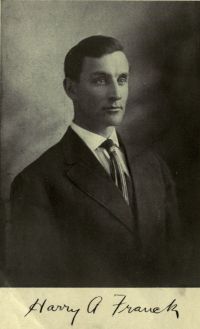
Harry Alverson Franck,
Roaming Through the West Indies
“ Even Palm Beach has nothing unusual to show until the holidays of mid-winter bring its vast hostelries back to life. One loses little in fleeing all day onward at Southern express speed.Miami, however, is worth a halt, if only for a glimpse of the United States in full tropical setting. There the refugee from winter will find cocoanuts nodding everywhere above him; there he may pick his morning grape-fruit at the door; and he need be no plutocrat to have his table graced with those aristocratic fruits of the tropics, the papaya and the alligator-pear. ”
Charles M. Skinner, Myths & Legends of our New Possessions & Protectorate
“ Near Florida was the island of Bimini, with its fountain of youth. Juan and Luis Ponce de Leon sought it vainly among the Bahamas, then crossed to Florida and kept up the search among the pine barrens, the moss-bearded cypresses, the snaky swamps, and alligator infested rivers. The Indians, strong, active, healthy with their simple, outdoor life, their ignorance of wine and European diseases, seemed so favored that the Spaniards believed they must have bathed in the magic fountain and drank its waters. ”
Joel Cook,
America, Volume 2 (of 6)
“ Augustine, and in 1763 the British held Amelia Island, extending the little fort to almost its present proportions, and laying out a town behind it, while to the southward the Countess of Egmont established an indigo plantation, which flourished for a brief period. Spain ultimately got the island, and it came into American possession with Florida in 1821. A little town with sandy streets, a pretty park, much foliage, delicious air bringing the balsam of the pines and the tonic of the sea, and hotels accommodating the influx of winter visitors, make up the Fernandina of to-day. ”
Oliver Optic,
Down South; or, Yacht Adventure in Florida
“ As we sat in front of the pilot-house, Cornwood pointed out all the objects of interest, and named the towns we passed. But nature was more to our taste than any village, after we had obtained an idea of the average town in Florida. We did not stop all day long, except to run into the stream that flows from Blue Spring, to note the marvellous clearness of the water. At four in the afternoon we passed into Lake Monroe, which is the head of navigation. On it are located the three towns of Sanford, Mellonville, and Enterprise, at the last of which we made a landing. ”
1911 Encyclopædia Britannica (1911)
“ Miami is the centre of a farming country in which citrus fruits, especially grape-fruit, pineapples and winter vegetables are raised for northern markets. There is excellent rod-fishing; Spanish and king mackerel and blue-fish are shipped from Miami in large quantities; and in Biscayne Bay there are important sponge fisheries. An alligator “farm” and the Subtropical Laboratory of the U.S. government are points of interest. ”
52d Congress, 2d Sesssion, Senate Report No. 1263 (1893)
“ The largest portion I should think go to Florida, because, in the first place, there are a great many Cubans coming from families which formerly lived in Florida; they are descendants of old Floridians. When Florida came under the flag of the United States under the treaty of 1819 a great many families would not live under the American flag and they came over here; and there are a great many very good families in Havana and out in the country here who came from those people, and this office has been at times filled with them coming in here to get papers to visit their friends in Florida. ”
Eulalie Osgood Grover, The Sunbonnet Babies in Italy
“ Nearly every afternoon they sat by a small table under an orange tree, or beside the blue water, or on a city sidewalk, and had nice things to eat and drink. The people were always kind to them and the sky was nearly always sunny. It is a land of sunshine and flowers and fruit, like our own sunny Florida, though Italy is much more beautiful. It is hardly twice the size of Florida, but nearly one-third as many people live there as live in the whole of our great United States. It is a crowded, happy, lovely country, and Molly and May will never forget their wonderful journey through it. ”
Kenneth Lewis Roberts,
Sun Hunting
(1922)
“ In 1910, Miami had a population of 5,471. In 1920 there were about 30,000 people living there. In 1922 there were 40,000. That’s the way things go in Florida. Once let a thing get a foothold, and it grows so rapidly that the general effect is more that of an explosion than a growth.{138}Grass grows with such enthusiasm in Miami that one can’t merely plant seed and let it grow. If one did that the grass would come in so thick that it would choke itself. What one does is to plant the seed and then, when the seed has sprouted, transplant the spears of grass so that they’re six inches apart. ”
Kenneth Lewis Roberts,
Sun Hunting
(1922)
“ One can never tell what is going to turn up in Florida waters. The prospectuses of{197} both winter and summer resorts usually lay it on a little too thick. The Miami prospectuses always sound very much too much. Starting with the bathing-girls on the front cover and ending with the proud fisherman on the back cover, they always look a little too perfect. ”
Charles Morris, Historic Tales: The Romance of Reality…
“ Never had the eyes of white men beheld this land of beauty before. English ships had sailed along the coast to the north, finding much of it bleak and uninviting. The caravels of Columbus had threaded the glowing line of tropic isles, and later ships had borne settlers to these lands of promise. But the rich southlands of the continent had never before been seen, and well was this unknown realm of beauty named Florida by the Spanish chief, whether by this name he meant to call it the "land of flowers" or referred to the Spanish name for Easter, Pascua Florida. ”
Julian Street,
American Adventures: A Second Trip 'Abroad at home'
“ The ride through Florida is tedious. The miles of palmettoes, with leaves glittering like racks of bared cutlasses in the sun, the miles of dark swamp, in which the cypresses seem to wade like dismal club-footed men, the miles of live-oak strung with their sad tattered curtains of Spanish moss, the miles of sandy waste, of pineapple [Pg 593] and orange groves, of pines with feathery palm-like tops, above all the sifting of fine Florida dust, which covers everything inside the car as with a coat of flour—these make you wish that you were North again. ”
Various, Harper's Round Table, April 21…
“ The Miami River is narrow, silent, and slow-flowing, with rocky banks. There are only three families here, but the Miami River bottom-lands are full of people, owing to vegetable farms, which make this an important shipping-point. ”
Joseph Hergesheimer,
San Cristóbal de la Habana
“ Once Cuba, regarded as the shore of India, had been the center of the West, and Florida no more than a chimera: how ironic such errors and reversals were! Now it was Juana that was legendary, and Florida resembled the significant hooked finger of an imponderable power. The day slid rapidly into water that had lost its blueness for expanses of chalky shallow green, and the flat roofs of Key West and masoned arches became slowly visible across the sea, and a stir of departure filled the decks. ”
Joel Cook,
America, Volume 2 (of 6)
“ There is not a horse in the settlement, and only one mule, whose duty is to haul a light summer car between the houses. The vehicles of Palm Beach are said to be confined to 380 "bicycles, wheel-chairs and jinrickshas." Off to the westward the distant horizon is bounded by the mysterious region of the everglades. Far down the coast the railway terminates at Miami, the southernmost railway station in the United States, a little town on Miami River, where it enters the broad expanse of Biscayne Bay, which is separated from the Atlantic by the first of the long chain of Florida keys. ”