“ It is noteworthy that in 1866, only two years [180] after the club’s foundation, Middlesex was the champion county, and was specially invited to play All England next year; but the result was disastrous. The weakness of Middlesex was always due to a dearth of bowling; in amateur batting Gloucestershire itself was hardly its superior; but of late years J. T. Hearne was in the very first flight of bowlers, as also A. E. Trott, the Australian professional. Howitt, of Nottingham, long did good service, as also Burton, Clarke, Phillips, and Rawlin, most of whom—one blushes to say it—were aliens. ”
Middlesex County Cricket Club
Definition and stakes
Quotes about “Middlesex County Cricket Club”
1911 Encyclopædia Britannica, Volume 7… (1911)
“ League cricket has of late become exceedingly popular, especially in the North of England, a number of clubs—about twelve to sixteen—combining to form a "League" and playing home-and-home matches, each one with each of the others in turn; points are scored according as each club wins, loses, or draws matches, the championship of the "League" being thus decided. English County Cricket.—The first English inter-county match which is recorded was played on Richmond Green in 1730 between Surrey and Middlesex ”
Various, Encyclopaedia Britannica, 11th Edition…
“ Surplus plants and cuttings are generally distributed without charge to educational or charitable institutions, and to the poor. Provision is made for cricket, football and other games in a number of the parks. Large gatherings of spectators are attracted to the first-class cricket matches played at Lord’s ground, St John’s Wood, by the Marylebone Club and the Middlesex County teams, Eton College against Harrow School, and Oxford against Cambridge University; to the Kennington Oval for the matches of the Surrey club, and the Leyton ground for those of the Essex club. ”
Various, Encyclopaedia Britannica, 11th Edition…
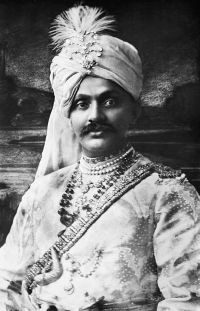
“ And in his “benefit match” in May 1907 at Lord’s he achieved the “hat trick” twice in one innings, taking first four and then three wickets with successive balls. But if there has been a dearth of professionals in Middlesex cricket, the county has produced an abundance of celebrated amateurs. In addition to the Walkers and A. J. Webbe, the metropolitan county was the home of the celebrated hitter, C. I. Thornton, and of the Studd family, who learnt their cricket at Eton and Cambridge University. ”
Ranjitsinhji Vibhaji II,
The Jubilee Book of Cricket
(1897)
“ Possibly no man who ever represented Middlesex has enjoyed greater popularity, and that deservedly, than A. J. Webbe, who will rank, too, as amongst the best of the scores of crack batsmen Middlesex has had. He was in the Harrow Eleven of 1872, and played for the Gentlemen of England in his Oxford days. Mr Webbe has, however, chiefly devoted himself to Middlesex county cricket. In 1887 he scored 192 not out v. Kent, and 243 not out against Yorkshire. ”
Various, Encyclopaedia Britannica, 11th Edition…
“ Middlesex has also the distinction of having produced the two greatest amateur wicket-keepers in the history of English cricket, namely, the Hon. Alfred Lyttelton (b. 1857) and Gregor MacGregor, both of whom, after playing for Cambridge University, gave their services to the Metropolitan county; while Lancashire can boast of the greatest professional wicket-keeper in Richard Pilling (1855-1891) , whose reputation has not been eclipsed by that of the most proficient of more recent years. ”
Ranjitsinhji Vibhaji II,
The Jubilee Book of Cricket
(1897)
“ Sir T. C. O'Brien's famous match against Yorkshire in 1889 will ever have a cherished memory in the history of Middlesex cricket, for in that never-to-be-forgotten game Middlesex had to get 280 to win in three hours and thirty-five minutes. Neither players nor spectators dreamt of anything but a draw. With an hour and a half left to play, 151 runs were still required with 6 wickets to fall. ”
Various, Encyclopaedia Britannica, 11th Edition…
“ Middlesex, like Kent, has been better served by amateurs than professionals. Indeed, with the notable exceptions of J. T. Hearne, who headed the bowling averages in 1891, 1896 and 1898, and of the imported Australian A. E. Trott, few professionals of high merit are conspicuously associated with the history of the county cricket. Trott, in 1899 and again in 1900, performed the previously unprecedented feat of taking over two hundred wickets and scoring over one thousand runs in the same season. ”
“ To attempt to single out individuals for comparison would be equally hopeless and invidious; it is only when we recall the weakness of the Middlesex bowling that we appreciate the strength of the batting that has enabled it to hold its own, though since 1866 championship honours have not come the metropolitan county’s way. ”
Various, Encyclopaedia Britannica, 11th Edition…
“ They did much good work in popularizing the game, and an annual match between the two at Lord’s on Whit-Monday was once a great feature of the season; but the increase of county cricket led eventually to their disbandment.At this period, and much later, the first-class matches of “M.C.C. and ground” (i.e. ground-staff, or professionals attached to the club) occupied a far greater amount of importance than is at present the case. In recent years over 150 minor matches of the utmost value in propagating the best interests of cricket are annually played by the leading club. ”
Ranjitsinhji Vibhaji II,
The Jubilee Book of Cricket
(1897)
“ The most prominent bowler for Middlesex at the present time is J. T. Hearne, a nephew of Tom Hearne. He has twice captured over 200 wickets in a season—viz., 212 in 1893 and in 1896. He bowls— to use a technical phrase—from his toes, has a beautiful off-break, varying his pace with excellent judgment. For M.C.C. v. Australia at Lord's in 1896 he was credited with 13 wickets for 77 runs, while in the final test match between England and Australia at the Oval the same year he obtained 10 wickets for 60 runs. Several famous names, too, must be added to this article of Middlesex cricket. ”
The Cricket of Abel, Hirst, and Shrewsbury
“ And in the pavilion are K.C.’s, artists, archdeacons, and leader-writers. Bad men, good men, workers and idlers are all there, and all at one in their keenness over the game. It is a commonplace that cricket brings the most opposite characters and the most diverse lives together. Anything that puts many very different kinds of people on a common ground must promote sympathy and kindly feelings. The workman does not come away from seeing{230} Middlesex beating Lancashire or vice versâ with evil in his heart against the Upper Ten ”
“ I have suggested that we owe the increase of cricket to the growth of county cricket, and the reasons are not far to seek. When once a county is included in the first class, or aspires to it, its first effort is to enlist all its available talent, and as the reward of the great cricketer is no mean one, whether that reward come in the shape of reputation and amusement to the amateur, or of good red gold to the professional, the aim and ambition of every promising player and of the club to which he belongs is to get at least a fair trial in the higher spheres of the game. ”
Various, Encyclopaedia Britannica, 11th Edition…
“ C. T. Studd, one of the most polished batsmen who ever played cricket, was at the same time an excellent medium-paced bowler, and his brother G. B. Studd is remembered especially for his fielding, though like his elder brother, J. E. K. Studd, he was an all-round cricketer of the greatest value to a county team. Sir T. C. O’Brien, who made his reputation by a fine innings for Oxford University against the Australian team of 1882, sustained it in the following years by many brilliant performances for Middlesex. A. E. Stoddart for several years was the best run-getter in the Middlesex eleven ”
William Benjamin Owen, Dictionary of National Biography… (1912)
“ Vyell Walker's eldest brother, John, founded in 1858, on his own land, the Southgate club, which became a chief centre of local cricket and a notable scene of activity for Walker and his brothers up to July 1877, when the club ceased to be their private property. There in 1859 John Walker invited the Kent eleven to play a Middlesex eleven which included five members of his family. John Walker and his brothers were mainly responsible for the creation of the Middlesex cricket club, which was definitely formed in 1864, and after many wanderings found a permanent home at Lord's in 1877. ”
Various, Encyclopaedia Britannica, 11th Edition…
“ The influence of individuals and families, such as the Graces in Gloucestershire, the Walkers in Middlesex, and in recent times the Fosters in Worcestershire, has of course been of inestimable benefit to cricket in those counties; but Buckinghamshire and Norfolk and Cheshire send their sons to the public schools and universities no less than Lancashire or Kent. It is difficult, therefore, to understand why county cricket should so persistently confine itself to a small number of counties ”
Ranjitsinhji Vibhaji II,
The Jubilee Book of Cricket
(1897)
“ To begin with, first-class cricket, including representative M.C.C., county, and university matches, is quite different from any other—partly because the results are universally regarded as more important, partly because certain obligations towards the spectators have to be taken into consideration. The last point applies equally to any match which people pay to come to see. Again, school cricket is quite different from ordinary club cricket, and both of them from country-house cricket. ”
Allan Gibson Steel,
Cricket
(1888)
“ Players, or represented England against Australia! No wonder the boy becomes imbued with keenness for the game, when everyone in the village, from, the parson to the old lady who keeps the sweetshop, is continually talking about cricket. As the boy grows older he begins to make his mark in the village club, and when he is eighteen or nineteen, to the delight of his father, mother, sisters, and himself, he is selected to make one of the twenty-two colts of his county that are chosen to play against the county team. ”
Ranjitsinhji Vibhaji II,
The Jubilee Book of Cricket
(1897)
“ A modern professional who represents his county is partly a servant of the club, partly a servant of the public, and partly a skilled labourer selling his skill in the best market. He may or he may not have a local interest in the club he represents: that is another aspect of his case. The introduction of spectacular cricket changed the basis of county cricket considerably. For many years the exhibition elevens and the counties played side by side, but gradually the former died out, and the new elements they had introduced into the game were absorbed into county cricket. ”
Various, Baily's Magazine of Sports and Pastimes…
“ It looks now as if the time is remote when Cambridgeshire will again beat Middlesex. When a couple of years ago Middlesex were again Champion County, Mr. Walker and his brother, the celebrated Mr. Russell D. Walker, entertained the County team to signalise the event. In the fifties and sixties the cricket played at Southgate was second to none in the world. The Walker brothers were in every sense of the word hosts in themselves, and by the addition of a few of their personal friends they were able to get a Southgate team fit to beat all comers. ”
“ At the present day there are county clubs which rely mainly for their existence on the voluntary subscriptions and donations of their supporters, men whose only reward is the opportunity of seeing good cricket brought home to their own doors, and the promotion, expansion, and improvement of the game. Gate-money is of course an important factor in a club’s receipts, but it is sheer nonsense, it is almost mendacity, to declare that the county cricket of to-day is played for gate-money and for nothing else. ”
Cricket (1903)
“ Amateur cricket owes a great debt to them, and also to the Incogniti, in which the present governor ot Jamaica has taken such keen interest. With varying sides, but unvarying good-fellowship, these pilgrims of cricket show how many withstand the attractions of golf, and prefer to drive the leather rather than the Haskell. Each University has one club noteworthy to the community at large. Cambridge boasts the Quidnuncs, the cap of which is so familiar in county matches, because hardly any old blue seems to wear his 'Varsity colours. ”
Various, Encyclopaedia Britannica, 11th Edition…
“ Matches between an unequal number of players are still sometimes arranged, but mainly in the case of local sides against touring teams, or “colts” playing against eleven experienced cricketers. In any case two umpires are always appointed, and for English first-class county cricket these are now annually chosen beforehand by the county captains. Two scorers are officially recognized. All the arrangements as to scoreboards, and accommodation for players, members of the club and general spectators, vary considerably according to local requirements. ”
W. G. Grace, Cricket (1891)
“ County cricket in England did not suffer much by the Australian invasion, and some very interesting and exciting matches were played. Middlesex, with a very strong batting team, took first place, and Gloucestershire and Nottinghamshire were close up. Mr. A. G. Steel's performance with the ball was equal, if not superior, to anything ever shown either by professional or amateur; and two professionals, Selby and Ulyett, handled the bat in a way worthy of Daft in his best days. The Gentlemen won both matches against the Players ”
W. G. Grace, Cricket (1891)
“ County cricket had a better chance in the absence of the Australian eleven, and it was very encouraging to notice the increase of spectators. Travelling elevens were rarely heard of now, and county matches were fulfilling the aim of their promoters. Yorkshire and Nottinghamshire were well ahead of the others, both being strongly represented in batting and bowling. Middlesex came next; and at last Surrey began to creep up again, owing to the magnificent batting of Mr. ”
Ranjitsinhji Vibhaji II,
The Jubilee Book of Cricket
(1897)
“ He appeared for the Gentlemen of England against the Players when but nineteen years of age, and in 1859, for England v. Surrey, he scored 20 not out and 108, and obtained all the wickets in the first innings of his opponents. He repeated this feat of capturing all the wickets in an innings at Mote Park, Maidstone, in 1864 for the Gentlemen of Middlesex against the Gentlemen of Kent, while he followed this up for the third time in the Middlesex v. Lancashire match at Manchester in 1865. Very few noblemen or gentlemen have done more to encourage cricket than Mr V. E. Walker. ”
Ranjitsinhji Vibhaji II,
The Jubilee Book of Cricket
(1897)
“ COUNTY CRICKET. THE MARYLEBONE CRICKET CLUB. The M.C.C. is acknowledged to be the great cricket authority throughout the world. Like many famous institutions, its success has been at times checkered. In the latter part of the last century Thomas Lord, a cricketer of some weight in his day, was in the habit of frequenting the Artillery-Field at Finsbury. This was the oldest ground of which we have the scores preserved of the early matches. On one occasion Lord there met the Earl of Winchilsea and the Hon. Colonel Lennox, both of whom were great supporters of the game. ”
Ranjitsinhji Vibhaji II,
The Jubilee Book of Cricket
(1897)
“ What is really wanted is a determined and combined effort of all Oxford cricketers to induce all the colleges, which still linger at Cowley or have not satisfactory grounds near Oxford, to gather under the wing of the O.U.C.C, and as far as possible in the Parks, with such a financial scheme as will satisfy the colleges without impoverishing the University Cricket Club. ”
Various, Encyclopaedia Britannica, 11th Edition…
“ Professionalism has increased, and it is an open secret that not a few players who appear before the public as amateurs derive an income under some pretext or other from the game. Cricket on the village green has in many parts of the country almost ceased to exist, while immense crowds congregate 441 to watch county matches in the great towns ”
Various, Harper's Young People, October 25…
“ Cricket may be played six months in the year, and those who play it think six months none too much. It is a social game also, and a good club can always arrange matches with neighboring clubs, and so friendly is the feeling among players that a visiting eleven nearly always declare, when they go home after a match, that they were never better treated in their lives. In the skill required, the variety of excitement, and the friendly feeling that it promotes, lie the claims of cricket to the favor it enjoys. ”