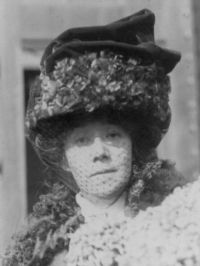
Minamoto no Yoritomo

Definition and stakes

Japan: From the Japanese Government History

“ An instance of the latter case is furnished by the story of the Taira family, whose fighting men gradually fell under the charm of the court life, and succumbed with comparative ease to the misfortunes that afterward overtook them. Minamoto-no-Yoritomo, however, fixed his headquarters at Kamakura and did not visit Kyōto except for very brief intervals. His habits of life were frugal and simple; he encouraged the samurai to adopt a severe military regimen, and he set his face resolutely against costly ostentation and enervating excesses. ”
Source: Gutenberg

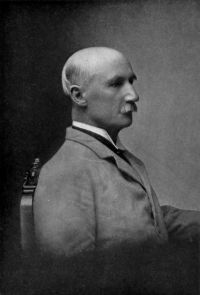
Portrait of F. Brinkley F. Brinkley,  A history of the Japanese people

“ It became necessary, therefore, to remove all potential foes from the Minamoto rear, and accordingly Hojo Tokimasa received orders to overrun Suruga and then to direct his movements with a view to concentration on the Fuji. Thither Yoritomo marched from Kamakura, and by the beginning of November, 1180, fifty thousand Taira troops were encamped on the south bank of the river and twenty-seven thousand Minamoto on the north. A decisive battle must be fought in the space of a few days. ”
Source: Gutenberg

Captain F. Brinkley,  Japan: Its History, Arts, and Literature (1902)

“ Yoritomo made the mistake of estimating his own personality more highly than the interests of the great clan he represented. He killed all the Minamoto leaders that seemed capable of disputing his sway, and he thus left the clan fatally weakened at the time of his death. Kamakura was then divided between two parties, the literary and the military. With the former were associated Masa, Yoritomo's widow, and her family, the Hōjō. A struggle ensued. Masa intrigued to preserve the succession for her own son in preference to her step-son, who had the right of primogeniture. ”
Source: Wikisource

Get perspective with Kwize: daily news enlightened by great literature