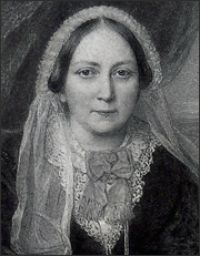
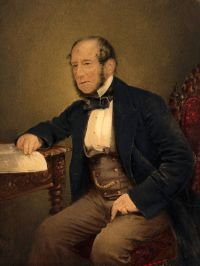
Mr. Rayner

Definition and stakes

Florence Warden,  The house on the marsh (1884)

“ At dinner-time Mr. Rayner did not appear; I was too shy to ask Mrs. Rayner the reason, and I could only guess, when tea-time came and again there was no place laid for him, that he had gone away somewhere. I was sure of it when he had not reappeared the next morning, and then I became conscious of a slow but sure change, a kind of gradual lightening, in Mrs. Rayner’s manner. She did not become talkative or animated like any other woman; but it was as if a statue of stone had become a statue of flesh, feeling the life in its own veins and grown conscious of the life around it. ”
Source: Gutenberg

Florence Warden,  The house on the marsh (1884)

“ The next morning I heard Mr. Rayner unlock the door at the foot of the staircase when I had just opened mine, ready to go down. He waited for me, looking up anxiously, and seemed shocked at my appearance. I had noticed myself, as I was dressing, how white and haggard I looked, and how dull and heavy my eyes were, with black rings round them.
“You ought not to have got up at all. You should have stayed in bed and had your breakfast brought up to you.”
”
Source: Gutenberg

Florence Warden,  The house on the marsh (1884)

“ There is no peace, no freedom for me as long as he lives.”
“Mrs. Rayner,” said I suddenly, “may I ask you if what Mr. Rayner told me when I first came is true—that you were rich and he poor, and that he lived on your money?”
“No, it is not true. I had a little money when he first married me, which he ran through at once.”
“And is it true you once wrote books, and had a little boy whose death made a great change in you?” said I slowly, watching her face.
“No; I never had any child but Mona and Haidee.”
”
Source: Gutenberg

Get perspective with Kwize: daily news enlightened by great literature