
“ Knott had arrived, so had the appreciative select; Mr. Howe's cravat and waistcoat had been duly jerked into place by his wife, and now the baby "really must be woke." Mrs. Howe sprinkles a little jockey-club on Mr. Howe's handkerchief, takes one last lingering look in the mirror, readjusts a stray ribbon, changes the latitude of a gold head pin, then steps up to the rose-wood cradle, and draws aside the lace curtains.What a pity! There is no flush on the babe's face! and how very pale she looks! Mrs. Howe takes hold of the plump little waxen hand that lies out upon the coverlid. ”
Quotes about “Mrs. Howe”
W. L. Grant, The Tribune of Nova Scotia
“ Men's wives bulk less largely in their biographies than in their lives. Mrs Howe's sweetness and charm were an unfailing strength to her husband. She moderated his extravagance, and bore cheerfully with his habit, so trying to a housekeeper, of filling the house with his friends at all hours and at every meal. Above all, she never nagged, or said 'I told you so.' She believed in him and in his work, and cheered him in his hours of depression. A man of such buoyant feelings, with such charm of manner, was quick to feel the attractions of the bright eyes of the pretty Nova Scotian girls. ”
 Maud Howe Elliott,
Julia Ward Howe, 1819-1910
“ It was in these days that she went with Laura to call on him, and found him in his library, a big, bright room, looking out on the Charles River, books lining the walls, a prevailing impression of atlases and dictionaries open on stands. The greeting between the two was pleasant to see, their talk something to remember. "Ah, Mrs. Howe," said the Autocrat, "you at seventy have much to learn about life. At eighty you will find new vistas opening in every direction!" ”
“ She went to a Lying-in Hospital, and staid there till the babe was born, and then there was a great noise, when it was found out how rich her aunt was; and when Mrs. Howe found out that people's tongues were wagging about it, she came forward and offered to pay her board in the country awhile."Mrs. Howe herself lives up in St. John's Square. She is trying to ride into fashionable society with her carriage and liveried servants; and that poor girl so heart-broken."Well, the Lord only knows what is going to become of poor Rose! ”
 Orison Swett Marden,
Eclectic School Readings: Stories from Life
“ Howe went to Europe, where they traveled for some time. The home which they established in Boston on their return became a center for the refined and literary society of Boston and its environment. Mrs. Howe's grace, learning, and accomplishments made her a charming hostess and fit mistress of such a home. Her literary talent was developed at a very early age. One of her friends has humorously said that "Mrs. Howe wrote leading articles from her cradle." However this may be, it is undoubtedly true that at seventeen she contributed valuable articles to a leading New York magazine. ”
Maud Howe Elliott,
Julia Ward Howe, 1819-1910
“ The convert buckled to her new task with all her might, working for it early and late with an ardor that counted no cost."Oh! dear Mrs. Howe, you are so full of inspiration!" cried a foolish woman. "It enables you to do so much!""Inspiration!" said "dear Mrs. Howe," shortly. "Inspiration means perspiration!" [364] She says of her early work for suffrage:—"One of the comforts which I found in the new association was the relief which it afforded me from a sense of isolation and eccentricity. For years past I had felt strongly impelled to lend my voice to the convictions of my heart. ”
 Louise Imogen Guiney,
Goose-Quill Papers
“ It is the case of one woman of strong individuality depicting the points which made another one of the most marked characters of her day. It is always agreeable to follow Mrs. Howe in this; for while we see marks of her own mind constantly, there is no inartistic protrusion of her personality. The book is always readable, and the relation of the death-scene is thrillingly impressive."—Saturday Evening Gazette. ”
 William Dean Howells,
Literary Friends and Acquaintance…
“ Julia Ward Howe and the impulse of reform which she personified. I did not sympathize with this then so much as I do now, but I could appreciate it on the intellectual side. Once, many years later, I heard Mrs. Howe speak in public, and it seemed to me that she made one of the best speeches I had ever heard. It gave me for the first time a notion of what women might do in that sort if they entered public life; but when we met in those earlier days I was interested in her as perhaps our chief poetess. I believe she did not care much to speak of literature ”
 Thomas Wentworth Higginson,
Carlyle's laugh, and other surprises
(1909)
“ Howe’s second daughter was named Florence Marion, became in 1871 the wife of David Prescott Hall, of the New York Bar, and was author of “Social Customs” and “The Correct Thing,” being also a frequent speaker before the women’s clubs. Mrs. Howe’s third daughter, Mrs. ”
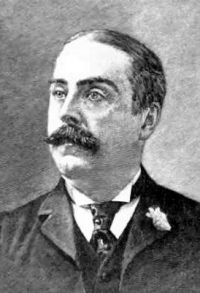 Edgar Fawcett,
The Adventures of a Widow: A Novel
“ Howe is very happy—for I know there is a Mrs. Howe, or you couldn't describe the American women as ably as you do...." Pauline passed onward as she ended her final sentence. Kindelon, still at her side, soon said to her,—"What a clever farewell you made: you have won Howe. You flattered him very adroitly. It's an open secret that his wife helps him in those exquisite novels of his. She is his one type of woman. I think that is why Howe will never be great; he will always be exquisite instead. He adores his wife, who hates society and always stays at home. ”
Maud Howe Elliott,
Julia Ward Howe, 1819-1910
“ A woman minister once said: "My conviction that Mrs. Howe was a divinely ordained preacher was gained the first time that she publicly espoused the question of woman suffrage in 1869."We have seen that little Julia Ward began her ministrations in the nursery. At eight years old she was adjuring her little cousin to love God and he would see death approaching with joy. At eleven she was writing her "Invitation to Youth":— Oh! let thy meditations be of God, Who guides thy footsteps with unerring eye; And who, until the path of life is trod, Will never leave thee by thyself to die. ”
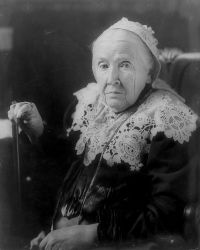 Julia Ward Howe,
Reminiscences, 1819-1899
“ We returned to the city very slowly, of necessity, for the troops nearly filled the road. My dear minister was in the carriage with me, as were several other friends. To beguile the rather tedious drive, we sang from time to time snatches of the army songs so popular at that time, concluding, I think, with"John Brown's body lies a-mouldering in the ground; His soul is marching on."The soldiers seemed to like this, and answered back, "Good for you!" Mr. Clarke said, "Mrs. Howe, why do you not write some good words for [p. 275] that stirring tune?" ”
Eliza F. Pollard, Roger the ranger: A story of border life among the Indians (1893)
“ Women rule the roost here, sir, as they do elsewhere,” he said, turning to Howe. “Mistress Martha will have it she has a right to the honour of entertaining some of your party; you went to her gate first, it seems.”“True,” said Howe, smiling. “We are flattered by your desire, madam. We think there is one amongst us who has already found a flame, and is trying to singe his wings; if she lead the way, he will not refuse to follow,” and as he spoke he looked towards where Marie and William Parkmann were talking to each other. ”
“ Howe!"And John wheeled round again, "didn't he upset that old squirrel-eyed Miss Price, by repeating a common-place remark of hers which she made him two [Pg 355] or three years ago, and which he had the brass to say struck him so forcibly at the time that he never forgot it? Didn't she go home in the full belief that she had up to that time been terribly underrated by her folks at home? Certainly;—now do you suppose he does all that for nothing, Mrs. Howe? No—he gets his pay out of you all by an invitation to a good dinner. ”
“ Howe, out of her abundance, had benevolently appropriated to the use of the sick child. The floor was uncarpeted, the window was without a blind, and the fat cook's ample petticoat had been pinned up by Mrs. Howe, not out of kindness to [Pg 139] the sick child, but to keep out the eyes of prying neighbors.Rose sat on the only seat in the room, a low cricket, swaying to and fro with Charley in her lap, vainly trying to hush his moanings ”
Thomas Wentworth Higginson,
Carlyle's laugh, and other surprises
(1909)
“ Howe’s only son, Henry Marion, graduated at Harvard University in 1869 and from the Massachusetts Institute of Technology in 1871, is a mining [308] engineer and expert, and is a professor in the School of Mines at Columbia University. His book on “The Metallurgy of Steel” has won for him a high reputation. It will thus be seen that Mrs. Howe has had the rare and perhaps unequaled experience of being not merely herself an author, but the mother of five children, all authors. She has many grandchildren, and even a great-grandchild, whose future career can hardly be surmised. ”
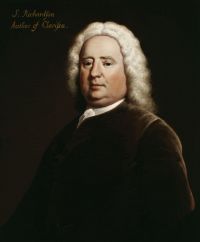 Samuel Richardson,
Clarissa Harlowe; or the history of a young lady…
“ But after all, I see that there is something so charmingly brilliant and frank in Miss Howe's disposition, although at present visibly overclouded by grief, that it is impossible not to love her, even for her failings. She may, and I hope she will, make Mr. Hickman an obliging wife. And if she does, she will have additional merit with me; since she cannot be apprehensive of check or controul; and may therefore, by her generosity and prudence, lay an obligation upon her husband, by the performance of what is no more than her duty. Her mother both loves and fears her. ”
Woman of the Century — Emeline Harriet Howe (1893)
“ She grew up with a love of the grand and beautiful in nature, art and literature, inspiring her at an early age to write verses for publication. In the twenty-third year of her life she became the wife of Capt W. C. Howe, who served his country gallantly in the Civil War. Their home is in the city of Franklin, Pa. Mrs. Howe is the mother of five sons, and her home is the domain of her power. Writing poems has been only an incident in her active life, although her published ones would make a volume. ”
 Florence Howe Hall,
Memories grave and gay
“ The following letter shows Edwin Booth’s tender care for his little motherless daughter:Friday. Dear Mrs. Howe,—To-morrow and Sunday night I am engaged—but think I shall remain at home on account of ill-health; to-morrow night I start for New York. I am sorry I have been unable to see you, but hope to have that pleasure before I leave the city.Baby Booth is not with me—I feared the climate and at the last moment concluded not to bring her here. I hear from her every day. She has grown to be a most splendid child and worships her papa. I miss her very much. ”
D. W. Belisle, The American Family Robinson
“ The chief regarded the speaker with an inquiring glance for a moment, then said: "Whirlwind is not to be played with. When the antelope says she will go with him, he will take her, if she is hemmed in with arrows." "Whirlwind, I will be plain with you," said Howe, "for I know you are noble, generous, and brave. Jane is not my child, and is not mine to dispose of; but as she has no other guardian here, I will protect her until once more restored to her family. ”
Julia Ward Howe,
Reminiscences, 1819-1899
“ Having accepted the invitation and made ready my tribute, I repaired to the station on the day appointed, to take the train for New York. Dr. Holmes presently appeared, bound on the same errand. As we seated ourselves in the car, he said to me, "Mrs. Howe, I will sit beside you, but you must not expect me to talk, as I must spare my voice for this evening, when I am to read a poem at the Bryant celebration." "By all means let us keep silent," I replied. "I also have a poem to read at the Bryant celebration." ”
 Nan Britton,
The president's daughter
“ But she went with me. We arrived fifteen [Pg 127] minutes or so before the train came in, and I was so weak from the trip downtown and the excitement of seeing my baby again that I lay in Elizabeth’s arms in the waiting-room until Mrs. Howe came. She was a rather heavy-set woman, with grey hair and spectacles—mother-looking—and I can just see her as she came into the waiting-room, carrying my precious baby in her arms.We had arranged for Mrs. Howe to go over to the Plaza Hotel on the North Side, so we bundled her into a taxi and I promised to get in touch with her the following day. ”
Julia Ward Howe,
Reminiscences, 1819-1899
“ In the spring of the year 1872 I visited England, hoping by my personal presence to effect the holding of a Woman's Peace Congress in the great metropolis of the civilized world. In Liverpool, I called upon Mrs. Josephine Butler, whose labors in behalf of her sex were already well known in America. Mrs. Butler said to me, "Mrs. Howe, you have come at a fortunate moment. The cruel immorality of our army regulations, separating so great a number of our men from family life, is much in the public mind just at present. ”
 E. W. Howe,
The Mystery of the Locks
“ She snapped her fingers in such a manner that it sounded like the report of a toy pistol, and the girl looked at her in surprise."We're all fickle; you and I as well as the rest of them," she continued. "Had the wives of this country pleasant homes to go back to; were their fathers all rich men, for example, who would be glad to receive them, half of them—more than that, two thirds of them—would leave their husbands, as they ought to do; but a wife usually has no other home than that her husband has made for her, and she gets along the best she can. The men are no worse than the women ”
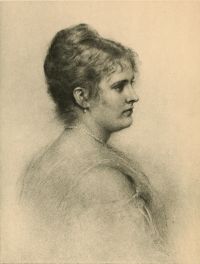 Maud Howe,
Atalanta in the South
(1886)
“ It is strange, is it not, that she can not give up one day for yours?" "What an ingenious statement of the case," murmured Margaret. "O woman! marvellous mixture of dove and serpent, how is a poor helpless, clumsy man to resist you?" whispered Rondelet. "I really am not aware," began the General, looking severely at Margaret, "that my daughter has any authority to refuse invitations in my name. You may count on me to-morrow, my dear madam, as on all other occasions when I may have the good fortune to enjoy the society of so charming a lady as yourself." ”
Maud Howe,
Atalanta in the South
(1886)
“ She had been a help to him, with her sober, conscientious work, her simple, earnest endeavor to fill the destiny chosen for her. "She does not know," thought Philip, "that such a career to a woman can only be a consolation. Women should only work when they cannot love. She knows nothing of love, and till she loves can know nothing of life." "Have I really helped you?" queried Margaret, all the chivalry of her nature thrilling at this admission of her strength and his dependence. ”
Maud Howe,
Atalanta in the South
(1886)
“ M. Feuardent, I shall consider you in the light of an animated society-newspaper, through whose columns I may gather something of what my friends in New Orleans are doing," said Madame Bienveillance. Poor Robert was at a loss to answer her. He had lived so entirely in his own emotions for weeks past that he had neither thought nor cared about the rest of the world. He only knew about Margaret; and he was on the point of yielding to the lover's impulse to talk of his beloved, even to a stranger, when a step was heard on the path and a tall, gaunt figure approached them. ”
Thomas Wentworth Higginson,
Carlyle's laugh, and other surprises
(1909)
“ She lived to refute much early criticism or hasty judgment, and this partly from inward growth, partly because the society in which she moved was growing for itself and understood her better. The wife of a reformer is apt to be tested by the obstacles her husband encounters; if she is sympathetic, she shares his [288] difficulties, and if not, is perhaps criticised by the very same people for not sharing his zeal. Mrs. Howe, moreover, came to Boston at a time when all New Yorkers were there regarded with a slight distrust ”
Samuel Richardson,
Clarissa Harlowe; or the history of a young lady…
“ Would any body, my dear Miss Howe, wish to marry, who sees a wife of such a temper, and blessed with such an understanding as my mother is noted for, not only deprived of all power, but obliged to be even active in bringing to bear a point of high importance, which she thinks ought not to be insisted upon? ”
