“ Perhaps this question, which has so long puzzled the literary world, may be incapable of a categorical answer, but it seems to us essentially to consist of fine thoughts, deeply felt, and expressed in vivid and melodious language. Poets and poetesses see farther than other people, feel more deeply, and utter what they see and feel better. ”
Poetess
Definition and stakes
The concept of the "poetess" refers to a female poet, historically admired for her lyrical sensitivity and emotional depth. Authors such as William Anderson praised her ability to "see farther" and "feel more deeply," while Metta Victoria Fuller Victor portrayed her as a vessel through which beauty becomes poetry.
Donald Grant Mitchell underscored her cultural impact, presenting her as a muse who inspired poetic creation, and Arthur Davison Ficke focused on her symbolic embodiment through images like "perfume" or "music." From Nathaniel Parker Willis’s elevation of love to Rita’s contemplation of poetry as a divine gift, the poetess appears both as an earthly figure and a transcendent presence, connecting human experience with spiritual idealism.
Quotes about “poetess”
author:Metta Victoria Fuller Victor, Poems of Sentiment and Imagination (1851)
“ That wraps her spirit in such ecstasy. Then had you known what 'tis to feel the charm Of all that's beautiful in our fair earth; For her mind fed on loveliness, nor form, Real nor spiritual, that has its birth, But was familiar to her delicate eye, Until her spirit became poetry! And her I loved for beauty that is given To make us less of earth and more of heaven. ”
 Donald Grant Mitchell,
English Lands, Letters and Kings…
Donald Grant Mitchell,
English Lands, Letters and Kings…
“ If not a poet, she led poets into gracious ways of speech. Her culture, her clear perceptions, her love of pageants even, her intolerance of all forms of dulness or slowness, her very vanities—were all of them stimulants to those who could put glowing thought into musical language. Her high ruff, her jewelled corsage, her flashing eye, her swift impulses, her perils, her triumphs, her [312] audacities, her maidenhood—all drew flatteries that heaped themselves in songs and sonnets. So live a woman and so live a Queen magnetized dulness into speech. ”
:Mary Elizabeth Blake, Mexico, picturesque, political… (1888)
“ Never has the loveliness or the virtue of woman shone more resplendently than when lifted upon the wings of poetry into the realms of the ideal; as when proclaimed in rhythmic cadence by the lyre of the poet, whose sensitive and passionate soul is alone capable of comprehending her. Her beauty, her tenderness, her smiles, her tears, have been the inspiration of the names that live through ages. ”
 Frances Fuller Victor,
The New Penelope
(1877)
Frances Fuller Victor,
The New Penelope
(1877)
“ His scornful lips upon the instant sing, And all his pulses leap with ecstasies. 'Tis love the poet wants; he cannot live Without caressing and without caress, Which all to charity his fellows give; But I will wrap his soul in tenderness, And straightway from his lips will burst a song All loving hearts shall echo and prolong. POET. O Earth, and Sky, and Flowers, and Streams agushing, God made ye beautiful to make us blest: O bright-winged Songsters through the blue air rushing ”
 Nathaniel Parker Willis,
Famous Persons and Places
Nathaniel Parker Willis,
Famous Persons and Places
“ Did she know the immortal honor and light poured upon woman by the love of genius? Did she know how this common and oftenest terrestrial passion becomes fused in the poet’s bosom with celestial fire, and, in its wondrous elevation and purity, ascends lambently and musically to the very stars? ”
Rita, The Mystery of a Turkish Bath
“ They say to you, oh Poet, ‘Perfect those gifts of your higher nature—yet be not of them vainglorious, since, humanly speaking, they are not yours, but lent for a purpose, and the brief space of earth-life.’ Look upon every beautiful thought, every gift of expression, as the direction of One who has dowered you with the possibility of opening other eyes to the beauty, and other minds to the understanding of such expression. ”
 Arthur Davison Ficke,
Chats on Japanese Prints
Arthur Davison Ficke,
Chats on Japanese Prints
“ The poet, when he wishes to convey the impression of a beautiful woman, does not set out her features and her stature and all the details of her aspect. He tries to awaken some realization of her by a bold and fantastic leap of the imagination straight to the heart of the matter—he makes her a perfume, a light, a music, a memory of goddesses. ”
 Oliver Wendell Holmes Sr.,
The Autocrat of the Breakfast-Table
(1858)
Oliver Wendell Holmes Sr.,
The Autocrat of the Breakfast-Table
(1858)
“ I will call on her whom the dead poets believed in, whom living ones no longer worship,—the immortal maid, who, name her what you will,—Goddess, Muse, Spirit of Beauty,—sits by the pillow of every youthful poet, and bends over his pale forehead until her tresses lie upon his cheek and rain their gold into his dreams. ”
 Percy Bysshe Shelley,
The Prose Works of Percy Bysshe Shelley…
(1897)
Percy Bysshe Shelley,
The Prose Works of Percy Bysshe Shelley…
(1897)
“ They tell us that these souls, flying like bees from flower to flower, and wandering over the gardens and the meadows, and the honey-flowing fountains of the Muses, return to us laden [Pg 121] with the sweetness of melody; and arrayed as they are in the plumes of rapid imagination, they speak truth. For a Poet is indeed a thing ethereally light, winged, and sacred, nor can he compose anything worth calling poetry until he becomes inspired, and, as it were, mad, or whilst any reason remains in him. ”
 Edgar Allan Poe,
The Poetic Principle
(1850)
Edgar Allan Poe,
The Poetic Principle
(1850)
“ He feels it in the beauty of woman — in the grace of her step — in the lustre of her eye — in the melody of her voice — in her soft laughter, in her sigh — in the harmony of the rustling of her robes. ”
Samuel Langhorne Clemens, Sketches by Mark Twain (1879)
“ I do not remember the rest; but, taken altogether, it seems to me that poem is the noblest tribute to woman that human genius has ever brought forth— (laughter) —and I feel that if I were to talk hours I could not do my great theme completer or more graceful justice than I have now done in simply quoting that poet's matchless words. (Renewed laughter.) The phases of the womanly nature are infinite in their variety. Take any type of woman, and you shall find in it something to respect, something to admire, something to love. ”
A Collection of Old English Plays…
“ Goe, goe, thou canst not write; 'tis but my calling The Muses helpe, that I may be inspir'd. Cannot a woman be a Poet, Sir?Poet. Yes, Madam, best of all; for Poesie Is but a feigning; feigning is to lye, And women practise lying more than men.Onae. Nay, but if I shoo'd write I woo'd tell truth: How might I reach a lofty straine?Poet. Thus, Madam: Bookes, Musick, Wine, brave Company and good Cheere Make Poets to soare high and sing most cleare. ”
 John Seely Hart,
Hillside Cottage
(1852)
John Seely Hart,
Hillside Cottage
(1852)
“ Love of the beautiful and sublime was with her almost a passion, and conversing with her, when animated by her favourite theme, was like reading a page of rare poetry, or gazing upon a series of paintings, the work of a well-skilled hand. ”
Oliver Wendell Holmes Sr.,
The Poet at the Breakfast-Table
(1872)
“ She can make something that looks like a rose, more or less, but it takes all the forces of the universe to finish and sweeten that blossom in your button-hole; and you may be sure that when the orator's brain is in a flame, when the poet's heart is in a tumult, it is something mightier than he and his will that is dealing with him! ”
Various, The Southern Literary Messenger…
“ With respect to the belle passion,—that has in all ages, climates and countries, constituted one of the strongest incitements to poetical genius. The imagination, warmed by impressions of feminine beauty and innocence, at once takes wing, and wanders through regions of thought and melancholy—investing the object of its idolatry with attributes and perfections which more properly belong to a purer state of being. Whether the philosophy of the subjoined stanzas is equal to their harmony, I leave to your readers to decide. ”

 William Cowper,
The Works of William Cowper
William Cowper,
The Works of William Cowper
“ The poet obeyed her command, and from the lively repartee of familiar conversation arose a poem of many thousand verses, unexampled perhaps both in its origin and excellence—a poem of such infinite variety, that it seems to include every subject and every style without any violation of harmony and order; which delineates nature, under her most attractive forms, and breathes a spirit of the purest and most exalted morality. ”
 G. P. R. James,
One in a Thousand; or, The Days of Henri Quatre
G. P. R. James,
One in a Thousand; or, The Days of Henri Quatre
“ It is not impossible that the very picturesque beauty of its situation might be the reason why it had been selected by one who had more poetry in her heart and soul than half the poets of the land in which she lived. ”
 William Shakespeare,
Love's Labour's Lost
(1598)
William Shakespeare,
Love's Labour's Lost
(1598)
“ And when Love speaks, the voice of all the gods Make heaven drowsy with the harmony. Never durst poet touch a pen to write Until his ink were temp'red with Love's sighs; O, then his lines would ravish savage ears, And plant in tyrants mild humility. ”
 Mrs. Jameson,
The Romance of Biography (Vol 2 of 2…
Mrs. Jameson,
The Romance of Biography (Vol 2 of 2…
“ Is it not singular that in a country which was the cradle, if not the birth-place of modern poetry and romance, the language, the literature, and the women, should be so essentially and incurably prosaic? ”
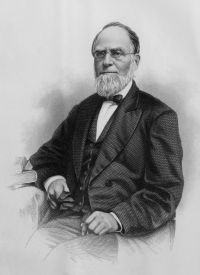 John S. C. Abbott,
The Wonders of the World
(1856)
John S. C. Abbott,
The Wonders of the World
(1856)
“ Who but a mighty poet, one seeing with ‘the vision and the faculty divine’—what, but a transfusing, all-conquering imagination—would have dared the attempt to compose another poem on the same subject, or to carry this to a greater hight of sublimity, by melting it down anew, so to speak, and pouring it out into a vaster, more glorious mold? ”
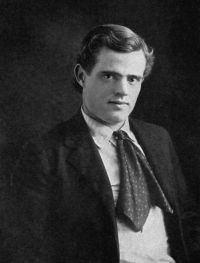 Jack London,
On the Makaloa Mat: Island Tales
Jack London,
On the Makaloa Mat: Island Tales
“ She was his poem of woman, a lyric delight, a three-dimensions of flesh and spirit delicious, a fate and a good fortune written, ere the first man and woman were, by the gods whose whim had been to make all men and women for sorrow and for joy. ”
 Ben Jonson,
Discoveries Made Upon Men and Matter and Some Poems
Ben Jonson,
Discoveries Made Upon Men and Matter and Some Poems
“ But before we handle the kinds of poems, with their special differences, or make court to the art itself, as a mistress, I would lead you to the knowledge of our poet by a perfect information what he is or should be by nature, by exercise, by imitation, by study, and so bring him down through the disciplines of grammar, logic, rhetoric, and the ethics, adding somewhat out of all, peculiar to himself, and worthy of your admittance or reception. ”
J. B. Priestley, Brief Diversions: Being Tales, Travesties and Epigrams
“ Where once were mighty poets, we have but known A fugitive or sterile muse of late: Across the sundering floods and leagues of foam, On younger peoples in a riper clime There falls no blight of song, but in full tide Of passion, poets have blossomed year by year. ”
 John Stuart Mill,
Autobiography
John Stuart Mill,
Autobiography
“ To her outer circle she was a beauty and a wit, with an air of natural distinction, felt by all who approached her: to the inner, a woman of deep and strong feeling, of penetrating and intuitive intelligence, and of an eminently meditative and poetic nature. ”
Anonymous, How to Write a Novel: A Practical Guide to the Art of Fiction
“ Now I designate Beauty as the province of the poem, merely because it is an obvious rule of Art that effects should be made to spring from direct causes—that objects should be attained through means best adapted for their attainment—no one as yet having been weak enough to deny that the peculiar elevation alluded to, is most readily attained in the poem. Now the object Truth, or the satisfaction of the intellect, and the object Passion, or the excitement of the heart, are, although attainable, to a certain extent, in poetry, far more readily attainable in prose. ”
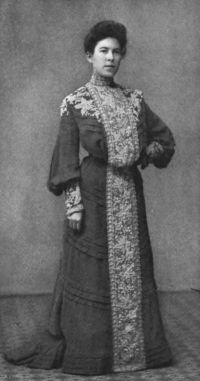 Jessie Belle Rittenhouse,
The Younger American Poets
Jessie Belle Rittenhouse,
The Younger American Poets
“ Her work falls under two distinct heads,—poetry of the intellect and poetry of the heart,—and while her most emotional verse has a fine subtlety of thought, and her most intellectual a subtlety of emotion, making them not crassly one or the other, none the less is the distinction apparent, and it is easy to put one’s hand upon the work into which her own temperament has entered and which her creative moods have shaped. ”
 George Edward Woodberry,
Studies in letters and life
(1890)
George Edward Woodberry,
Studies in letters and life
(1890)
“ Other poets, in style, have set forth the object plainly, and left it to work its will on the heart and imagination, unaided by the romantic spell, the awakening glow, the silent but imperative suggestion, the overmastering passion that takes heart and imagination captive; and they have not lost their reward. ”
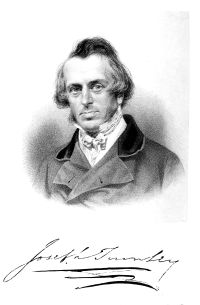 Joseph Turnley,
The Language of the Eye
(1856)
Joseph Turnley,
The Language of the Eye
(1856)
“ Poetry, painting, and music are sciences peculiarly beholden to genius: poetry is the language of pure passion; painting is silent poetry; music is the accent of passionate expression. Some do not allow this grand power to be one of the properties of woman ”
Various, The Southern Literary Messenger… (1836)
“ Among those high qualities which give her beyond doubt, a title to the sacred name of poet, are an acute sensibility to natural loveliness—a quick and perfectly just conception of the moral and physical sublime—a calm and unostentatious vigor of thought—a mingled delicacy and strength of expression—and above all, a mind nobly and exquisitely attuned to all the gentle charities and lofty pieties of life. ”
 Samuel Taylor Coleridge,
The Literary Remains of Samuel Taylor Coleridge…
Samuel Taylor Coleridge,
The Literary Remains of Samuel Taylor Coleridge…
“ But the love of the marvellous, the deeper sensibility, the higher reverence for womanhood, the characteristic spirit of sentiment and courtesy, these were the heir-looms of nature, which still regained the ascendant, whenever the use of the living mother-language enabled the inspired poet to appear instead of the toilsome scholar. ”
 Leslie Stephen,
Hours in a Library, Volume 1
Leslie Stephen,
Hours in a Library, Volume 1
“ What you really love in the picture or the poem is the painter or the poet whom it brings into sympathy with you across the gulf of time. He tells you what are the thoughts which some fragment of natural scenery, or some incident of human life, excited in a mind greatly wiser and more perceptive than your own. ”
Walter Richard Cassels, Eidolon; or, The Course of a Soul…
“ I have attempted to symbol the course of a Poet's mind from a state wherein thought is disordered, barren and uncultivated, to that which is ordered and swayed by the true Spirit of Poetry, and holds its perfect creed. ”
Donald Grant Mitchell,
English Lands, Letters and Kings…
“ Now, in reading these two poems of such opposite tone, and yet of agreeing verbal harmonies, one would say—here is a singer, serene, devout, of delicate mould, loving all beautiful things in heaven and on earth. One would look for a man saintly of aspect, deep-eyed, tranquil, too ethereal for earth. ”
 Margaret Fuller,
Life Without and Life Within; or…
Margaret Fuller,
Life Without and Life Within; or…
“ FRAGMENTARY THOUGHTS FROM MARGARET FULLER'S JOURNAL. Poesy.—The expression of the sublime and beautiful, whether in measured words or in the fine arts. The human mind, apprehending the harmony of the universe, and making new combinations by its laws.Poetry.—The sublime and beautiful expressed in measured language. It is closely allied with the fine arts. It should sing to the ear, paint to the eye, and exhibit the symmetry of architecture. If perfect, it will satisfy the intellectual and moral faculties no less than the heart and the senses. ”
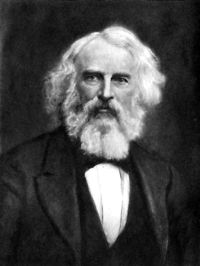 Henry Wadsworth Longfellow,
In the Harbor — Elegiac Verse
(1882)
Henry Wadsworth Longfellow,
In the Harbor — Elegiac Verse
(1882)
“ So by the art of the poet our common life is uplifted, So, transfigured, the world floats in a luminous haze.VIILike a French poem is Life; being only perfect in structure When with the masculine rhymes mingled the feminine are. ”
“ Votaries of pleasure still, where'er she dwells, Near barren rocks, in palaces, or cells, Oh grant a poet leave to recommend, (A poet fond of nature and your friend,) Her slighted works to your admiring view, Her works must needs excel who fashion'd you. ”
Donald Grant Mitchell,
Reveries of a Bachelor; or, A Book of the Heart
“ Her words sparkle and flow hurriedly, and with the prettiest doubleness of meaning. Naturalness she copies and she scorns. She accuses herself of a single expression or regard, which nature prompts. She prides herself on her schooling. She measures her wit by the triumphs of her art ”
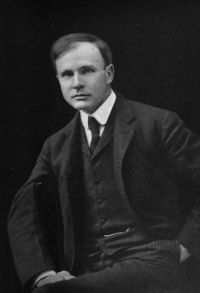 Bliss Perry,
A Study of Poetry
Bliss Perry,
A Study of Poetry
“ To give the body of the time the form and pressure of individual feeling, of individual artistic mastery of the language of one's race and epoch;—this, no less than the other, is the task and the opportunity of the lyric poet. ”
 Susanna Moodie,
Life in the Clearings versus the Bush
Susanna Moodie,
Life in the Clearings versus the Bush
“ But there is not a doubt that those born and brought up among scenes of great natural sublimity and beauty, imbibe this feeling in a larger degree, and their minds are more easily imbued with the glorious colouring of romance,--the inspired visions of the poet. ”
Various, The Continental Monthly , Vol. 2 No…
“ The reason is that Poetry—the hymn which should elevate the soul in Nature-worship—instead of reflecting in every simile, every image, directly or indirectly, the deep mystery of life which intuitively associates with itself that of love and all loveliness, is satisfied with mere comparisons based on casual and petty resemblance. ”
Jane Campbell, Florence Earle Coates (1895)
“ There remain, however, poetic springs deep in human consciousness; and though thought and sentiment may be intelligently expressed in prose, it is the welding of thought to rhythm, the union of the pleasures of intellect and of sense which appeal most strongly to our perception of the beautiful. ”
 Edward Albert,
A history of English literature
(1923)
Edward Albert,
A history of English literature
(1923)
“ Poetry. (a) The Lyric. The period is rich in lyrical poetry of a peculiar kind. The theme is chiefly love or religion. Most of the love-poems are dedicated to ladies of the usual literary convention, such as Althea, Celia, and Phyllis, who both in name and nature resemble the stock characters of the artificial pastoral poetry. The language addressed to such creations cannot be that of deep and genuine passion; it is rather that of polite compliment, verbal quibble, or courtly jest. This type of lyric is a charming literary exercise, but hardly the inspired [179] searching of the lover’s heart. ”
