Mughals

Definition and stakes

Lanka Sundaram,  Mughal Land Revenue System (1929)

“ Everything is a matter of distinction and imperial favour, while the son of a nobleman may enjoy a greater Mansab or none at all. Everything is ephemeral in such a society.
Under the Mughals, the Sarkar is the territorial unit while the Mahal is a revenue division; or, to put it in another way, the Mahal is the fiscal unit while the Parganah is a fixed historical division. All the revenue documents of the Mughal times have, as their avowed objects, the extension of cultivation on the one hand, and the improving of the crops on the other
”
Source: Wikisource

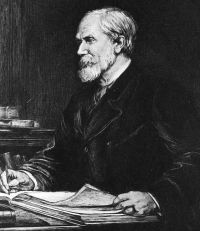
Portrait of Henry Yule Henry Yule,  Hobson-Jobson — M (1903)

“ Beg is the characteristic affix of the Mughal's name, as Khān is of the Pathān's. Among the Mahommedans of S. India the Moguls or Mughals constitute a strongly marked caste. [They are also clearly distinguished in the Punjab and N.W.P.] In the quotation from Baber below, the name still retains its original application. The passage illustrates the tone in which Baber always speaks of his kindred of the Steppe, much as Lord Clyde used sometimes to speak of "confounded Scotchmen."
In Port. writers Mogol or Mogor is often used for "Hindostān," or the territory of the Great Mogul.
”
Source: Wikisource

G. B. Malleson,  Rulers of India: Akbar

“ The Yusufzais not only repulsed the first attack of the Mughals, but when reinforcements, sent by Akbar under his special favourite, Rájá Bírbal, joined the attacking party, they too were driven back with a loss of 8,000 men, amongst whom was the Rájá.3 It was the severest defeat the Mughal troops had ever experienced. To repair it, the Emperor despatched his best commander, Rájá Todar Mall, supported by Rájá Mán Singh, of Jaipur. These generals manoeuvred with great caution, supporting their advance by stockades, and eventually completely defeated the tribes in the Khaibar Pass. ”
Source: Gutenberg

Get perspective with Kwize: daily news enlightened by great literature