“ It is quite impossible to doubt the sincerity of the Plymouth settlers, the Pilgrims, or Fathers of New-England, who escaping over sea laid the foundations of a mighty empire on the perpetual rocks of New-Plymouth, and along the desolate shores of a new world, or their belief in witchcraft and sorcery, whatever we may happen to believe now ”
New Plymouth
Definition and stakes
New Plymouth, a city in New Zealand’s Taranaki region, is named after the English city of Plymouth and functions as the region’s economic and cultural center. Authors such as Thomas Wallace Knox and A. S. Burbank have examined its historical development, from its founding in 1841 to its industrial changes and interactions with Māori resistance.
While some sources, like William Bradford’s descriptions of the Pilgrims, emphasize the American colony, others underscore New Plymouth’s distinctive fusion of colonial history and modern character. The city’s story, influenced by its geography, administration, and population changes, illustrates a dynamic balance between tradition and current progress.
Quotes about “New Plymouth”
A. S. Burbank, Guide to Historic Plymouth: Localities and Objects of Interest
“ The character of Plymouth’s industrial life has entirely changed within a half century. Within the memory of men now living, the time was when the town boasted a fleet of seventy-five fishermen, and enjoyed prestige as a fishing port. In common with other seaport towns of New England, this industry has departed, but thriving manufactories have risen in its place and coal barges and steamships are doing business at the port, superseding the old fishing schooners which once crowded the wharves or whitened the harbor with their sails. ”
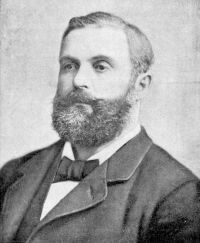
Thomas Wallace Knox,
The Boy Travellers in Australasia
(1889)
“ New Plymouth has a population of some four thousand or more, and is the port of a section of country which is said to be very fertile, as it can grow nearly every English fruit and cereal. It was settled in 1841, but suffered much during the Maori wars, as most of the natives in the district of Taranaki were hostile. They showed us several factories, saw-mills, and a large flouring-mill, and they called our attention to an establishment for making iron from the sands of the sea-shore. ”
A. S. Burbank, Guide to Historic Plymouth: Localities and Objects of Interest
“ New Plymouth lies on the slope of a hill stretching east toward the sea coast, with a broad street about a cannon shot of eight hundred (yards) long, leading down the hill, with a (street) crossing in the middle northwards to the rivulet and southwards to the land. [1] The houses are constructed of hewn planks, with gardens also enclosed behind and at the sides with hewn planks, so that their houses and court-yards are arranged in very good order, with a stockade against a sudden attack; and at the ends of the street are three wooden gates. ”
William Bradford, Bradford's history of the Plymouth settlement… (1909)
“ Then turn your eyes upon our Pilgrims, and watch them through their persecution in mediæval England; their flight to Holland; their hard sojourn there; their voyage across the wide seas of those days, and their settlement at New Plymouth—“in a country devoid of all civilized inhabitants, given over only to savage and brutish men, who range up and down, little differing from the wild beasts themselves.... ”
Samuel Adams Drake,
Nooks and Corners of the New England Coast
“ Plymouth is the American Mecca. It does not contain the tomb of the Prophet, but the Rock of the Forefathers, their traditions, and their graves. The first impressions of a stranger are disappointing, for the oldest town in New England looks as fresh as if built within the century. There is not much that is suggestive of the old life to be seen there. Except the hills, the haven, and the sea, there is nothing antique; save a few carefully cherished relics, nothing that has survived the day of the Pilgrims. ”
Helen T. Briggs, A guide to Plymouth and its history (1938)
“ The Plymouth Antiquarian Society is the owner of the Harlow House, and takes great thought and interest in reviving there the human element in daily life in a momentous episode of history,—the settlement of the Plymouth Colony. “In a short time other causes sprung up to bind the Pilgrims with new cords to their chosen land. Children were born, and the hopes of a future generation arose, in the spot of their new habitation. ”
William Bradford, Bradford's history of the Plymouth settlement… (1909)
“ To prevent any further scattering from this place and weakening of it, it was thought best to give out some good farms in the neighbourhood to special persons who would promise to live at New Plymouth, likely to be helpful to the church and commonwealth, and so tie the lands to New Plymouth as farms for its inhabitants, so that their cattle and their ploughed land might be kept there by servants, and they retain their dwellings here. ”
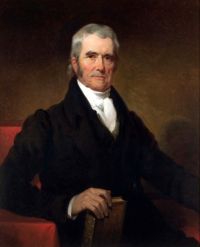
John Marshall,
The Life of George Washington, Vol…
“ Settlement at New Plymouth.After exploring the coast, they chose a position for their station, to which they gave the name of New at New Plymouth. On the 11th of November, before landing, a solemn covenant was signed by the heads of families, and freemen, in which, after reciting that they had undertaken to plant a colony for the glory of God, and for the honour of their King and country, and professing their loyalty to their sovereign Lord King James, they combined themselves into a body politic, for the purpose of making equal laws for the general good. ”
Lyon Gardiner Tyler,
England in America, 1580-1652
“ In 1633 the people of Plymouth established a fort on Connecticut River above the Dutch post, so as to intercept the Indian trade, and in 1639 they renewed the ancient league with Massasoit.23 In 1640 they had a dispute with Massachusetts over the boundary-line, which was arranged by a compromise, and in 1641 William Bradford deeded to the freemen of the corporation of New Plymouth the patent of 1630, granted by the Council for New England to him as trustee for the colony.24 Finally, in 1643, Plymouth became a member of the New England confederation. ”
William Bradford, Bradford's history of the Plymouth settlement… (1909)
“ We hope you will pardon us for our imperfect writing in your language, and take it in good part; through want of practice we cannot so well express what we understand, nor understand everything as full we should. We humbly pray the Lord for His mercy’s sake that He will take both us and you into His gracious keeping and protection. By the Governor and Council of New Plymouth, Your Worships’ very good friends and neighbours, etc. ”
William Bradford, Bradford's history of the Plymouth settlement… (1909)
“ The Adventurers in England to the Settlers at New Plymouth:Loving Friends,As your sorrows and afflictions have been great, so our crosses and interruptions in our proceedings here have not been small. After we had, with much trouble and expense, sent the Parragon away to sea, and thought all the trouble was at an end, about fourteen days after she returned leaking dangerously and battered with storms, so that she had to be put into dock and have £100 spent on her. All the passengers lay upon our hands for six or seven weeks, and much discontent was occasioned. ”
Edward Marsh, The Collected Poems of Rupert Brooke… (1918)
“ I telephoned to Browne, flew to some agents, and in consequence I sail from New York on May 29th, and reach Plymouth—oh blessed name, oh loveliness! Plymouth—was there ever so sweet and droll a sound? Drake's Plymouth, English Western Plymouth, city where men speak softly, and things are sold for shillings, not for dollars; and there is love, and beauty, and old houses; and beyond which there are little fields, very green, bounded by small piled walls of stone ”
Agnes Rothery, The Old Coast Road
“ For this reason the permanent position of Plymouth in our history is forever assured. Old age, which may diminish the joys of youth, preserves inviolate memories which nothing can destroy. The place whose quiet fame is made is surer of the future than the one which is on the brink of fabulous glory. It is impossible to overestimate the significance of this spot.The Old Coast Road—the oldest in New England—began here and pushed its tortuous [Pg 203] way up to Boston along the route we have so lightly followed. ”
Helen T. Briggs, A guide to Plymouth and its history (1938)
“ The facilities of the Antiquarian Society are much used by the Plymouth Schools, and also by other schools, sometimes at a considerable distance. Both houses also give much pleasure, and a better understanding of Plymouth and New England, to the many visitors who see them each summer. ”
1911 Encyclopædia Britannica (1911)
“ From 1900 to 1905 the capital invested in manufactures increased 83% and the value of the product 101%. Large quantities of cranberries are raised in the township. Plymouth is a port of entry, but its foreign commerce is unimportant; it has a considerable coasting trade, especially in coal and lumber. The township owns its waterworks. Plymouth was the first permanent white settlement in New England, and dates its founding from the landing here from the “Mayflower” shallop of an exploring party of twelve Pilgrims, including William Bradford, on the 21st of December (N.S.) 1620. ”
Emmanuel Altham, Three Visitors to Early Plymouth
“ Indians who performed the massacre of 1622 in Virginia. [63] Edward Winslow, who left Plymouth for England on the Anne, Sept. 10, 1623. [64] The other ship was the Anne, of 140 tons, William Peirce, master. The Company of Adventurers for New Plymouth (sometimes called by variants of this name) was the organization of merchants who helped finance the Plymouth settlement. They “adventured” their money; the Pilgrims were “planters,” although in modern estimation they were more adventurous. ”
William Bradford, Bradford's history of the Plymouth settlement… (1909)
“ The warfare against the countless forms of violence, injustice, and falsehood will never cease: may the example of our brothers exalt and purify our aims!A few words as to the vicissitudes of the precious manuscript of this book.As the author tells us, he began to write down this record of the affairs of the New Plymouth Settlement in the year 1630, ten years after their arrival, continuing the writing of it from time to time up to the year 1650, when he compiled the Register of Passengers on the Mayflower, their marriages, the birth of their descendants, and their deaths. ”
Emmanuel Altham, Three Visitors to Early Plymouth
“ Pemberton’s ship and ours in this country, we both lighted upon one harbor, [120] where the New Plymouth Colony kept a stage for their fishing. Which stage they of Pemberton’s ship, by order from him, seized upon by a wile; but in the interim were glad to compound, or else it had cost them the loss of their lives and ship. For the plantation sent twenty men in arms to regain it by land, and our ship [121] lay by theirs to fight with them if any onset were given. But they, loving to sleep in a whole skin, laid down their arms and abandoned the plantation’s right ”
Samuel Adams Drake,
Nooks and Corners of the New England Coast
“ The gardens and house-plots, nevertheless, thrive if they have moisture enough. Few vessels were lying in the harbor, for Plymouth has at present little or no commerce; yet of these, two small colliers were larger than the little Mayflower that carried a greater than Cæsar and his fortunes. [176] The Pilgrims brought the name of their settlement along with them, though Captain John Smith gives it first the Indian name of Accomack, changed by Prince Charles to Plimouth, as it appears on the map accompanying "Advertisements for the Unexperienced." ”
Agnes Rothery, The Old Coast Road
“ In an established community, indeed, such a rate of increase would be rapid, but was not sufficient to raise in New England a power which could overcome Indians and Dutchmen and Frenchmen and assert its will in opposition to the Crown. It is when we view the founding of Plymouth in relation to what came afterward, that it assumes the importance which belongs to the beginning of a new era. ”
Mrs. J. B. Webb, The Pilgrims of New England
“ The new settlers had always been on very friendly terms with the elder colony of Plymouth; and visits were frequently exchanged between the Governors and others of the inhabitants, which, though performed with much difficulty and even danger, were a source of mutual pleasure to the two bands of British emigrants. If the men of Plymouth regarded with some feeling of jealous anxiety the growing power and greatness of their rival, it was but natural. ”
Benson John Lossing,
The Pictorial Field-Book of the Revolution…
“ Founding of Plymouth.—Destitution and Sickness.—Death of Carver.—Election of Bradford.—Defiance of the Indians 444Plymouth, in memory of the hospitalities which they had received at Plymouth, in England, and in a few days they commenced the erection of dwellings. The exposure of the explorers, and of others who had reached the shore by wading, had brought on disease, and nearly one half of the company were sick when the first blow of the ax was struck in the primeval forest. Faith and hope nerved the arms of the healthy, and they began to build. "This was the origin of New England ”
Edwin Balmer,
Waylaid by Wireless
(1909)
“ Dunneston. But late in August, as the travellers were working their ways slowly to the ports to take ship back to America, Preston found them all at Plymouth. The very next morning after his arrival the Englishman entered the breakfast-room of his same hotel upon the Hoe. To Americans, Plymouth is the place where the first Pilgrims put in with the Mayflower, and where they last prayed and provisioned before setting sail for the New England of the West. But to the English it had been the stronghold and the principal port of their southwest coast for hundreds of years before. ”
Lyon Gardiner Tyler,
England in America, 1580-1652
“ It overflowed into Plymouth, and in twelve years more the population had increased to three thousand.25 The new settlers were a miscellaneous set, composed for the most part of "unruly servants" and dissipated young men, whose ill conduct caused the old rulers like Bradford to question "whether after twenty years' time the greater part be not grown worser."26 Nevertheless, the people increased their "outward estate," and as they scattered in search of fertile land, Plymouth, "in which they lived compactly till now, was left very thin and in a short time almost desolate." ”
Ethel J. R. C. Noyes, The women of the Mayflower and women of Plymouth colony (1921)
“ Intercourse between Plymouth and the newly established colonial neighbors became frequent, leading to interchange of visits and even of residence. The newcomers were duly sensible of what they owed to the Plymouth settlers, who had blazed the way.The opening of their second decade in the New World showed great contrasts to those Plymouth women who remembered what the first year and those immediately following had been. Now, they were able to see and hear of the experiences of others, close at hand, with much in common. ”
A Journal of the Pilgrims at Plymouth… (1963)
“ The towns abound with young tradesmen, and the hospitals are full of the ancient; the country is replenished with new farmers, and the almshouses are filled with old laborers; many there are who get their living with bearing burdens, but more are fain to burden the land with their whole bodies. Multitudes get their means of life by prating, and so do numbers more by begging. ”
Agnes Rothery, The Old Coast Road
“ Because new housekeepers come into existence with each new day. So, if there be any man who comes to Plymouth who does not know the story of Plymouth Rock, it is here set down for him, as accurately and briefly as possible. ”
William T. Davis, Plymouth memories of an octogenarian (1906)
“ Thus packets were running from Boston to every town of importance on the New England coast. Those to the nearer places were sloops as to Salem, Newburyport, Portsmouth, Barnstable, Plymouth and Provincetown; those to places a little more distant topsail schooners; those to Hartford, New York, Philadelphia, Baltimore, Richmond, Savannah and Charleston, brigs, and those to Mobile and New Orleans, ships. Plymouth had a very considerable amount of freight to distribute, cotton cloth, nails, anchors, hollow ware, cordage, fish and imported iron, sugar and molasses. ”
A Journal of the Pilgrims at Plymouth… (1963)
“ Although there is little talk of tragedy in this volume, we know that more than half of the original party died during the first year at Plymouth. Considering their primitive living conditions, it is a wonder that so many did survive the “general sickness” while wading to and from the shallop, and working hard to develop new skills in the harsh and alien environment of a strenuous New England winter. Another tragedy is only presaged here, in the white man’s facile rationalization of his usurpation of lands which had long been used by Indians. ”
A Journal of the Pilgrims at Plymouth… (1963)
“ But seeing we were friends, they welcomed us with such food as they had, and we bestowed a small bracelet of beads on them. Thus far we are sure the tide ebbs and flows.Having here again refreshed ourselves we proceeded in our journey, the weather being very hot for travel, yet the country so well watered that a man could scarce be dry, but he should have a spring at hand to cool his thirst, beside small rivers in abundance. But the savages will not willingly drink but at a springhead. ”