Ole

Definition and stakes

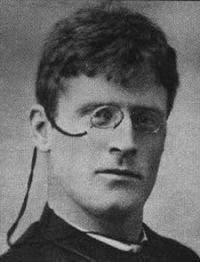
Portrait of Bjørnstjerne Bjørnson Bjørnstjerne Bjørnson,  A Happy Boy

“ Ole, quickly: "That is it, yes; I ran a madman's race. I strove against the girl until the tree split. But let by-gones be by-gones; the wind, not the snow, beats down the grain; the rain-brook does not tear up large stones; snow does not lie long on the ground in May; it is not the thunder that kills people."
They all four laugh; the school-master says:
"Ole means that he does not want you to remember that time any longer; nor you, either, Thore."
”
Source: Gutenberg

Sara Chapman Thorp Bull,  Ole Bull: A Memoir

“ That Ole Bull’s success on Saturday evening was very great, it is unnecessary to say; for no audience (except the French) , however critical and severe, can escape the electrical touch of his genius. One word, one glance, one sweep, if it is informed with magnetic power, leaves all rules in the rear, and asserts its own supremacy. Here is the characteristic and charm of Ole Bull. Like Paganini, he is an exceptional person. Like every man of remarkable and pronounced genius, he is a phenomenon. He is his own standard; he makes his own rules. ”
Source: Gutenberg

Portrait of Bjørnstjerne Bjørnson Bjørnstjerne Bjørnson,  In God's Way: A Novel

“ And what made Ole do all this? Because he was ambitious and wanted to become an apostle, which was more than to be either king, emperor, or pope; Ole had told Edward Kallem that himself. But, in order to become an apostle, he had to find out "God's ways," and those ways began down at Martha's; there he meant to learn how to work miracles, to wrestle with the heathen and the wild beasts and poisonous snakes, and to calm a cyclone. Then there was a roar. But just at that moment the school-bell rang, and, shouting with laughter, the boys had only time to run past Ole back to their lessons again. ”
Source: Gutenberg

Get perspective with Kwize: daily news enlightened by great literature