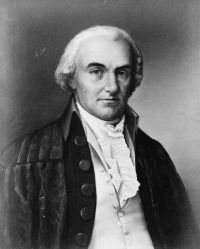
Oliver Ellsworth (1745–1807) was a Founding Father, jurist, and key figure in shaping early American governance. As a delegate to the 1787 Constitutional Convention, he advocated for the Connecticut Compromise, which balanced state representation, and played a central role in drafting the Judiciary Act of 1789. His tenure as chief justice (1796–1800) underscored federal judicial authority and discouraged separate opinions.
The 1911 Encyclopædia Britannica highlights his legal expertise, while his decisions in New York v. Connecticut reveal his thoughtful approach to state disputes, blending constitutional principles with practical conflict resolution. Ellsworth’s influence persists in the foundational structures of the federal judiciary and his efforts to promote legal clarity amid territorial tensions.