“ Those to the southward make in goodly proportion the figure of a man reclining on his back, even to feet and eyes, while further inland are seen the narrow tube-like cones of the Organ Mountains, shooting high up into the sky, and then lower down, and around, are strewn lesser hills, sweeping and undulating from vale to vale, in an endless succession of picturesque beauty. ”
Organ Mountains
Definition and stakes
The theme of “Organ Mountains” has been addressed by authors such as John Wesley Powell, Arnold Lorand, Charles Darwin, John Charles Frémont and John Muir. It is often associated with terms like mountain, valley, geology, rock and Alps.
Quotes about “Organ Mountains”
Enos A. Mills, The Rocky Mountain Wonderland
“ The ill effects of altitude are mostly imaginary. True, climbing high into a brighter, finer atmosphere diminishes the elastic clasp—the pressure of the air—and causes physiological changes. These usually are beneficial. Climbers who become ill through mountain-climbing would also become ill in hill-climbing. In the overwhelming number of cases the lowland visitor is permanently benefited by a visit to the mountains and especially by a climb in the heights. ”
 Arnold Lorand,
Old Age Deferred
“ High mountains with such arborization generally have pure fresh air full of oxygen, and there is no drug in pharmacy that can equal this in its beneficial effects. It is a fact, established by leading physiologists, that persons living on mountains have more red blood-corpuscles than those living in the plains. When patients are sent to spots so elevated in the air as mountains with forests, we find them, as a rule, looking healthy and fresh when they return from their holiday in the fresh air. ”
 Norman Collie,
Climbing on the Himalaya and Other Mountain Ranges
“ Having tried it so often in the Himalaya, in Skye, in Norway, in the Canadian Rocky Mountains, and Switzerland, perhaps I may be biassed, but even if I never again had a chance of climbing a first-class peak in the Alps, I would return there to live the lazy, delightful, disreputable life in a tent, near the ice and the snows and the pine woods, to smell the camp fire, lie on my back all day amidst the grass and the flowers, listening to the wind, and looking at the sky and the great silent peaks. ”
 John Kirk Townsend,
Wyeth's Oregon, or a Short History of a Long Journey…
“ The rocks in the vicinity are a loose, fine-grained sandstone, the strata nearly horizontal, and no organic remains have been discovered. We have still a view of the lofty Wind-river mountains on our right hand, and they have for some days served as a guide to determine our course. On the plain, we passed several huge rhomboidal masses of rock, standing alone, and looking, at a little distance, like houses with chimneys. The freaks of nature, as they are called, have often astonished us since we have been journeying in the wilderness. ”
H. N. Hutchinson, The Story of the Hills: A Book About Mountains for General Readers
“ Now, we all know that snow and ice take a long time to melt; and thus Nature regulates and like a prudent housewife economises her precious stores. The rivers which she feeds continually, from silent snowfields and glaciers among her mountain-peaks, are the very arteries and veins of the earth; and as the blood in our 45 bodies is forced to circulate by pressure from the heart, so the rivers are compelled to flow by pressure from the great heart of the hills,—slow, steady, continuous pressure, not the quick pulses which the human heart sends through the body. ”
 John Uri Lloyd,
Etidorhpa; or, The End of Earth
“ The geologist studies the substances that are thrust from the crater of an active volcano, and from this makes conjectures regarding the strata beneath, and the force that casts the excretions out. The results must with men, therefore, furnish evidence from which to explain the cause. It is as though an anatomist would form his idea of the anatomy of the liver by the secretion thrown out of that organ, or of the lung texture by the breath and sputum. ”
 Isabella Lucy Bird,
A Lady's Life in the Rocky Mountains
(1879-1880)
“ Skeletons and bones of animals were often to be seen. A range of low, grassy hills, called the Foot Hills, rose from the plain, featureless and monotonous, except where streams, fed by the snows of the higher regions, had cut their way through them. ”
Alexander McAllan, Ancient Chinese account of the Grand Canyon…
“ In the grand caves at Pikes Peak there is an "organ," which is really no organ at all. It is a natural formation or production from which charming melodies are fetched by skilled musicians. Now if we ourselves can gravely call a musical, highly-strung rock an "Organ," may not the Ancients be excused for calling a combination of musical streams a Lute? ”
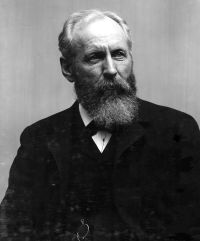 Grove Karl Gilbert,
Report on the geology of the Henry Mountains
(1877)
“ There is every reason to believe that the mountain crest marks the zone of greatest igneous activity, and that the foot-hills are as truly subsidiary from a geological point of view as they are from a topographic. ”
 Mayne Reid,
The Plant Hunters: Adventures Among the Himalaya Mountains
“ They may be found pursuing their avocation in every corner of the world—through the sequestered passes of the Rocky Mountains, upon the pathless prairies, in the deep barrancas of the Andes, amid the tangled forests of the Amazon and the Orinoco, on the steppes of Siberia, in the glacier valleys of the Himalaya—everywhere—everywhere amid wild and savage scenes, where the untrodden and the unknown invite to fresh discoveries in the world of vegetation. ”
Isabella Lucy Bird,
A Lady's Life in the Rocky Mountains
(1879-1880)
“ A grand, well-defined mountain-top it is, a nearly level acre of boulders, with precipitous sides all round, the one we came up being the only accessible one. It was not possible to remain long. One of the young men was seriously alarmed by bleeding from the lungs, and the intense dryness of the day and the rarefaction of the air, at a height of nearly 15,000 feet, made respiration very painful. There is always water on the Peak, but it was frozen as hard as a rock, and the sucking of ice and snow increases thirst. ”
 Charles Darwin,
Coral Reefs; Volcanic Islands; South American Geology…
“ But we cannot believe that the broad summit of a mountain lies buried at the depth of a few fathoms beneath every atoll, and nevertheless throughout the immense areas above-named, with not one point of rock projecting above the level of the sea; for we may judge with some accuracy of mountains beneath the sea, by those on the land; and where can we find a single chain several hundred miles in length and of considerable breadth, much less several such chains, with their many broad summits attaining the same height, within from 120 to 180 feet? ”
 John Wesley Powell,
Canyons of the Colorado
“ Wherever we look there is but a wilderness of rocks,--deep gorges where the rivers are lost below cliffs and towers and pinnacles, and ten thousand strangely carved forms in every direction, and beyond them mountains blending with the clouds. ”
H. N. Hutchinson, The Story of the Hills: A Book About Mountains for General Readers
“ These small folds become sharper and closer the nearer we get to the main chain, and evidently were formed by the same movements that uplifted the higher ranges beyond; but the force was not so great. Thus we find the great Alpine chain flanked to the north by the smaller ranges of the Jura Mountains; and on the south, side of the Himalayas we find similar smaller ranges of hills. ”
Isabella Lucy Bird,
A Lady's Life in the Rocky Mountains
(1879-1880)
“ These Foot Hills, which swell up uninterestingly from the plains on their eastern side, on their western have the appearance of having broken off from the next range, and the break is abrupt, and takes the form of walls and terraces of rock of the most brilliant colour, weathered and stained by ores, and, even under the grey sky, dazzling to the eyes. The driver thought he had understood the directions given, but he was stupid, and once we lost some miles by arriving at a river too rough and deep to be forded, and again we were brought up by an impassable canyon. ”
Various, The Catholic World, Vol. 01, April to September…
“ Every now and then we caught beautiful glimpses of the distant Alps, abruptly rising from the green level of the valley, beyond the hills clad with the dark verdure of the pine forests, piled curiously one over another, which run the whole length of the plain, forming the first steps, as it were, of those mighty Alpine mountains which rear their magnificent heights, shrouded in eternal glaciers, behind these graduated ranges. ”
 Ellen Churchill Semple,
Influences of Geographic Environment
“ Transition forms of relief between highlands and lowlands.In view of the barrier character of mountains, a fact of immense importance to the distribution of man and his activities is the rarity of abrupt, ungraded forms of relief on the earth's surface. The physiographic cause lies in the elasticity of the earth's crust and the leveling effect of weathering and denudation. Everywhere mountains are worn down and rounded off, while valleys broaden and fill up to shallow trough outlines. Transition forms of relief abound. Human intercourse meets therefore few absolute barriers on the land ”
 Harriet Beecher Stowe,
Sunny Memories of Foreign Lands
(1854)
“ Ascending the ridge we looked off upon a sleeping world. Mists lay beneath like waves, clouds, like a sea. On one side the Oberland Alps stretched along the horizon their pale, blue-white peaks. Other mountains, indistinct in color and outline, chained round the whole horizon. ”
Grove Karl Gilbert,
Report on the geology of the Henry Mountains
(1877)
“ The study of the mountains is further facilitated by their isolation. They mark a limited system of disturbances, which interrupt a region of geological calm, and structurally, as well as topographically, stand by themselves. ”
Hallam Hawksworth, The Strange Adventures of a Pebble
“ Most mountain peaks, except those of the volcanoes, are remnants of hard rock which have been left standing while the rivers and the weather cut away the softer rock around them.- 117 - IN THE HIMALAYAS THEY MIGHT CALL THESE "HILLS"High as these mountains are—we are right on the roof of the Rockies—if they were in the Himalayas they might be called "hills," because there the scenery grows so much taller. What does the sharpness of the peaks say as to the age of these mountains? Compared with the Appalachians, for example? ”
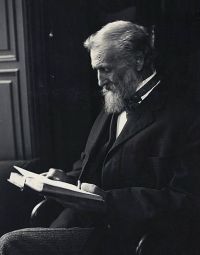 John Muir,
The Mountains of California
(1894)
“ To the timid traveler, fresh from the sedimentary levels of the lowlands, these highways, however picturesque and grand, seem terribly forbidding—cold, dead, gloomy gashes in the bones of the mountains, and of all Nature's ways the ones to be most cautiously avoided. Yet they are full of the finest and most telling examples of Nature's love; and though hard to travel, none are safer. ”
H. N. Hutchinson, The Story of the Hills: A Book About Mountains for General Readers
“ In the Himalayas, the traveller does not begin to suffer from the attacks of this ailment until he has reached a height of 16,500 feet; while on the Andes a large number of persons are affected by it at an altitude of 10,700 feet. In the South American mountains, the symptoms are much more serious: to the fatigue, head-ache, and want of breath are added giddiness, sometimes fainting-fits, and bleeding from lips, gums, and eyelids. The aeronaut, however, who is spared all the fatigue of climbing, rarely suffers any inconvenience except from cold, at such elevations. ”
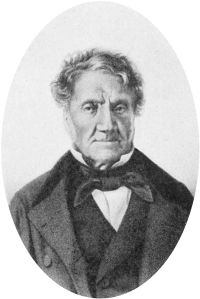 Aimé Bonpland,
Personal Narrative of Travels to the Equinoctial Regions of America…
“ These mountains are sometimes longitudinal, running in narrow bands or chains, similar to the veins that preserve their directions at great distances, as the Andes, the littoral chain of Venezuela, the Serra do Mar of Brazil, and the Alleghenies of the United States. Sometimes they are in masses with irregular forms, in which upheavings seem to have taken place as on a labyrinth of crevices or a heap of veins, as for example in the Sierra Parime and the Serra dos Vertentes. ”
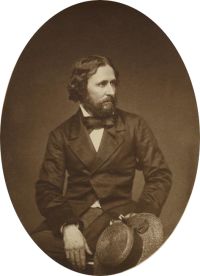 John Charles Frémont,
The Exploring Expedition to the Rocky Mountains…
“ We ascended by a steep hill from the river bottom, which is sandy, to a volcanic plain, around which lofty hills sweep in a regular form. It is cut up by gullies of basaltic rock, escarpments of which appear everywhere in the hills. This plain is called the Taih prairie, and is sprinkled with some scattered pines. The country is now far more interesting to a traveler than the route along the Snake and Columbia rivers. To our right we had always the mountains, from the midst of whose dark pine forests the isolated snowy peaks were looking out like giants. ”
Isabella Lucy Bird,
A Lady's Life in the Rocky Mountains
(1879-1880)
“ Hereafter, when I call up memories of the glorious, the view from this camping ground will come up. Looking cast, gorges opened to the distant Plains, then fading into purple grey. Mountains with pine-clothed skirts rose in ranges, or, solitary, uplifted their grey summits, while close be- hind, but nearly 3000 feet above us, towered the bald white crest of Long's Peak, its huge precipices red with the light of a sun long lost to our eyes. Close to us, in the caverned side of the Peak, was snow that, owing to its position, is eternal. ”
Thomas Thomson, Western Himalaya and Tibet
“ Ridges become visible in the face presented to the eye, which, as the traveller continues to advance, become developed into projecting spurs, separated from the general mass by wide valleys, previously quite undistinguishable. On a still nearer approach, the elevation continuing to increase, the extent of range embraced 4 by the eye is gradually lessened, till at last, when we arrive at the base of the mountains, a single valley with its bounding ranges of low hills is alone visible, the giant masses, so conspicuous from a greater distance, being no longer to be seen. ”
Ada Woodruff Anderson, The Rim of the Desert
“ The eastbound began to wind and lift like a leviathan seeking a way through. It crept along a tilting shelf, rounded a sheer spur, and ran shrieking over a succession of trestles, while the noise of the exhausts rang a continuous challenge from shoulder and crag. Then suddenly a mighty summit built like a pulpit of the gods closed behind, and a company of still higher mountains encircled the gorge. Everywhere above the wooded slopes towered castellated heights and spires. ”
Enos A. Mills, The Rocky Mountain Wonderland
“ Their investigations explode the theory that altitude is a strain upon the heart, or injurious to the system. These men concluded that the heart is subjected to no greater strain in high altitudes than at sea-level, except under the strain of physical exertion. The blood is richer in high altitudes. For every hundred red corpuscles found at sea-level there are in Colorado Springs, at six thousand feet, one hundred and ten; and on the summit of Pike's Peak, from one hundred and forty to one hundred and fifty-four. ”
John Muir,
The Mountains of California
“ Standing here in the deep, brooding silence all the wilderness seems motionless, as if the work of creation were done. But in the midst of this outer steadfastness we know there is incessant motion and change. Ever and anon, avalanches are falling from yonder peaks. These cliff-bound glaciers, seemingly wedged and immovable, are flowing like water and grinding the rocks beneath them. The lakes are lapping their granite shores and wearing them away, and every one of these rills and young rivers is fretting the air into music, and carrying the mountains to the plains. ”
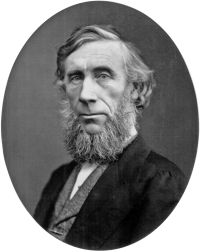 John Tyndall,
Hours of Exercise in the Alps
“ I chose instead of the air of a laboratory that of the Wetterhorn, the Galenstock, and the mountains which surround the Great Aletsch glacier. Each succeeding day added to my strength.There is assuredly morality in the oxygen of the mountains, as there is immorality in the miasma of a marsh, and a higher power than mere brute force lies latent in Alpine mutton. We are recognising more and more the influence of physical elements in the conduct of life, for when the blood [156] flows in a purer current the heart is capable of a higher glow. ”
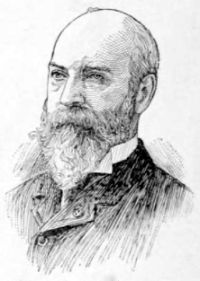 Samuel Adams Drake,
The Heart of the White Mountains…
“ The rocks themselves bear witness to the intense heat which has either cracked them wide open, crumbled them in pieces, or divested them, like oysters, of their outer shell, all along the path of the conflagration.The walk over the lower summits to the base of the peak occupied another hour, and is a most profitable feature of the ascent. On each side a superb panorama of mountains and lakes, of towns, villages, and hamlets, is being slowly unrolled; while every forward step develops the inaccessible character of the high summit more and more. ”
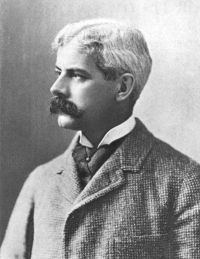 John C. Van Dyke,
The desert
(1901)
“ For days I have been watching them change color at sunset—watching the canyons shift into great slashes of blue and purple shadow, and the ridges flame with edgings of glittering fire. They are lonesome looking mountains lying off there by themselves on the plain, so still, so barren, so blazing hot under the sun. Forsaken of their kind, one might not inappropriately call them the “Lost Mountains”—the surviving remnant no doubt of some noble range that long centuries ago was beaten by wind and rain into desert sand. ”
Related terms
Authors who wrote about “Organ Mountains”
John Wesley PowellArnold LorandCharles DarwinJohn Charles FrémontJohn MuirH. N. HutchinsonGrove Karl GilbertIsabella Lucy BirdEllen Churchill SempleHallam HawksworthNorman CollieEnos A. MillsThomas ThomsonJohn C. Van Dyke Lady Morgan
 Henry David Thoreau
 W. Y. MorganSamuel Adams Drake
 John RuskinMayne Reid
