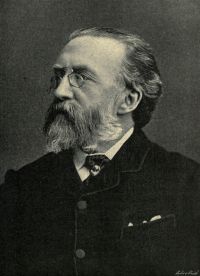
Various, The Atlantic Monthly, Volume 17…
“ Those who knew Orsini have since told me that he was one of the most lovable of men, as he was one of the most handsome,—full of the fire of intense and stalwart manhood, yet as gentle as a young girl. ”
The Orsini were a prominent Italian noble family, central to historical and literary accounts of conflict, power, and intrigue. Authors such as Bulwer Lytton depicted them as involved in violent disputes, while Trollope emphasized their unruly rivalries with the Colonna.
Guerrazzi’s Isabella Orsini delves into their aristocratic struggles, and Reid’s memoirs present them as symbols of revolutionary sacrifice. These depictions, spanning from tragic nobility to unrelenting ambition, highlight the Orsini’s lasting symbolic significance in Italy’s turbulent past, reflecting both their human complexity and their deep involvement in political conflict.
Various, The Atlantic Monthly, Volume 17…
“ Those who knew Orsini have since told me that he was one of the most lovable of men, as he was one of the most handsome,—full of the fire of intense and stalwart manhood, yet as gentle as a young girl. ”
Baron Edward Bulwer Lytton Lytton, Rienzi, the Last of the Roman Tribunes
“ It is true, indeed, that the followers of Orsini did not share the fury of their lord; partly afraid of the consequence to themselves should the blood of so highborn a signor be spilt by their hands, partly embarrassed with the apprehension that they should see themselves suddenly beset with the ruthless hirelings so close within hearing, they struck but aimless and random blows, looking every moment behind and aside, and rather prepared for flight than slaughter. ”
Baron Edward Bulwer Lytton Lytton, Rienzi, the Last of the Roman Tribunes
“ May the Holy Mother so judge me,” continued he, devoutly lifting up his eyes, “as I now with truth declare, that it is for your wrongs, and for the wrongs of Rome, that I have drawn this sword against the Orsini.” “So say all the tyrants,” rejoined the smith, hardily, as he leant his hammer against a fragment of stone—some remnant of ancient Rome—“they never fight against each other, but it is for our good. One Colonna cuts me the throat of Orsini’s baker—it is for our good! Another Colonna seizes on the daughter of Orsini’s tailor—it is for our good! ”
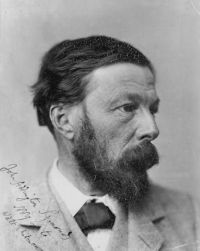
Thomas Adolphus Trollope,
A Decade of Italian Women, vol…
“ The Orsini being equally noble, and equally powerful and lawless, the high-bred mastiffs of either princely house for more than 200 years, with short respites of ill-kept truce, never lost an opportunity of flying at each other's throats, to the infinite annoyance and injury of their less noble and more peaceably disposed fellow-citizens. ”
Rafael Sabatini,
The Banner of the Bull — The Perugian
(1915)
“ This was at Assisi on the very day that he ordered the strangling of Gravina and Giangiordano's bastard. On that same evening came one of his spies with information that Matteo Orsini was in hiding at Pievano, the castle of his distant kinsman Almerico—an Orsini this last, too aged and too inactive to be worthy the Duke's attention, a studious man, living almost in seclusion with his books and his daughter, untouched by ambition, asking but to be left in peace, undisturbed by all the strife and bloodshed that were afflicting Italy. ”
The World's Best Poetry, Volume 09…
“ Weary of his life, Francesco flew to Venice, and, forthwith, Flung it away in battle with the Turk. Orsini lived,—and long mightst thou have seen An old man wandering as in quest of something, Something he could not find, he knew not what. ”
Francesco Domenico Guerrazzi,
Isabella Orsini: A Historical Novel of the Fifteenth Century
“ To the country, say I, to the country; we cannot breathe at ease in these prisons which they call cities; an oppression weighs upon the breast and vexes the heart. Let us see if there we can still be melancholy. I wish to see you merry; I will make you all cheerful, or I am not Paolo Giordano Orsini, Duke of Bracciano. Listen, Isabella; I have determined to pay a visit to his Highness your brother; Virginio shall go with me; and having, as is proper, rendered my due respects to him, I shall immediately take leave, and we can go, without delaying any longer in town, to our beautiful Cerreto. ”
T. Wemyss Reid, Memoirs of Sir Wemyss Reid 1842-1885
“ But the one man whose face and figure dwell most vividly in my recollection is Orsini, the great Italian who, after a lifetime spent in the attempt to deliver Tuscany and Lombardy from the yoke of the tyrant, died under the guillotine in Paris, and by his death secured for Italy her long-sought freedom. Orsini came to Newcastle shortly after his escape from an Austrian dungeon at Mantua, and addressed a great meeting in the Lecture Room. ”
Thomas Adolphus Trollope,
A Decade of Italian Women, vol…
“ But the last words that Francesco uttered, as Orsini left him, were overheard, and have curiously enough been [Pg 248] preserved. [164] "When you have satisfied yourself of the odious truth, remember always that you are a Christian and a gentleman!" said the Duke, who had learned his ideas of either character in the school of Philip II. of Spain. He moreover lent Orsini during his stay in Florence the villa now called Poggio Imperiale, near the Roman gate of the city. To Isabella her husband assumed the appearance of perfect cordiality and affection. ”
Louis Fagan, The life and correspondence of Sir Anthony Panizzi…
“ That, by many ordinary Englishmen, such a man, who scrupled not to attack and destroy all, known or unknown, who stood in his way, might aptly be called the mad dog of society, is perfectly conceivable. But, granting all that can be brought against him, and in no wise seeking to justify his actions, we nevertheless submit that the character of Orsini is rather deserving of careful study, and even of allowance, if that study be made fully and without prejudice, than of hasty condemnation. ”
Rafael Sabatini,
The Banner of the Bull — The Perugian
(1915)
“ For that—because Valentino knows that if I served him it was but because I served Orsini and that I am to be reckoned as of the Orsini's family—I am now proscribed and hunted, and if I am taken I shall perish as Paolo and Gravina perished and as men say that Matteo Orsini perished too.'In nothing perhaps does the craft of the man appear so starkly as in this probing statement. As he spoke these words he watched father and daughter closely, seeming but to consider them with eyes of concern and pity. ”
Littell's Living Age — Volume 145…
“ It was not, however, until after the fearful enterprise of Orsini, on January 14, 1858, that, he got to be so seriously unnerved as to live in constant dread of assassination. Count Felice Orsini was not a mere vulgar fanatic, but a gentleman by birth, education, and fortune. An ardent patriot, and a partisan of the unification of Italy, his grudge against Napoleon III. was that the latter, when a political refugee in Italy, had joined a Freemasonic lodge, and sworn certain oaths which, by-and-by, as emperor, he had neglected to fulfil. ”
Ferdinand Gregorovius,
Lucretia Borgia According to Original Documents and Correspondence of Her Day
“ He married his daughter Adriana to Ludovico, a member of the noble house of Orsini, and lord of Bassanello, near Civita Castellana. As the offspring of this union, Orsino Orsini, married in 1489, it is evident that his mother must have entered into wedlock at least sixteen years before. Ludovico Orsini died in 1489 or earlier. As his wife, and later as his widow, Adriana occupied one of the Orsini palaces in Rome, probably the one on Monte Giordano, near the Bridge of S. Angelo, this palace having subsequently been described as part of the estate which her son Orsino inherited. ”
contessa Evelyn Lilian Hazeldine Carrington Martinengo-Cesaresco, Cavour
“ It was only then that it began to dawn on him what had been the real effect of the attempt, and of Orsini's trial, on the mind of the Emperor. Cavour had none of the fellow-feeling with conspirators that lurked in Napoleon's brain, and the idea seemed to him absurd that a man should be strongly moved by the pleading of his would-be assassin. Among the royal families of Europe, Orsini's influence was at once understood, but it was thought to have its source in fear. ”
Giovanni Papini,
Four and Twenty Minds
(1922)
“ In our dried veins—sleek, feminine, civilian dilettantes that we are—we need a little of the blood of peasants, of mountaineers, of the rabble. It is not enough to “open our windows,” as Orsini said. We must go forth, leave the city, feel things and love things immediately, whether they be fair or foul. ”
Felix Moscheles,
Fragments of an Autobiography
“ Nobody entertained a doubt that he was at the bottom of the plot. It could only be he who had organised it; he had supplied the bombs, and Orsini was but a tool sent to the post of danger, whilst he himself remained on the safe side of the water that separated hospitable England from the realm of the French Emperor and his ever-watchful police. ”
Lyndon Orr, Famous Affinities of History: The Romance of Devotion…
“ Had he shown her the affection of a husband she might have loved him. But he was neither imposing, nor, on the other hand, was he alluring. She wrote very frankly about him in a letter to the Count Orsini: My tastes are not the same as those of the king, who cares only for hunting and blacksmith work. You will admit that I should not show to advantage in a forge. I could not appear there as Vulcan, and the part of Venus might displease him even more than my tastes. Thus on the one side is a woman in the first bloom of youth, ardent, eager—and neglected. ”
Project Gutenberg, The Project Gutenberg Encyclopedia…
“ But the rest of the clan still held out, and the papal troops sent against them under Guidobaldo duke of Urbino and the duke of Gandia were defeated at Soriano (January 1497) . Peace was made through Venetian mediation, the Orsini paying 50,000 ducats in exchange for their confiscated lands; the duke of Urbino, whom they had captured, was left by the pope to pay his own ransom. The Orsini still remained very powerful, and Alexander could count on none but his 3000 Spaniards. His only success had been the capture of Ostia and the submission of the Francophile cardinals Colonna and Savelli. ”
Baron Edward Bulwer Lytton Lytton, Rienzi, the Last of the Roman Tribunes
“ The two bands coming unexpectedly on each other through this narrow defile, the jealousy of the two houses presently declared itself. Each pressed forward for the precedence; and, as the quiet regularity of Adrian’s train, and even its compact paucity of numbers, enabled it to pass before the servitors of his rival, the populace set up a loud shout—“A Colonna for ever!”—“Let the Bear dance after the Column!” “On, ye knaves!” said Orsini aloud to his men. “How have ye suffered this affront?” ”
Louis Fagan, The life and correspondence of Sir Anthony Panizzi…
“ Panizzi replied that he doubted it very much, seeing that he himself had an appointment with Orsini for the following day, when they were both to call on Lord Palmerston together. This was thought at the time to be a deep but futile scheme for establishing an alibi. Of the truth of the story we have no evidence beyond what we have mentioned. So far as we have been able to ascertain, there is nothing to show that Orsini was in London at all in this month of January. It is a matter of regret that we cannot help the reader further to judge of the truth or falsehood of the anecdote. ”
F. Marion Crawford, Don Orsino
“ Those people see everything, and talk of nothing but what they have seen.""This is historic," she said aloud. "You will have a chance of contemplating the Romans in their glory. Colonna and Orsini marching side by side, and old Saracinesca in all his magnificence. He is eighty-two year old.""Saracinesca?" repeated Maria Consuelo, turning her tawny eyes upon her neighbour."Yes. The father of Sant' Ilario—grandfather of that young fellow who showed you to your seat.""Don Orsino? Yes, I know him slightly."Corona, sitting immediately behind them heard her son's name. ”
George W. M. Reynolds,
Wagner the Wehr-wolf — CHAPTER XXV: THE MARQUIS OF ORSINI.
(1846)
“ The name of Orsini would be dishonored if the gambling debt were not paid; and one bold—one desperate step might supply him with the means to save himself from the impending ruin—the imminent disgrace. But as the thoughts encouraged by those simple words—"the diamonds"—assumed a more palpable shape in his imagination, he shrank back dismayed from the deed which they suggested: for gamester, debauchee, spendthrift as he was, he had never yet perpetrated an act that could be termed a crime. The seduction of the Countess of Arestino was not a crime in his estimation—oh! ”
Baron Edward Bulwer Lytton Lytton, Rienzi, the Last of the Roman Tribunes
“ Orsini himself, exhausted by his fury, had paused for an instant, fronting his foe with a heaving breast and savage looks, when, suddenly, his followers exclaimed, “Fly! fly!—the bandits approach—we are surrounded!”—and two of the servitors, without further parley, took fairly to their heels. The other five remained irresolute, and waiting but the command of their master, when he of the white plume, whom I have just described, thrust himself into the melee. “What! gentles,” said he, “have ye finished already? Nay, let us not mar the sport; begin again, I beseech you. What are the odds? Ho! ”
Charles Isaac Elton,
The Great Book-Collectors
“ No private person could now take their place; but the interests of literature could hardly have been protected in a former age without the personal labour and enthusiasm of Orsini and Pétau.Fulvio Orsini was born in 1529. He began life as a beggar, though for many years before his death he was the leader of Italian learning. A poor girl had been abandoned with her child and was forced to beg her bread in the streets of Rome. ”
Thomas Adolphus Trollope,
A Decade of Italian Women, vol…
“ There is the direct statement of the Settimanni [166] chronicle, that Orsini was sent for from Rome that he might consent to his wife's death. There is the general popular [Pg 249] belief at the time and ever since. And there is the fact that both Ferdinando and Francesco continued on perfectly friendly terms with Paolo Giordano after Isabella's death, and interested themselves, as they had not before done, in the settlement of his numerous debts. ”
Robert Shea, The Saracen: The Holy War
“ He assured each Roman nobleman, Simon interpreting, how happy he was to see him."I believe it would be best if my men and I were to camp outside the city walls for tonight," he said, looking down his large nose at Orsini."I was just about to suggest that," said Orsini. "The city is quite crowded.""Perhaps less crowded now." Charles laughed, with a nod at [202] the fields where wailing men and women were walking, trying to find their dead and bear them away for burial. "At any rate, I will enter the city tomorrow." ”
Bolton King, The Life of Mazzini
“ No doubt, his waning prestige at home, and the fear that another Orsini might arise, both had their influence; but he was still true in a way to his nationalist ideals, and since he had sacrificed Poland to the Russian alliance, he was the more eager to free Italy and Hungary. ”
Baron Edward Bulwer Lytton Lytton, Rienzi, the Last of the Roman Tribunes
“ The words made one of the mottoes of the Orsini; and, whatever its earlier signification, had long passed into a current proverb, to signify their hatred to the Colonna. Adrian, now engaged in raising, and attempting to revive Irene, who was still insensible, disdainfully left it to Montreal to reply. “I doubt not, Signor,” said the latter, coolly, “that thou wilt be faithful to Death: for Death, God wot, is the only contract which men, however ingenious, are unable to break or evade.” ”
Ferdinand Gregorovius,
Lucretia Borgia According to Original Documents and Correspondence of Her Day
“ Many great nobles were present, among whom were spe [Pg 39] cially mentioned the kinsmen of the groom, Cardinal Gianbattista Orsini and Raynaldo Orsini, Archbishop of Florence. The young couple, as the season was charming, may have gone to Castle Bassanello, or, if not, may have taken up their abode in the Orsini palace on Monte Giordano.Before her marriage Cardinal Rodrigo must have known, and often seen Giulia Farnese in the palace of Madonna Adriana, the mother of the young Orsini. There, likewise, Lucretia, who was several years younger, made her acquaintance. ”
Felix Moscheles,
Fragments of an Autobiography
“ Among others a letter from Orsini thus came into his hands, which contained the vilest accusations against two most deservedly respected ladies, friends both of Mr. Stansfeld and of Mazzini. The indignant answer with which the former met the slander led in true Continental fashion to a challenge from Orsini, which, it is needless to say, was treated with contempt. Mazzini, to whom woman was ever an ideal to be looked up to and revered, was deeply incensed. He never met Orsini after the incident, and he never forgave him the libels he had penned. ”
Alexandre Dumas,
My Memoirs, Vol. VI, 1832 to 1833
“ Buridan comes as a gipsy, and not as a captain, to visit the wizard Orsini. The latter wants to overawe the gipsy, who revealed to him the murders of the tower of Nesle as he had revealed them to Marguerite; and soon the magician falls at the gipsy's feet, seized with the very superstitions he himself instils into the vulgar-minded, to enquire if, perhaps, there be true sorcerers! This scene was bound to disappear directly Orsini was made an inn-keeper. ”
Justin McCarthy,
Modern Leaders: Being a Series of Biographical Sketches
“ The fact is, that, during the Crimean war, Cavour first tried England on the subject, through easy-going and heedless Lord Clarendon—who hardly took the trouble to listen to the audacious projects of his friend—and then turned to France, where quicker and shrewder ears listened to what he had to say.I have spoken of Orsini's contempt for Mazzini. Such a feeling toward such a man seems quite inexplicable. Many men detest Mazzini; many men distrust him; many look up to him as a prophet, and adore him as a chief ”