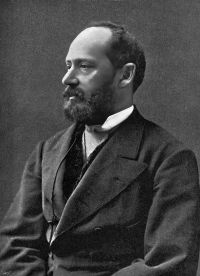
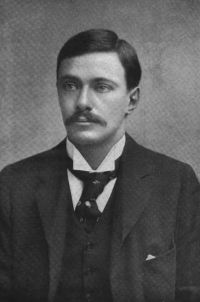
Osman I

Definition and stakes

L. Mühlbach Mohammed Ali and His House

Oh, to live there, to go to Egypt as the grand- sultan's pacha, to rule in that beautiful land, to make the rebels, the Mamelukes, and the beys, bow down in the dust. To vanquish them all, Osman, this is my dream of bliss, this is but no, I am still the same foolish boy, dreaming of impossibilities. See, there come those of whom we have been speaking," raising his hand and pointing to the hallway. "There comes the tschorbadji with Cousrouf Pacha. Let me go now, Osman, it is unpleasant to be in the vicinity of this haughty man; my heart always fiercely resents his insolence.
Source: Gutenberg

Thomas Stevens Around the World on a Bicycle - Volume II

Osman can scarcely be called imperturbable, for he has his daily and hourly moods, and is of varying temper; but he carries himself always as though conscious of being an outcast, whom nothing can either elevate or defile. When his fellow Mussulmans are piously prostrating themselves and uttering religious sighs sincere as fanaticism can make them, Osman is either curled up beneath a pomegranate bush asleep, feeding the horse, or attending to the pee-wit.
Source: Gutenberg

Portrait of Herbert Adams Gibbons Herbert Adams Gibbons The Foundation of the Ottoman Empire…

For his success in killing the Greek, the Sultan rewards him with the castle of{265} Ottomanzich, which is often confused with Sugut, and is claimed to be the origin of Osman’s name. [669] By another story, which is asserted to be the invention of Mohammed II, who thus wanted to legitimatize in the eyes of the world his claim to the throne of the Caesars, Osman is the descendant of a certain Isaac Comnenus, a member of the imperial Byzantine family, who fled to the court of the Seljuks of Konia, and became a Moslem.
Source: Gutenberg

Get perspective with Kwize: daily news enlightened by great literature