Padang

Definition and stakes

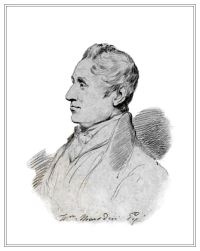
Portrait of Albert Smith Bickmore Albert Smith Bickmore,  Travels in the East Indian archipelago (1868)

“ The city of Padang is situated on a small plain, whence its name; padang in Malay, meaning an open field or plain. Its population numbers about twelve thousand, and is composed of emigrants from Nias, Java, some Chinese and Arabs, and their mestizo descendants, besides the natives and Dutch. The streets are well shaded and neat. Near the centre of the city is a large, beautiful lawn, on one side of which is the residence of the governor. On the opposite side is the Club-House, a large and well-proportioned building. ”

Source: Gutenberg

Emily Richings,  Through the Malay Archipelago

“ Emma-Haven, the little port of Padang, twenty minutes by train from the palm-girt Sumatran capital, scarcely mars the beauty of the secluded inlet with the red and white warehouses standing against the sylvan verdure which fringes the blue arc of the deep bay. Cloud upon cloud, the spectral vision of distant mountains gleams through the vanishing veil of mist melting in the sunrise, and the departing steamer, hugging the shore, but halting for cargo at sundry barbaric campongs, affords numerous glimpses of native life. ”
Source: Gutenberg

Portrait of Christiaan Snouck Hurgronje Christiaan Snouck Hurgronje,  The Achehnese (1906)

“ In the lowlands, where the whole country has been reclaimed by man, uncultivated fields or plains are seldom to be seen, but in the highlands there are many such. These are called padang, and belong like the blang to definite gampōngs, though the rights which those who live in their vicinity can exercise in them, are not confined to a single gampōng, but extend over the whole mukim. ”
Source: Wikisource

Get perspective with Kwize: daily news enlightened by great literature