“ Under the Pearl Street elevated the sunlight drifted through the girders in a lively chequer, patterning piles of gray-black snow with a criss-cross of brightness. We had wanted to show our visitor Franklin Square, which he, as a man of letters, had always thought of as a trimly gardened plot surrounded by quiet little old-fashioned houses with brass knockers, and famous authors tripping in and out. ”
Pearl Street
Definition and stakes
The theme of “Pearl Street” has been addressed by authors such as Willard W. Glazier, Douglas Goldring, Christopher Morley, James Stonehouse and Nathaniel Hawthorne. It is often associated with terms like avenue, Broadway, city, Main and park.
Quotes about “Pearl Street”
Willard W. Glazier, Peculiarities of American Cities
“ Each little suburb has its own corporation, and its own municipal government, while even its mayor and aldermen may do daily business in the large city below it.In the city itself Pearl street is noted for its wholesale [Pg 129] trade, and for the uniform elegance of its buildings. Third street, between Main and Vine, contains the banking, brokering, and insurance offices. Fourth street is the fashionable promenade and business street. Freeman street, in the neighborhood of Lincoln Park, is also a favorite promenade. Both the East and West Ends contain many fine residences. ”
Various, The Bay State Monthly — Volume 2…
“ The Pearl Street House stood on the north-west corner of Milk and Pearl streets, and was built in 1816, and was the mansion of William Pratt. It was first occupied as a hotel in 1836. Colonel Shepherd was its first landlord. The Scots' Charitable Society frequently held its meetings there. ”
Willard W. Glazier, Peculiarities of American Cities
“ Any time between these hours the street, from the lower end of Capitol Park down to Pearl street, is transformed into a vast market-place. Meat-wagons, vegetable carts, restaurants on wheels, and all sorts of huckstering establishments, are backed up to the sidewalk, on either side, blocking the way and so filling the wide avenue that there is barely room for the street-car in its passage up and down the hill. ”
Charles Hemstreet, Nooks & Corners of Old New York
“ Through Broad Street, when the town was New Amsterdam, a narrow, ill-smelling inlet extended to about the present Beaver Street, then narrowed to a ditch close to Wall Street. The water-front was then at Pearl Street. Several bridges crossed the inlet, the largest at the point where Stone Street is. Another gave Bridge Street its name. In 1660 the ways on either side were paved, and soon became a market-place for citizens who traded with farmers for their products, and with the Indians who navigated the inlet in their canoes. The locality has ever [Pg 10] since been a centre of exchange. ”
“ Pearl Street loop round Five Points—a charter was granted for that extension some time ago—will form the connecting link to the combination they’re figuring on. And then on top of that there’s the direct connection to be made with the new Brooklyn subway that’s being built now. If you’ll look at the map of the East Side lines you’ll see for yourself how important it is for the group that intends to take control of the trolley lines on this side of the river and hopes to control the subway to the other side of the river that they should have the Pearl Street loop in their grip. With it they win ”
Various, The Continental Monthly , Vol. 2 No…
“ Of this class (now about extinct) a few built up large concerns, while others, after hopelessly contending year after year with adverse fortune, sunk eventually into bankruptcy, and may in some instances now be found in the ranks of clerkship. From Cedar street, trade moved to Liberty, Nassau, and John streets, while as these new emporiums prospered, Pearl street gradually lost its prestige, until the general hegira of trade in 1848, which left that ancient mart deserted. ”
Charles Hemstreet, Nooks & Corners of Old New York
“ On the building at 4 and 6 Pearl Street, corner State Street, is a tablet which reads:1636 1897 ON THIS SITE STOOD THE "STADHUIS" OF NEW AMSTERDAM——ERECTED 1636 THIS TABLET IS PLACED HERE IN LOVING MEMORY OF THE FIRST DUTCH SETTLERS BY THE HOLLAND DAMES OF THE NEW NETHERLANDS AND THE KNIGHTS OF THE LEGION OF THE CROWN LAVINIA KONIGINIt was set up October 7, 1897, and marks the supposed site of the first City Hall. What is claimed by most authorities to be the real site is [Pg 8] at Pearl Street, opposite Coenties Slip. ”
Henry Phelps Johnston, The Campaign of 1776 around New York and Brooklyn
“ Queen, now Pearl, was the principal business street; fashion was to be found in the vicinity of the Battery, and Broad and Dock streets; the Vauxhall Gardens were at the foot of Reade; and to pass out of town, one would have to turn off Broadway into Chatham street, which extended through Park Row, and keep on to the Bowery. [Pg 38] John Adams has left us a brief description of New York, as he saw it when passing through to the first Congress at Philadelphia in 1774, in company with Cushing, Paine, and Samuel Adams. ”
 Pearl S. Buck,
The mother
(1934)
Pearl S. Buck,
The mother
(1934)
“ It was true her pin to hold her hair had so broken, and she said the truth before she knew it, and turned to go away, ashamed even before people who did not know her to be seen speaking to a man upon a town street, and he was a man somewhat notable in his looks, and being taller than most men and his face very square and pale, so that people were already looking at them curiously as they passed. ”
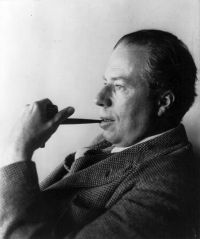
 Augustine Birrell,
In the Name of the Bodleian, and Other Essays
Augustine Birrell,
In the Name of the Bodleian, and Other Essays
“ Peerless Street, the second main turning on the left of the City Road just beyond Old Street in coming from the City, is all that is left to remind anyone of the once Parlous Pool, unless, indeed, it still occasionally creeps into a cellar and drowns cockroaches instead of divers youths. ”
“ This Nancy trudged for hours through straight and terrible streets called avenues, with a dismal husband and a tired baby at her side. Third Avenue, Fourth Avenue, then quickly across Fifth Avenue, which had nothing to do with us, and again across to Sixth Avenue ... and everywhere dirty shops, screaming children, jostling girls, rude men, trains rushing overhead, street-cars screeching and clanging. Then, at last, Seventh Avenue, where there were streets full of quiet, squalid boarding-houses, fewer screaming children, fewer dirty shops, and no trains. ”
“ When Carol had walked for thirty-two minutes she had completely covered the town, east and west, north and south; and she stood at the corner of Main Street and Washington Avenue and despaired. Main Street with its two-story brick shops, its story-and-a-half wooden residences, its muddy expanse from concrete walk to walk, its huddle of Fords and lumber-wagons, was too small to absorb her. The broad, straight, unenticing gashes of the streets let in the grasping prairie on every side. She realized the vastness and the emptiness of the land. ”
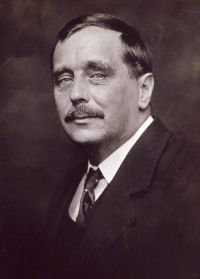 H. G. Wells,
Certain Personal Matters
H. G. Wells,
Certain Personal Matters
“ The Margaret Street in question is an apparently derelict thoroughfare, opening into Great Portland Street. Immemorial dust is upon its pavements, and a profound silence broods over its vacant roadway. The blinds of its houses are mostly down, and, where the blackness of some window suggests a dark interior, no face appears to reassure us in our doubt of humanity within. ”
 Arthur Bartlett Maurice,
Fifth Avenue
Arthur Bartlett Maurice,
Fifth Avenue
“ To those who really understand them, every one of the great, vital streets of the world has a soul as well as a body. The social invader from the West, the merchant whose establishment still found profit in Grand Street, the banker from Broad Street, or the ship's chandler from South, the club awakening to the fact that its quarters on Broadway or in one of the side streets near Irving Place was too far downtown, or in size inadequate to its growing membership—those were the agencies that wrought the Avenue's material development. ”
 William Hale White,
Catharine Furze
William Hale White,
Catharine Furze
“ He heard that an old woman had died who lived in Parker’s Alley and sold old clothes, old iron, bottles, and such like trash. Parker’s Alley was not very easy to find. Going up High Street from the bridge, you first turned to the right through Cross Street, and then to the right again down Lock Lane, and out of Lock Lane ran the alley, a little narrow gutter of a place, dark and squalid, paved with round stones, through which slops of all kinds perpetually percolated, and gave forth on the cleanest days a faint and sickening odour. Mike thought he could buy the stock for five shillings ”
 Arthur Morrison,
Tales of mean streets — INTRODUCTION
(1894)
Arthur Morrison,
Tales of mean streets — INTRODUCTION
(1894)
“ Foul slums there are in the East End, of course, as there are in the West; want and misery there are, as wherever a host is gathered together to fight for food. But they are not often spectacular in kind.Of this street there are about one hundred and fifty yards—on the same pattern all. It is not pretty to look at. A dingy little brick house twenty feet high, with three square holes to carry the windows, and an oblong hole to carry the door, is not a pleasing object; and each side of this street is formed by two or three score of such houses in a row, with one front wall in common. ”
“ The streets are fluttering with beautiful women; light summer frocks are twinkling in the busy frolic air. Oh, to be turned loose at the corner of Broadway and Thirty-second Street at 6:15 o'clock of a June evening, with nothing to do but follow the smile of adventure to the utmost! Thirty-second, we might add, is our favourite street in New York. It saddens us to think that the old boarding house on the corner of Madison Avenue is vanished now and all those quaint and humorous persons dispersed. ”
 Charles Edward Pearce,
Madame Flirt
Charles Edward Pearce,
Madame Flirt
“ She had no longer the courage to face the dangers of the street. The deep shadow of great St. Paul's, sacred building though it was, afforded her no protection; it spoke rather of cut-throats, footpads, ruffians ready for any outrage. The din of voices, the sounds of brawling reached her from Cheapside. The London 'prentices let loose from toil and routine were out for boisterous enjoyment and may be devilry. She dared not go further eastward. ”
 Geraldine Bonner,
The book of Evelyn
(1913)
Geraldine Bonner,
The book of Evelyn
(1913)
“ Roger said, “I like you in brown.”I love going down Fifth Avenue in the dark of a winter evening. The traffic of business is over. Motors and carriages go spinning by, carrying people [Pg 61] to dinners. The big glistening street is like an artery with the joyous blood of the city racing through it, coursing along with the throb, throb, throb of a deathless vitality. ”
 Lillian D. Wald,
The house on Henry Street
(1915)
Lillian D. Wald,
The house on Henry Street
(1915)
“ It is necessary to spend a summer in our neighborhood to realize fully the conditions under which many thousands of children are reared. One night during my first month on the East Side, sleepless because of the heat, I leaned out of the window and looked down on Rivington Street. Life was in full course there. Some of the push-cart venders still sold their wares. Sitting on the curb directly under my [70] window, with her feet in the gutter, was a woman, drooping from exhaustion, a baby at her breast. ”
 Edmund Lester Pearson,
The Believing Years
Edmund Lester Pearson,
The Believing Years
“ Before ten o'clock we all set out for Main Street,—Ed Mason, Rob Currier, [149] Peter Bailey, and myself, together with an unavoidable convoy of small sisters and other relatives. The streets had that appearance which circus day and no other always brought. Toy balloon men and sellers of paper whirligigs wandered up and down, and strange looking persons, clutching children with one hand and paper bags of luncheon with the other, stood or sat on the grass bankings, edge-stones, and lawns, in front of the houses. ”
 Rheta Childe Dorr,
What eight million women want
Rheta Childe Dorr,
What eight million women want
“ Standing on the corner of the Bowery and Grand Street, in New York, when the Third Avenue trains overhead are roaring their way uptown packed with homeward-bound humanity, or on the corner of State and Madison streets, in Chicago, or on the corner of Front and Lehigh streets, in Philadelphia; pausing at the hour of six at the junction of any city's great industrial arteries, you get a full realization of the change. Of the pushing, jostling, clamoring mob, which the sidewalks are much too narrow to contain, observe the preponderance of girls. ”
 Julian Street,
Abroad at Home: American Ramblings…
Julian Street,
Abroad at Home: American Ramblings…
“ We had gone hardly a block before we realized that our earlier impressions of the place had been ill-founded. We had arrived in the least agreeable portion of the city, and had not, hitherto, seen any of the built-up, well-paved streets. "Petticoat Lane"—the fashionable shopping district on Eleventh Street between Main Street and Grand Avenue—has a metropolitan appearance, and the wider avenues, with their well-built skyscrapers, tell a story of substantiality and progress. ”
 Joyce Kilmer,
Main Street, and Other Poems
Joyce Kilmer,
Main Street, and Other Poems
“ The truck and the motor and trolley car and the elevated train They make the weary city street reverberate with pain: But there is yet an echo left deep down within my heart Of the music the Main Street cobblestones made beneath a butcher's cart. God be thanked for the Milky Way that runs across the sky, That's the path that my feet would tread whenever I have to die. Some folks call it a Silver Sword, and some a Pearly Crown, But the only thing I think it is, is Main Street, Heaventown. ”
Robert Cortes Holliday, Walking-Stick Papers
“ People going and coming through the arches are silhouettes. Overhead it is like the grumbling of a thunder storm. Wagons going over the stones rattle tremendously, and they carry lanterns swung beneath to be lighted at night. The streets have fine names: there is Gold Street, and then Jacob Street. Frankfort Street widens out and becomes a generous thoroughfare, all in sunlight. There is a huge, gay hoarding to the right as you go down. ”
Jacob Riis, How the Other Half Lives — Chapter IV: The Down Town Back-Alleys
“ Take a look into this Roosevelt Street alley; just about one step wide, with a five-story house on one side that gets its light and air--God help us for pitiful mockery!--from this slit between brick walls. There are no windows in the wall on the other side; it is perfectly blank. The fire-escapes of the long tenement fairly touch it; but the rays of the sun, rising, setting, or at high noon, never do. It never shone into the alley from the day the devil planned and man built it. ”
Robert Caldwell Reid, Rambles on the Golden Coast of New Zealand (1886)
“ The people are intensely patriotic and political, hence the streets are named after celebrated statesmen; the principal thoroughfare, which, by the way, is over a mile in length, being called Palmerston Street, the rest bearing such honoured cognomens as Cobden, Bright, Brougham, Russell, Peel, and so on. ”
 John Dos Passos,
Manhattan Transfer
(1925)
John Dos Passos,
Manhattan Transfer
(1925)
“ She dresses in a hurry and goes out, walks down Fifth Avenue and east along Eighth Street without looking to the right or left. The sun already hot simmers slatily on the pavements, on plateglass, on dustmarbled enameled signs. Men’s and women’s faces as they pass her are rumpled and gray like pillows that have been too much slept on. ”
“ How is the sense of all these innumerable aspects going to be squeezed into a pitiful couple of thousand words?...One would like, for example, to distinguish street from street: to speak of Lord Street, say, with its inevitable air of well-groomed alertness, brisk and personable even under gloom, its rather superficial architecture pleasantly asnap, its traffic and its shops equally avoiding the dully commercial, equally achieving a confident glitter that only just falls short of a swagger. ”
The Heart Line: A Drama of San Francisco
“ It was already after sunset when he started across Union Square. Kearney Street was alight with electric lamps and humming with life. He walked north, passing the gayer retail shopping district towards the cheaper stores, pawnshops and quack doctors' offices to where the old Plaza, rising in a green slope to Chinatown, displayed the little Stevenson fountain with its merry gilded ship. ”
 H. L. Mencken,
Prejudices: Fourth Series
(1924)
H. L. Mencken,
Prejudices: Fourth Series
(1924)
“ Along Fifth avenue, from the Fifty-ninth street corner to the upper end of Central Park, there is not a single house that looks reposeful and habitable. Along Park avenue—but Park avenue, for all its flash of creamy brick, is surely one of the most hideous streets in all the world! ”
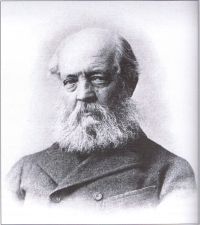 Frederick Law Olmsted,
Pittsburgh Main Thoroughfares and the Down Town District
Frederick Law Olmsted,
Pittsburgh Main Thoroughfares and the Down Town District
“ Another fact, seen clearly from this larger point of view, is that the essential matter is to secure a radical reduction of the maximum gradients on the three great thoroughfare lines, Sixth Avenue, Fifth Avenue, and Diamond Street, even though the minor streets on the margins of the Hump be skimped. ”