Pelops

Definition and stakes

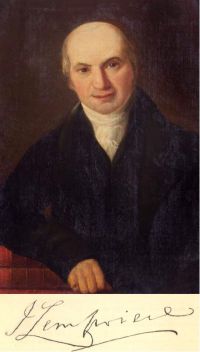
Portrait of John Lemprière John Lemprière,  A classical dictionary (1904)

“ According to some authors, Pelops had received some winged horses from Neptune, with which he was enabled to outrun Œnomaus. When he had established himself on the throne of Pisa, Hippodamia’s possession, he extended his conquests over the neighbouring countries, and from him the peninsula, of which he was one of the monarchs, received the name of Peloponnesus. Pelops, after death, received divine honours, and he was as much revered above all the other heroes of Greece, as Jupiter was above the rest of the gods. ”
Source: Gutenberg

Portrait of John Lemprière John Lemprière,  A classical dictionary (1904)

“ Some suppose that the Palladium of the Trojans was made with the bones of Pelops. His descendants were called Pelopidæ. Pindar, who, in his first Olympic, speaks of Pelops, confutes the traditions of his ivory shoulder, and says that Neptune took him up to heaven to become the cup-bearer to the gods, from which he was expelled, when the impiety of Tantalus wished to make mankind partake of the nectar and the entertainments of the gods. Some suppose that Pelops first instituted the Olympic games in honour of Jupiter, and to commemorate the victory which he had obtained over Œnomaus. ”
Source: Gutenberg

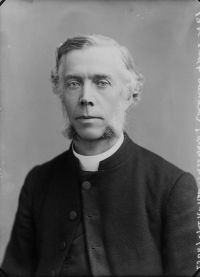
Portrait of Reginald Copleston Reginald Copleston,  Aeschylus (1870)

“ The Ruin which the gods, in their mysterious will, sent down upon the race of Pelops stands before us visible in Clytemnestra. Looked at from the human side, she is an incarnation of consummate wickedness, triumphant and unashamed; from the divine side she is a messenger of Atè and Erinnys, filled full with their terrible displeasure, the most awful object that could meet the eyes of bewildered and despairing mortals. Through a long series of short answering chants her consciousness of this dread mission is contrasted with the timid horror of the Chorus. ”
Source: Wikisource

Get perspective with Kwize: daily news enlightened by great literature