“ The aides-de-camp pressed forward eagerly, but Prince Romanos waited, with his eyes fixed on Petros. “I really think you had better not take it, friend Petraki,” he said, in a tone of good-humoured raillery. “You will fall through sheer fright, and blame me for your misfortunes.” Petros gave him a glance of helpless hatred, like that of a savage animal in a trap, and fairly tore the paper from his hand, then started to run across the ground. ”
Petros
Definition and stakes
The theme of “Petros” has been addressed by authors such as E. F. Benson, Sydney C. Grier and Jacob Bryant. It is often associated with terms like Peter, Petersburg, great, Russia and saint.
Quotes about “Petros”
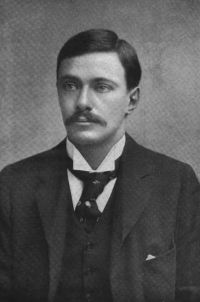 E. F. Benson,
The Princess Sophia
E. F. Benson,
The Princess Sophia
“ We have to wait, so let us do so like reasonable men. I have no patience with prophets—there is no such thing as prophecy; the whole world is one calculation. You have not calculated; you only prophesy. I never prophesy; but I am not without a mathematical gift.’‘You are not tied by the ankle to the steps of a throne,’ retorted Petros. ‘You do not know Sophia as I know her, and, what is more, you have only a thousand pounds in this precious club.’Malakopf had not told, and did not intend to tell, Petros about his further investment, and he replied:‘You are wholly wrong, my dear Prince. ”
“ Danaë laughed in the darkness. “Every old woman in Therma, do you say, friend Petraki? There is pardon for that, but not for killing one Kyria Olimpia.” “Lady, it is you who mistake.” Petros spoke slowly and meaningly. “In that deed I had no part, and can invoke without fear the most awful of all curses upon the villains who took part in it. You yourself heard the orders the Despot gave me, that the Lady who was leading his son astray was to be brought alive to Strio, there to be imprisoned where she could do no more harm. ”
“ Follow thine uncle, little one, and fear not. The Lady and I will come to thy help if he beats thee.” “He will not, lord.” The words were uttered with such concentrated fury that Prince Romanos turned rather uneasily to his wife as Danaë, with head held high, followed the retreating form of Petros. “That is really a very remarkable girl, Olimpia. Our women are usually kept in better order.” “Then I wish Petros had not chosen the exception to bring here. If you knew the trouble Eurynomé has made in the house, you would not be so horrified by the thought of her getting a beating. ”
E. F. Benson,
The Princess Sophia
“ The fickle goddess was charmed at the recantation of the heresies which could never have been permanent, and had looked on her with peculiar favour, and thus it came about that in the third week in September, even before the House, which the fine example of Petros had rendered even more conscientious and industrious than usual, had risen, she announced by telegram her earlier return, and the return of forty thousand napoleons.{106}Petros went down to Mavromáti to meet the Felatrune, and she seemed pleased and a little surprised to see him. ”
Jacob Bryant, A New System; or, an Analysis of Antient Mythology…
“ The Scholia above will moreover lead us to discover whence the strange notion arose about the famous Anaxagoras of Clazomenæ; who is said to have prophesied, that a stone would fall from the Sun. All that he had averred, may be seen in the relation of the Scholiast above: which amounts only to this, that Petros was a name of the Sun. It was a word of Egyptian original, derived from Petor, the same as Ham, the Iämus of the antient Greeks. This Petros some of his countrymen understood in a different sense ”
E. F. Benson,
The Princess Sophia
“ Malakopf shook his head.‘You underrate your powers, Prince Petros,’ he said. ‘It was always the same with the Princess; she is all zeal for whatever she has in hand. I have even seen her once or twice here in the palace playing some trivial game at the cards with the ardour—all the ardour, so I thought—with which she follows our debates. And with what act! You would have thought she really cared for the romances of the little pasteboard pieces in which her guests of less sterling fibre found their amusement. ”
E. F. Benson,
The Princess Sophia
“ Sophia motioned to her other guests to leave the room, and they were left alone.‘My poor dear Princess,’ she said, ‘Petros has made a tragic ass of himself! He has been quite incredibly foolish and wicked. I am very sorry, but I gave him a warning before, and he would not take it. Oh, don’t cry so! He will not have his head cut off; but he will never sit any more close to the throne of Rhodopé, because he tried to occupy the seat. ”
E. F. Benson,
The Princess Sophia
“ In fact, it will add to the absurd veneration—for it is absurd—in which we are held by the people if you make yourself, when you are on the throne, rather more scarce than I have done. Let your appearances be something to be remembered; do not let the people get used to you.’Sophia looked up.‘Yes, I never thought of that; that will be a great advantage. Petros can constantly take my place in the Assembly, and I hope he will enjoy it more than I have done. He can see to the tobacco and potato bills during the day, and play cards in the evening. ”
“ Only—there are some who would willingly make everything secure by killing the Lady instead of merely carrying her off.” The chronicles of the Christodoridi included a not inconsiderable variety of cold-blooded murders, but Danaë blenched. Nevertheless, she endeavoured vigorously to justify herself, realising that Petros was gloating over her horror. “What is that to us? You have the Despot’s orders to bring her to Strio, not to kill her. To remove her evil influence from the Lord Romanos is a good deed, but to shed blood would be to bring sin upon our souls. ”
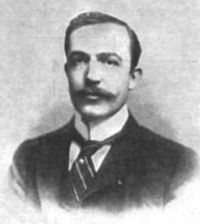 William Henry Wilkins,
The Romance of Isabel, Lady Burton
(1904)
William Henry Wilkins,
The Romance of Isabel, Lady Burton
(1904)
“ Petropolis is a pretty, white, straggling settlement, chiefly inhabited by Germans. It has two streets, with a river running between, across which are many little bridges, a church, a theatre, four or five hotels, the Emperor's palace, and villas dotted everywhere. It is the Imperial and Diplomatic health resort, and the people attached to the Court and the Diplomatic Corps have snuggeries scattered all about the table-land of Petropolis, and form a pleasant little society. The cottages are like Swiss châlets. It is a paradise of mountains, rocks, cascades, and bold panoramas. ”
Stories by Foreign Authors: Russian
“ Petro stood petrified, without moving from the spot, when the innocent child lisped out Pidorka's words to him. "And I, unhappy man, thought to go to the Crimea and Turkey, win gold and return to thee, my beauty! But it may not be. The evil eye has seen us. I will have a wedding, too, dear little fish, I too; but no ecclesiastics will be at that wedding. The black crow will caw, instead of the pope, over me; the smooth field will be my dwelling; the dark blue clouds my roof-tree. The eagle will claw out my brown eyes: the rain will wash the Cossack's bones, and the whirlwinds will dry them. ”
William Wilkinson, An account of the principalities of Wallachia and Moldavia (1820)
“ A man called Mad [97] Petro, having in his travels seen the world, and acquired an intimate knowledge of the advantages thereof, became Cral of Muscovy, and subjected the Russians, whether they would or no, to the restraints of discipline. In order to try what progress they had made in it, he declared war against the King of Sweden, and avenged himself of him. He then went in an expedition 280towards the Crimea, reduced whatever fortresses he thought proper, and began to break the power of the Tartars. ”
 Hilaire Belloc,
Mr. Petre
(1925)
Hilaire Belloc,
Mr. Petre
(1925)
“ Petre’s soul. But the scent of that fetid air nauseated him. He read the prices as a decent man reads, from a kind of itch and against his better instincts, the exploitation of the gallows by our great modern Lords in their newspapers. He reads: but hates it the more as he reads. Till at last he burns the rag.So felt Mr. Petre as he watched Magnas moving.When a big thing moves it does not move like Touaregs, that flighty Gallic-African stock; it moves as moves the mighty Pachyderm, in a solemn ascentional surge like a herd of elephants breasting a hill ”
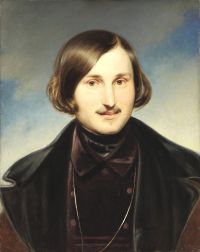
“ Petro doubted his senses, and stood thoughtfully before them, with both hands upon his sides."What prodigy is this? one can see these weeds ten times in a day: what marvel is there about them? was not devil's-face laughing at me?"Behold! the tiny flower-bud crimsons, and moves as though alive. ”
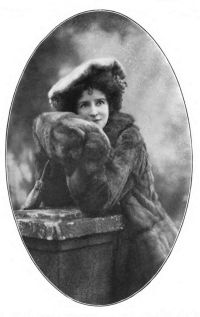 A. M. Williamson,
Winnie Childs, the Shop Girl
A. M. Williamson,
Winnie Childs, the Shop Girl
“ Petro, however, could never bear to refuse any one a favour, even if granting it were an uncongenial task. This peculiarity was constitutional and too well known for his comfort."What do you want me to do?" he asked in a tone polite, but void of personal interest."To come home with me quick and get me out of a horrid scrape. No trouble for you—but a lot for me without a pal to see me through. I won't keep you more than a few minutes, if you're engaged anywhere.""I'm not engaged. But—" Petro began, only to be cut short. ”
Stories by Foreign Authors: Russian
“ A father's heart is not made of stone. Hanging the whip again upon the wall, he led him quietly from the house. "If you ever show yourself in my cottage again, or even under the windows, look out, Petro! by Heaven, your black moustache will disappear; and your black locks, though wound twice about your ears, will take leave of your pate, or my name is not Terentiy Korzh." So saying, he gave him a little taste of his fist in the nape of his neck, so that all grew dark before Petrus, and he flew headlong. ”
Various, The Wide World Magazine, Vol. 22…
“ Accordingly he went up to him deferentially and laid a respectful hand upon his epauletted shoulder."I beg your Excellency's pardon," he said, "but your adjutants have not yet returned, and we wish to close the establishment now. If you will graciously permit me, I will see you back to the palace.""All right," muttered Petroff. "I'm a general.""Certainly, your Highness; but this is closing time."The vodka mounted to Petroff's brain, and he began to get angry."Go to the devil!" he shouted, rising unsteadily to his feet. "I'm a general, I tell you. I want a drink. ”
Hilaire Belloc,
Mr. Petre
(1925)
“ Petre’s entrance, but very courteously motioned him to a chair, on which that financier sat down uncertainly, awaiting inquisition. The Great Specialist looked at him for a moment, and he at the Great Specialist. He felt sure that the Great Specialist was searching the very inwards of his soul, while as for himself, he could not even search, but only very generally receive the most external, the most superficial impression of that eminent man before him. ”
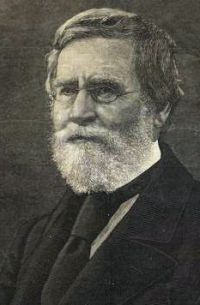
“ Peter knew that when he became a man he would be emperor of all Russia. He knew that among the populations of that immense country there were a great many wild and turbulent tribes, half savage in habits and character, that would never be controlled but by military force, and that the country, too, was surrounded by other nations that would sometimes, unless he was well prepared for them, assume a hostile attitude against his government, and perhaps make great aggressions upon his territories. ”
The Great Events by Famous Historians…
“ No other man—one is almost tempted to say, no sane man—would have ventured to erect a capital city in such an impossible place and on the very frontier of his dominions. That Peter not only dared, but succeeded, though at an almost immeasurable cost, makes the creation of the great metropolis, St. Petersburg, one of the most remarkable events of history.It was the chances of the great northern war that led Peter to St. Petersburg. When he first threw down the gauntlet to Sweden he turned his eyes on Livonia—on Narva and Riga. ”
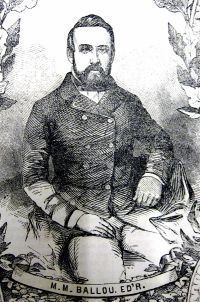 Maturin M. Ballou,
The Duke's Prize; a Story of Art and Heart in Florence
Maturin M. Ballou,
The Duke's Prize; a Story of Art and Heart in Florence
“ The mist was slowly creeping up the mountain's side on the following morning, scarcely three hours from the time that the duke's guests had departed, when Petro and his friends, closely followed by Carlton and his companion, sought the appointed rendezvous for the meeting. The cool, fresh breeze of the morning air, that strengthened as they ascended the mountain, one would think should cool the passions of any creature. Not so with Petro; for the Italian fire of his spirit was up-the dark, deep passions of his nature-and nought but blood could appease their cravings. ”
Charles Morris, Historic Tales: The Romance of Reality…
“ Peter the Great hated Moscow. It was to him the embodiment of that old Russia which he was seeking to reform out of existence. Had he been able to work his own will in all things, he would never have set foot within its walls; but circumstances are stronger than men, even though the latter be Russian czars. In one respect Peter set himself against circumstance, and built Russia a capital in a locality seemingly lacking in all natural adaptation for a city.In the early days of the eighteenth century his armies captured a small Swedish fort on Lake Ladoga near the river Neva. ”
Hilaire Belloc,
Mr. Petre
(1925)
“ He would build a vaster one—with the rumor of John K. Petre behind him. He had designed to leave apart the Tide Power Basins and to ruin them. Now, with this name behind him, he would change his plan. He would buy up and Rotorize them. He would catch the fool public with debentures: they should buy the tides for him and yet leave him master, and at the same time provide a wide support for his raid upon the wealth of England. He would rotorize Central Lighting in the towns. He would more than double the haul in which he had sacrificed half his share. He had lost a battle. ”
“ But Petrograd and the Revolution ... all that ... are put before us only so far as they enter into the lives of a few people--a family of Russians and three casual Englishmen. Which is as it should be. Petrograds change, revolutions come and go; but the secret city of the human heart is not transformed. Human motives remain. Human passions ebb and flow. Human hopes perish--and are reborn. ”
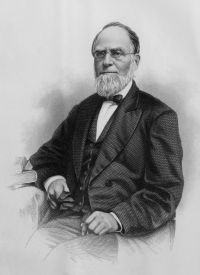 John S. C. Abbott,
The Empire of Russia: From the Remotest Periods to the Present Time
John S. C. Abbott,
The Empire of Russia: From the Remotest Periods to the Present Time
“ Peter III., having placed this abdication in the hands of Count Panin, seemed quite serene, fancying himself safe, at least from bodily harm. In the evening, however, an officer, with a strong escort, came and conveyed him a prisoner to Ropscha, a small imperial palace about fifteen miles from Peterhof. Peter, after his disgraceful reign of six months, was now imprisoned in a palace; and his wife, whom he had intended to repudiate and probably to behead, was now sovereign Empress of Russia. ”
Hugo Ganz, The Land of Riddles (Russia of To-day…
“ Petersburg has none the less become a city of millions of inhabitants is due entirely to the barbaric energy of its founder, Peter the Great, an energy which still works in the plastic medium of Russian national character. On the bank of the Neva stands the equestrian statue of Peter, raised on a mighty block of granite, a notable work of the Frenchman Falconet. ”
Hilaire Belloc,
Mr. Petre
(1925)
“ Petre rose. His host rose with him. “A thousand thanks,” he said, “Mr. Petre. We shall only be too pleased. Too pleased.” He nodded, made the slightest possible inclination of his head, and Mr. Petre bowed and was gone. He was conducted back with great ceremony through the deeply-carpeted corridor, past the three engravings of the Mother Bank in 1815, 1852 and Present Day; and as he would have gone hurriedly out past the counter, was gently detained while his courteous, his even obsequious, guardian handed him an oblong check book, which he thrust hurriedly into his pocket as he disappeared. ”
Maturin M. Ballou,
The Duke's Prize; a Story of Art and Heart in Florence
“ The Italian bit his lips with suppressed rage, and seemed too angry to trust even his voice; but he did not remain long silent. "Signor Americano," said Petro, warmly, "you have insulted my uncle and myself by this secret interview with Signora Florinda, and I demand of you immediate satisfaction for it." "Signor Petro, I have no cause for contention with you," was the reply of Carlton. "I know you love not the lady, and you are equally aware of her feelings towards you. ”
R. Van Bergen, The Story of Russia
“ But when this autocrat had made up his mind, objections were brushed aside. Peter collected 40,000 men, soldiers, Cossacks, Kalmucks, Tartars and such natives as could be found, and put them to work. At first he provided neither tools nor shelter, and food was often scarce. Thousands of workmen died;—what did he care? Others were compelled to take their place. The fortress of St. Peter and Paul arose first; the czar himself was watching the progress from a little wooden house on the right bank of the Neva. Men of means were forced to build stone houses in the new capital. ”
