“ At length, when the truth dawned upon me, that he had really finished, not without difficulty I began to collect myself, and looking at Hippocrates, I said to him: O son of Apollodorus, how deeply grateful I am to you for having brought me hither; I would not have missed the speech of Protagoras for a great deal. For I used to imagine that no human care could make men good; but I know better now. Yet I have still one very small difficulty which I am sure that Protagoras will easily explain, as he has already explained so much. ”
Protagoras
Definition and stakes
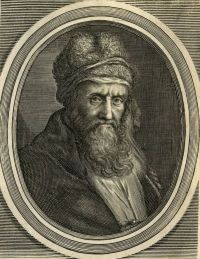
Protagoras, a pre-Socratic philosopher and sophist, is renowned for his relativist claim that "man is the measure of all things," questioning the existence of objective truth. Plato engages with him in dialogues such as Protagoras, portraying their discussions on rhetoric, wisdom, and ethics, while Gilbert Murray emphasizes his role as a skeptic and innovator in the fields of rhetoric and democratic theory.
Havelock Ellis highlights Protagoras’s influence on philosophical development, pointing out the lasting effect of his paradoxical teachings. Writers from Plato to Schwegler wrestle with his ideas, demonstrating his contested reputation as both a seminal thinker and a source of intellectual tension.
Quotes about “Protagoras”
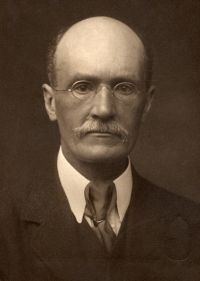 Gilbert Murray,
Euripides and His Age
(1913)
Gilbert Murray,
Euripides and His Age
(1913)
“ We hear of Protagoras in his old age from that enemy of the sophists, Plato. But for this sophist even Plato's satire is kindly and almost reverent. Protagoras worked not at physical science, but at language and philosophy. He taught men to think and speak; he began the study of grammar by dividing sentences into four kinds, Optative, Interrogative, Indicative, Imperative. He taught rhetoric; he formulated the first theory of democracy. But it was as a sceptic that he struck men's imaginations most. "About the Gods, I have no means of knowing either that they are or are not. ”
“ Let us be your peacemakers. And do not you, Socrates, aim at this precise and extreme brevity in discourse, if Protagoras objects, but loosen and let go the reins of speech, that your words may be grander and more becoming to you. Neither do you, Protagoras, go forth on the gale with every sail set out of sight of land into an ocean of words, but let there be a mean observed by both of you. Do as I say. And let me also persuade you to choose an arbiter or overseer or president; he will keep watch over your words and will prescribe their proper length. ”