“ Certain anxious looks escaped my aunt, all of which took the direction of her daughter. I never see Rachel myself without wondering how it can be that so insignificant-looking a person should be the child of such distinguished parents as Sir John and Lady Verinder. ”
Rachel Verinder
Definition and stakes
The theme of “Rachel Verinder” has been addressed by authors such as Anne Homan-Mulock Kennard, Angelina Weld Grimké, Virginia Woolf, Lady Florence Eveleen Eleanore Olliffe Bell and W. B. Maxwell. It is often associated with terms like Mr., theatre, Roy, frost and Vere.
Quotes about “Rachel Verinder”
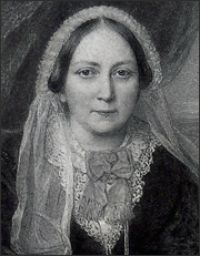 Mrs. Henry Wood,
Verner's Pride
“ A fascinating, lovable child had Rachel Frost ever been: she was a fascinating, lovable girl. Modest, affectionate, generous, everybody liked Rachel; she had not an enemy, so far as was known, in all Deerham. Her father was nothing but a labourer on the Verner estate; but in mind and conduct he was superior to his station; an upright, conscientious, and, in some degree, a proud man: her mother had been dead several years. Rachel was proud too, in her way; proud and sensitive.Rachel, dressed in her bonnet and shawl, passed out of the house by the front entrance. ”
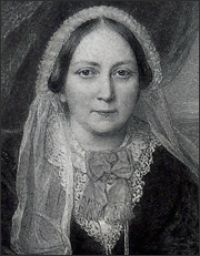 Ellen Wood,
Once a Week
(1862)
“ Verner. The evening rays fell upon her exquisite face, with its soft dark eyes and its changing colour; they fell upon her silk dress, a relic of Mrs. Verner’s,—but it had not crimson stripes across it; upon her lace collar, upon the little edge of lace at her wrists. Nature had certainly intended Rachel for a lady, with her graceful form, her charming manners, and her delicate hands. ”
Mrs. Henry Wood,
Verner's Pride
“ West. "Young women are not thrown into ponds without some cause; and I should think few ever gave less cause for maltreatment of any kind than she. It appears most strange to me with whom she could have been quarrelling—if indeed it was Rachel that was quarrelling.""It is all strange together," cried Lionel Verner. "What took Rachel that way at all, by night time?""What indeed!" echoed Mr. Bitterworth. "Unless—""Unless what?" asked Mr. Verner; for Mr. Bitterworth had brought his words to a sudden standstill. ”
Mrs. Henry Wood,
Verner's Pride
“ But what stranger would be likely to quarrel with Rachel?""Egad, if you come to that, sir, a stranger's more likely to pick a quarrel with her than one of us," rejoined John Massingbird."It was no stranger," said Mr. Verner, shaking his head. "We do not quarrel with strangers. Had any stranger accosted Rachel at night, in that lonely spot, with rude words, she would naturally have called out for help; which it is certain she did not do, or young Broom and Mrs. Roy must have heard her. Rely upon it, that man in the lane is the one we must look for." ”
Mrs. Henry Wood,
Verner's Pride
“ I'd not have Luke Roy if he were made of gold. I never yet had anything to say to him, and I never will have. We can't help our likes and dislikes.""Pshaw!" said Robin, with pardonable pride. "Pretty Rachel is not for a daft chap like Luke Roy, that's a head and ears shorter nor other men. Be you, my dear one?"Rachel laughed. Her conscience told her that she enjoyed a joke at Luke's undersize. She took a shower of kisses from the little girl, put her down, and rose."I must go," she said. "Mrs. Verner may be calling for me.""Don't she know you be come out?" asked old Matthew. ”
Ellen Wood,
Once a Week
(1862)
“ John laughed: he knew his mother did not believe him. “The truth is, mother, I began teasing Rachel about her admirer, Luke. It made her angry.” “What absurdity!” exclaimed Mrs. Verner, testily, to Rachel. “My opinion is, you would have done well to encourage Luke. He was steady and respectable, and old Roy must have saved plenty of money.” Rachel burst into tears. “What now!” cried Mrs. Verner. “Not a word can anybody say to you lately, Rachel, but you must begin to cry as if you were heart-broken. What has come to you, child? Is anything the matter with you?” ”
Anne Homan-Mulock Kennard, Rachel (1894)
“ The author of La Vendéene has not only wished to write a drama, but also to bring forward a little girl, a child of barely fifteen, called Rachel. This child is no phenomenon, and will never, thank goodness, be a prodigy. Mademoiselle Rachel acts with much feeling, enthusiasm, and intelligence, but with very little skill. She intuitively understands the part given to her; she has no need of lessons or counsel from anyone. ”
Mrs. Henry Wood,
Verner's Pride
“ Mr. Bitterworth and Jan had walked on. The vicar touched Lionel on the arm, not immediately to follow them."Mr. Verner, I do not hold good with the policy which seems to prevail, of keeping this matter from you," he said, in a confidential tone. "I cannot see the expediency of it in any way. It is not Rachel's Frost's ghost that is said to be terrifying people." ”
Anne Homan-Mulock Kennard, Rachel (1894)
“ This society, which later exaggerated her faults and accused her unjustly of many things, only chose at the beginning of her career to see perfection in every act, and a heart above all the evil sentiments and violent passions which she knew so well how to portray. The success which Mademoiselle Rachel obtained in the drawing-rooms of the great, the favour full of tenderness which she knew how to win from distinguished women of the world, can only be explained by the rare qualities—I do not say of the actress, but of a young girl who was spirituelle, amiable, and always mistress of herself. ”
 Mrs. George de Horne Vaizey,
The Heart of Una Sackville
“ I’ll tell you something, but you mustn’t speak of it to Mr Carstairs, or father, or anybody; just think over it yourself, and try if you can help her. Rachel knows—she found out for herself, as I did. Vere is not brave nor submissive, nor anything that you think; it is only a pretence, for in reality she is broken-hearted. She won’t allow herself to give in like other people, so she has determined to brave it out, and pretend that she doesn’t care. She has always been admired and envied, and would hate it if people pitied her now, and I think there is another reason. She is angry! ”
Florence Warden, The Dazzling Miss Davison
“ I know you are leading a life you hate, and that you are doing it because you are under the influence of a will stronger than your own. I know that you wish you could break away from it, that you would give the world to be free. And I know that something stronger than yourself holds you down and binds you, and forces you into ways that torture you, and into a life that is a living tomb for all that is best in you. Rachel, Rachel, tear yourself away from it—break loose; say you will be free, and with my help you will be.”His words had the most extraordinary effect upon the girl. ”
Mrs. Henry Wood,
Verner's Pride
“ Roy had intended to be amongst them. But now, understand me, Mr. Verner, although I have told you this, I have not mentioned it to another living soul. Neither do I intend to do so. It can do no good to reap up the sad tale; whether Frederick Massingbird was or was not with Rachel that night; whether he was in any way guilty, or was purely innocent, it boots not to inquire now.""It does not," warmly replied Lionel. "You have done well. Let us bury Mrs. Roy's story between us, and forget it, so far as we can."They parted. Lionel took his way to Deerham Court, absorbed in thought. ”
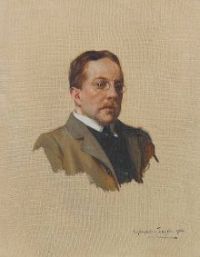 E. W. Hornung,
The Shadow of the Rope
“ And he looked straight at her, as one only looks at one's neighbor at table when one is saying or hearing something out of the common; he turned half round, and he looked in Rachel's face with the smile of an artist with a masterpiece in his eye. It was an inevitable moment, come at last when least expected; instinct, however, had prepared Rachel, just one moment before; and after all she could stare coldly on his enthusiasm, without a start or a tremor to betray the pose. ”
Anne Homan-Mulock Kennard, Rachel (1894)
“ She breaks herself to pieces against the huge difficulties of the conception, and does not succeed in moving us. In the second scene, where Phèdre, thinking her husband is dead, confesses her incestuous passion to the object of it, Sarah Bernhardt never rises above the level of an Aventurière or a Frou-Frou. Rachel was the mouth-piece of the gods ”
Anne Homan-Mulock Kennard, Rachel (1894)
“ In the year 1842, Rachel went, for the first time, to Belgium. Her stay there only lasted a month—from the 22nd of July to the 29th of August. It was then that the pale, insignificant school-girl from the Rue d'Isabey looked at her, with eager hazel eyes, seeking to read the riddle of her life, and listened to her with a heart throbbing to every heart-throb of the actress; for did not the star of genius shine on her brow also? and, diverse as were their lives, and far apart as lay the paths they each of them trod, had not the same "efflux of sacred essence" descended on them both from above? ”
Anne Homan-Mulock Kennard, Rachel (1894)
“ He leaves me very seldom, and only goes for a walk sometimes when I am in a bad temper. It would be impossible to forward our interests with more practical good sense. How, indeed, express it? He is my father, my child, my friend, and my protector. The only thing is, he is impressed with the belief that everyone is trying to cheat me; the consequence is he is like a cat watching a mouse. Rachel always indulged in extremes of praise or blame. At one time Raphaël was an angel of goodness, at another she would roundly accuse him for being parsimonious, and not arranging things properly for her. ”
Anne Homan-Mulock Kennard, Rachel (1894)
“ Now weariness, illness, and regrets for the art she was obliged for a time to forsake, were likely to discourage her. "But be strong and hopeful! Give yourself up to that Eastern sun and warm breezes which will restore you, happy and inspired, to those who love you, and to the great art of Tragedy, which has no future but in Rachel." "À revoir, chère et tendre mère," she wrote to her anxious, heart-broken mother from Malta, on her way to Egypt, "ne fais aucun canevas de drame pendant mon absence." ”
Anne Homan-Mulock Kennard, Rachel (1894)
“ I have made up my mind to enjoy life as much as I possibly can before I return. Away, dull care! Forward! march to the roll of drums, and, like the clown in the pantomime, make three somersaults backwards, with a 'Here I am again!' I love you, and embrace you hurriedly, for I am off to act Camille." Though only a Frenchwoman by adoption, Rachel had much in common with that changeable, volatile race, registering like a barometer every variation in the social or political horizon. ”
Anne Homan-Mulock Kennard, Rachel (1894)
“ Out of such elements one of the finest modern dramas has been evolved, and, after the first hesitation, Rachel appreciated the pathos and interest of the part, and identified herself with it as no actress since has been able to do. "What! you are not dead?" said a friend to her one evening, as she came off the stage laden with crowns and flowers. "You have stolen those flowers from your own tomb." His words bore a strange significance; for Rachel acted Adrienne when struck to death at Charleston, the last time she ever appeared on any stage. ”
Anne Homan-Mulock Kennard, Rachel (1894)
“ She could shake them with the power of her passion. There was a perfect understanding between the actress and them—an alliance strong enough to break down any favouritism or party that either the literary or theatrical world might endeavour to use against her. On her great nights, in Camille or Phèdre, the audience, to the very lowest among the "gods," would sit gazing on the stage, scarcely daring to breathe. "On entendait voler une mouche," Jules Janin says—in the midst of the almost supernatural silence. Many were the charges brought against Rachel's genius. ”
E. W. Hornung,
The Shadow of the Rope
“ But as for admiration, I don't mind telling you that I admire you as I never admired any woman in the world before; and I hope, in spite of that, we shall be friends."Still the indicative mood, still not for a moment the conditional! Rachel did not fail to make another note; but now there was nothing bitter even in her thoughts. She believed in this man, and in his promises; moreover, she began to focus the one thing about him in which she disbelieved. It was his feeling towards her—nothing more and nothing else. There he was insincere; but it was a pardonable insincerity, after all. ”
Anne Homan-Mulock Kennard, Rachel (1894)
“ Then someone rushed forward and caught her as she fell—and the curtain came down. There was no attempt at a recall. There was something too real in the whole scene. The audience silently arose and slowly separated. Ladies sat in groups upon the benches with white faces and red eyes. They all thought her beautiful. They all forgave everything, and they all denied everything. It was a rare triumph. We so love what we greatly admire, that we all longed to love Rachel. ”
Albert D. Vandam, An Englishman in Paris: Notes and Recollections
“ This alone ought to have been sufficient to heal the breach between the tutor and the pupil; any woman with the least spark of generosity, in the position of Rachel towards Samson, would have taken the first step towards a reconciliation. Rachel, as will be seen directly, was perfectly conscious of what she ought to do under the circumstances; she was too great an actress not to have studied the finer feelings of the human heart, and yet she did not do it. ”
Anne Homan-Mulock Kennard, Rachel (1894)
“ Only an actress with all the experience and vicissitudes of a varied career behind her could hope to grasp such a conception. But here we see a half-developed child, with none of the requisites, either voice, walk, or bearing, put forward to act a part in which lust, energy, and violence rule supreme. . . . This delicate girl, this puny overtasked frame, this undeveloped bosom, this troubled tone, could these suffice to represent the stalwart lioness whom we call Roxane? Mademoiselle Rachel appeared, and in an instant the house felt she was unequal to the task. ”
 Ada Cambridge,
A Mere Chance: A Novel. Vol. 2
“ Oh, if you are going to blush, how am I to tell whether you are looking well or not?""I am not going to blush," said Rachel; "and I am quite well. I never was better. The country air is doing me ever so much good.""I am not so sure of that," rejoined Mr. Kingston, rather gravely, stroking her soft cheek. "You look fagged, as if you had been knocking about too much. I didn't like your going to those rubbishy little races—I told Thornley so. Have you been sitting up late at night?""No—I have been doing nothing," pleaded Rachel; "I am really as well as possible. How is the house getting on?" ”
E. W. Hornung,
The Shadow of the Rope
“ Venables sat with folded hands."This is too good of you!" cried Rachel, greeting her in a manner redeemed from hypocrisy by a touch of irresistible irony. "You know my inexperience, and you have come to tell me things, have you not? You could not have come at a better time. How do you fit in twenty-six people at one table? I wanted to have two at each end, and it can't be done!"Mrs. Venables suppressed a smile suggestive of some unconscious humor in these remarks, but sat more upright than ever in her chair, with a hard light in the bright brown eyes that stared serenely into Rachel's own. ”
Mrs. Henry Wood,
Verner's Pride
“ Verner. "Is this all you know of the affair?" he continued, after a pause."It's all, sir," she sobbed. "And enough too. There's only one thing as I shall be for ever thankful for.""What's that?" asked Mr. Verner."That my poor Luke was away afore this happened. He was fond of hankering after Rachel, and folks might have been for laying it on his shoulders; though, goodness knows, he'd not have hurt a hair of her head.""At any rate, he is out of it," observed John Massingbird. ”
Anne Homan-Mulock Kennard, Rachel (1894)
“ The small side-door, where the child Rachel had knocked so often in vain with her little hand, thin and rigid with hunger and cold, was hardly visible. As she gazed, she must have lived over again all those days of varying sadness and joy, of depression and exultation, which are a portion of every actor's life. Slowly she turned away, bending forward to look at the walls of the theatre where she had awakened the echoes with the voice of Hermione, Camille, and Monime, and where she had made men and women tremble and weep as she chanted the "Marseillaise." ”
Related terms
Authors who wrote about “Rachel Verinder”
Anne Homan-Mulock Kennard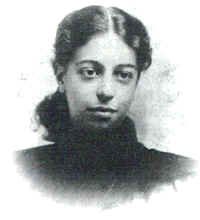 Angelina Weld Grimké
 Virginia WoolfLady Florence Eveleen Eleanore Olliffe Bell
 W. B. MaxwellMary Cholmondeley
 Wilkie CollinsElizabeth MillerAlbert D. VandamAlfred A. GraceMrs. Henry WoodE. W. HornungEllen WoodFlorence WardenMrs. George de Horne Vaizey
 Lilian BellAda CambridgeJr. Horatio Alger
 William MacLeod Raine
 Hugo P. Thieme
Angelina Weld GrimkéVirginia WoolfLady Florence Eveleen Eleanore Olliffe BellW. B. MaxwellMary CholmondeleyWilkie CollinsElizabeth MillerAlbert D. VandamAlfred A. GraceMrs. Henry WoodE. W. HornungEllen WoodFlorence WardenMrs. George de Horne VaizeyLilian BellAda CambridgeJr. Horatio AlgerWilliam MacLeod RaineHugo P. Thieme