Rhine Province

Definition and stakes

1911 Encyclopædia Britannica (1911)

“ The Rhine province is the most thickly populated part of Prussia, the general average being 617 persons per sq. m. The province contains a greater number of large towns than any other province in Prussia. Upwards of half the population are supported by industrial and commercial pursuits, and barely a quarter by agriculture. There is a university at Bonn, and elementary education is especially successful. For purposes of administration the province is divided into the five districts of Coblenz, Düsseldorf, Cologne, Aix-la-Chapelle and Trier. ”

Source: Wikisource

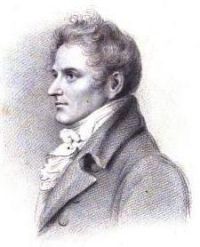
Portrait of Lewis Spence Lewis Spence,  Hero Tales and Legends of the Rhine

“ Like other world-rivers, the Rhine has attracted to its banks a succession of races of widely divergent origin. Celt, Teuton, Slav, and Roman have contested for the territories which it waters, and if the most enduring of these races has finally achieved dominion over the fairest river-province in Europe, who shall say that it has emerged from the struggle as a homogeneous people, having absorbed none of the blood of those with whom it strove for the lordship of this vine-clad valley? ”
Source: Gutenberg

1911 Encyclopædia Britannica (1911)

“ The imports consist mainly of raw material for working up in the factories of the district, while the principal exports are coal, fruit, wine, dyes, cloth, silk and other manufactured articles of various descriptions.
The population of the Rhine province in 1905 was 6,435,778, including 4,472,058 Roman Catholics, 1,877,582 Protestants and 55,408 Jews. The Roman Catholics muster strongest on the left bank, while on the right bank about half the population is Protestant. The great bulk of the population is of Teutonic stock, and about a quarter of a million are of Flemish blood.
”
Source: Wikisource

Get perspective with Kwize: daily news enlightened by great literature