“ Its form of government made necessary a varied and active part in public affairs, educating all classes of officials to a high degree of efficiency and the people at large to self-government. The Riksdag, through parliamentary activity and importance, developed an authority which, although too composite to govern itself, was enabled to act as a shield of steel against all abuse of the executive power. The national life never gathered a richer harvest of men of genius who worked for the progress of their country and for that of the world. ”
Riksdag
Definition and stakes
The Riksdag, Sweden’s unicameral parliament, functions as the supreme legislative body, composed of 349 members elected proportionally for fixed four-year terms. Historically based on the medieval Riksdag of the Estates, it transitioned from a bicameral system in 1866 into a modern, representative institution.
Scholars such as Victor Alfred Nilsson emphasize its role in promoting self-government and limiting executive power, while Frederic Austin Ogg points out its constrained parliamentary framework, in which ministers remain primarily responsible to the monarchy. The Riksdag’s transformation, from representation based on estates to proportional suffrage, illustrates Sweden’s political development, balancing constitutional authority with democratic responsibility.
Quotes about “Riksdag”
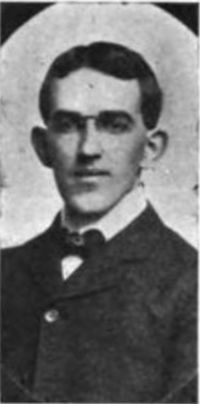 Frederic Austin Ogg,
The Governments of Europe
Frederic Austin Ogg,
The Governments of Europe
“ If the king's decision is palpably contrary to the constitution or the general laws, the ministers are authorized to enter protest. But that is all that they may do. The ministers have seats in the Riksdag, where they participate in debate and, in the name of the crown, initiate legislation. But their responsibility lies so much more directly to the king than to the legislature that what is commonly understood as the parliamentary system can hardly be said to exist in the kingdom. ”
“ The stipulation that the members of the cabinet are to take part in the deliberations of the Chambers gives another pillar of strength to the Riksdag. If the ministers of state are to exert any influence upon the decisions of the Riksdag, it is requisite to have its full confidence. The king is forced to select for his cabinet such members as are supposed to have an influence with the representatives of the people. The influence of the Riksdag has been steadily increasing ever since 1867. ”