“ THE BANKS OF YARROW. After Allingham's collated version. There are many renderings of this ballad, which Scott declares to be a great favorite among the peasantry of the Ettrick forest, who firmly believe it founded on fact. The river Yarrow, so favored of the poets, flows through a valley in Selkirkshire and joins the Tweed above the town of Selkirk. The Tennies is a farm below the Yarrow kirk. ”
River Yarrow
Definition and stakes
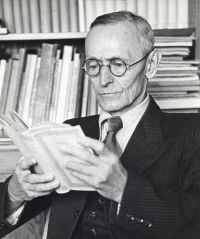
The theme of “River Yarrow” has been addressed by authors such as T. L. Mitchell, Charles Sturt, W. S. Crockett, James Smail and Hermann Hesse. It is often associated with terms like Yarmouth, Yorkshire, great, tide and Scotland.
Quotes about “River Yarrow”
 Archibald Geikie,
Landscape in History, and Other Essays
“ But even in the midst of the rough warfare of these olden days, there was often a thread of tender affection and romance woven by the ballad-singers into their tales. The vale of the river Yarrow has been more specially consecrated by these tragic songs, and the 'dowie howms o' Yarrow' have come to be identified with all that is most pathetic in the minstrelsy of the Border. From the time of the early ballads a succession of minor poets had sung of this vale, until the pathos of its history was fully revealed to the whole world by Scott and Wordsworth. ”
James Smail, Once a Week (1863)
“ Ball-playing in the river affords great amusement to a large number of on-lookers, who crowd the bridges and the banks of the river in order to see the sport. The on-lookers are of both sexes, the females being all of the poorest class. Men and boys, however, of all grades and ages, eagerly watch the game. From the mouth of the Yarrow upwards, for somewhere about five miles, the visitor passes through as beautiful and romantic a valley as Scotland can reveal ”
 Andrew Lang,
Highways and Byways in the Border
“ It is left to one now only to repeat what has been said by better men; at the best, one may but paraphrase the words of another. There is nothing new to be said of Yarrow, no fresh beauty to be pointed out. Its charm affects each one differently; each must see and feel for himself. But whether the season be sweetest summer-tide, or that when winter's blast comes black and roaring down the glens, fiercely driving before it sheets of water snatched from the tortured bosom of lone Saint Mary's,—there, still, abides the indescribable charm of Yarrow. ”
“ Fair hangs the apple frae the rock, But we will leave it growing. O’er hilly path, and open strath, We’ll wander Scotland thorough; But, though so near, we will not turn Into the dale of Yarrow. ‘Let beeves and home-bred kine partake The sweets of Burn-Mill meadow; The swan on still Saint Mary’s Lake Float double, swan and shadow! We will not see them; will not go, To-day, nor yet to-morrow; Enough if in our hearts we know There’s such a place as Yarrow. ‘Be Yarrow stream unseen, unknown! It must, or we shall rue it: We have a vision of our own ”
W. S. Crockett, In the Border Country
“ Is there anything in the scenery to account for it—anything in the physical conditions of the glen itself that solves the secret? There is, and there isn't. To a mere outsider—a mere summer tripper hurrying through—Yarrow is little different from others of the southland valleys. Its main features are identical with those of the Ettrick, and the Tweed uplands, or with the Ewes and the Teviot. All of them exhibit the same pastoral stillness. The same play of light and shade are on their hills. The same soothing spirit broods over them. ”
Anonymous, The Dowie Dens of Yarrow
“ As she walked up yon high, high hill, And down the glen so narrow, Twas there she found her true love John, Lying cold and dead on Yarrow. She washed his face, she combed his hair, As she had done before o, And she kissed the blood from off his wounds, On the dowie dens of Yarrow. Her hair it being three quarters long, The colour it was yellow, She wrapped it round his middle so small, And carried him home to Yarrow. "O daughter dear, dry up your tears, And weep no more for sorrow. I'll wed you to a better man Than the ploughboy lad of Yarrow." ”
H. C. Yarrow, A Further Contribution to the Study of the Mortuary Customs of the North American Indians
“ BURIAL MOUNDS OF OHIO. Near the center of the round fort *** was a tumulus of earth about 10 feet in height and several rods in diameter at its base. On its eastern side, and extending 6 rods from it, was a semicircular pavement composed of pebbles such as are now found in the bed of the Scioto River, from whence they appear to have been brought. The summit of this tumulus was nearly 30 feet in diameter, and there was a raised way to it, leading from the east, like a modern turnpike. The summit was level. The outline of the semicircular pavement and the walk is still discernible. ”
“ It is a really remarkable stream in making its debut without the slightest fuss, for it is large enough at its very birth to be called a small river. Its modesty is a great loss to Yorkshire, for if, instead of gathering strength in the hidden places in the limestone fells, it were to keep to more rational methods, it would flow to the edge of the Cover, and there precipitate itself in majestic fashion into a great pool below. ”
Various, The Atlantic Monthly, Volume 13…
“ The day was out broadly now,—a thorough winter's day, cold and clear, the frosty air sending a glow through your blood. It sent none into Yarrow's thinned veins: he was too far gone with all these many years. The place, as I said, was a lonely one, niched between hills, yet near enough main roads for him to hear sounds from them: people calling to each other, about Christmas often; carriages rolling by; great Conestoga wagons, with their dozens of tinkling bells, and the driver singing; dogs and children chasing each other through the snow. ”
Various, The Rivers of Great Britain, Descriptive…
“ Though the river has constantly increased in width, all the towns from Croft downwards are situated more or less on each side of the stream. The first of these is the quiet and sleepy town of Yarm, with a single broad street on one side of the river, and a few scattered houses and windmills on the other. Up to Yarm the tide reaches, and here also the net-fishing for salmon begins, small cobles, with salmon-nets on board, being plentiful in the neighbourhood of Yarm Bridge. What else the people of Yarm do for a living in these days is not readily discernible. ”
Andrew Lang,
Highways and Byways in the Border
“ In the summer season now, and especially since the advent of the motor car, from morning till night so constant a stream of visitors and 295tourists passes through the vale, and along the lake side, that even Yarrow's deathless charm is broken, her peace disturbed; one's soul can take no rest there now, far from the clamour of the outer world. ”
Jean F. Terry, Northumberland Yesterday and To-day
“ The Jarrow of to-day, and all its neighbours of industrial Tyneside, possess no beauty of aspect such as the towns that are more fortunately situated on the upper reaches of the river; they are muffled in clouds of smoke and soot, and darkened by the necessities of their toil in grimy ores and the ever-present coal. ”
W. S. Crockett, In the Border Country
“ Here, if anywhere in the valley, the answer to the Yarrow enigma will be found. Professor Veitch thinks that the whole district affords such an answer: "Nor will anyone," he says, "who is familiar with the Vale of Yarrow have had much difficulty in understanding how it is suited to pathetic verse. The rough and broken, yet clear, beautiful, and [Pg 107] wide-spreading stream has no grand cliffs to show; and it is not surrounded by high and overshadowing hills. Here and there it flows placidly, reflectively, in large liquid lapses, through an open valley of the deepest summer green ”
W. S. Crockett, In the Border Country
“ Those deep green grassy knowes of the valley are peculiarly susceptible of change. In the morning with a blue sky, or with breaks of sunlight through the fleeting clouds, the green hillsides and the stream smile and gleam in sympathy with the cheerfulness of heaven. But under a grey sky, or at the gloaming, the Yarrow wears a peculiarly wan aspect—a look of sadness. And no valley I know is more susceptible of sudden change. ”
Chester A. Reed, Flower Guide: Wild Flowers East of the Rockies
“ The leaves, alternating along and clasping the stem, are soft and feathery—deeply and finely bipinnatifid.The flowers grow in very compact, flat-topped clusters at the top of the stem. Each flower-head has a centre of short, tubular, yellowish florets that turn brown or grayish as they grow old; they are surrounded by from four to six round, white rays.Yarrow is a very hardy plant; we may find it thriving beside roads where the dust has killed nearly ever other living thing. Its leaves have a strong, not unpleasant, aromatic odor. ”
Leland F. Allen, Wild Flowers of Zion and Bryce Canyon National Parks and Cedar Breaks National Monument
“ Western Yarrow is very widespread and can be found in much of Western America. It is more common at elevations above 5,000 feet in these areas. It grows to be 12 to 20 inches high, and the fernlike leaves, which have a pungent odor when crushed, and the umbrella-shaped clusters of flowers are characteristics of this plant that help to identify it. ”
G. Christopher Davies, The Swan and Her Crew
“ It is the eastern part of Norfolk, and no better place could be found as a field for the doings of three enterprising young naturalists and sportsmen. It is known as the "Broad District," and it consists almost entirely of lake, river, and marsh. If we take Yarmouth on the sea-coast as the starting-point, and look inland, we shall see first of all a large tidal lake known as Breydon Water. From this radiate three rivers going north-west, [2] west, and south-west. The chief of them is the Yare, which winds for thirty miles inward to the old city of Norwich. ”
William Hewitt, An Essay on the Encroachments of the German Ocean Along the Norfolk Coast
“ In Yarmouth, the sea has not advanced upon the sands in the slightest degree since the reign of Elizabeth, and where the town is built became firm and habitable ground about the year 1008, from which time a line of dunes has gradually increased in height and breadth, stretching across the whole entrance of the ancient estuary, and obstructing the ingress of the tides so completely, that they are only admitted by a narrow passage, which the river keeps open, and which has gradually shifted several miles to the south. ”
“ Alas! e'en your unhallow'd breath May spare the victim fallen low; But Man will ask no truce to death, No bounds to human woe. T. CAMPBELL. 257. YARROW UNVISITED. 1803. From Stirling castle we had seen The mazy Forth unravell'd, Had trod the banks of Clyde and Tay, And with the Tweed had travell'd; And when we came to Clovenford, Then said my "winsome Marrow." "Whate'er betide, we'll turn aside, And see the Braes of Yarrow." "Let Yarrow folk, frae Selkirk town, Who have been buying, selling, Go back to Yarrow, 'tis their own, Each maiden to her dwelling! ”
Frank Yeigh, Canadian Alpine Journal (1907)
“ It was a rare day in summer when we thus meandered over the alluring trail, past the Takakkaw falls—Canada's highest Niagara—past the Laughing falls and the Twin falls, and many another no less beautiful, to the great Yoho glacier at the uppper end of the valley, with its giant caverns, showing strangely blue and green, and from the throats of which the streams had their birth that later made the Yoho river. ”
 John Lort Stokes,
Discoveries in Australia, Volume 1
“ One disadvantage under which this place labours is badness of water, while the country around it is a dead level, with clumps of very open woodland. The formation is whinstone, but the soil's fertile quality shows an absence of sandstone. RIVER YARRA-YARRA. Proceeding up the Yarra-yarra, we found that about two miles from the mouth, the river divides, one branch continuing in a northerly direction, and the other, a narrow sluggish stream, turning suddenly off to the eastward. The banks are so densely wooded, that it is seldom if ever that its surface is ruffled by a breeze. ”
Walter White, A Month in Yorkshire
“ Rocks and cliffs of various formations beset all its upper course, imparting a different character to the dale every few leagues—savage, romantic, picturesque, and beautiful. No more beautiful scenery is to be found along the river than for some miles above and below Bolton Abbey. Five miles farther down, the stream flows past those two delightful inland watering-places, Ilkley and Ben Rhydding, and onwards between thick woods and broad meadows to Wetherby, below which it is again narrowed by cliffs, until leaving Tadcaster, rich in memories of Rome, it enters the Ouse between Selby and York. ”
Gordon Home, Yorkshire Dales and Fells
“ These nearer hills, which include High Seat and the Lady’s Pillar, form the watershed of this part of the Yorkshire border; for on the western slopes are to be found the sources of the river Eden that flows through the beautiful valley, which is one of the greatest charms of the Midland route to Scotland.If one stays in this mountainous region, there are new and exciting walks available for every day. ”
Francis Davy Longe, Lowestoft in olden times
“ This action of the sea on our eastern coast is due to the inexhaustible supply of sand and shingle which is being constantly pushed along the shore southwards by the tidal wave. How persistent is the action of the sea in blocking up every outlet, whether river or harbour mouth, which man would wish kept open, has been a matter of costly experience to Yarmouth for some 800 years, as it has been to the Great Eastern Railway Company during the short time that they have undertaken the task of keeping open the mouth of Lowestoft Harbour. ”
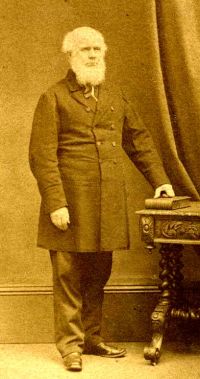 William Howitt,
Homes and Haunts of the Most Eminent British Poets…
“ As you look out at the front door, the Yarrow runs down the valley at the distance of, perhaps, a quarter of a mile on the left hand, with a steep scaur, or precipitous earthy bank, on its farther side, in full view, over the top of which runs the highway from Edinburgh to Galashiels. Down the valley, and on the other side of the water, lies, in full view also, the farm of Mount Benger, which Hogg took of the Duke of Buccleugh after he came to Altrive. It is much more inclosed and cultivated in tillage than Altrive. ”
Francis Davy Longe, Lowestoft in olden times
“ The origin of Yarmouth is unique; the bar of a wide Estuary, a sandbank in the sea, seized upon for human habitation before even nature herself had trusted it with any vegetation beyond a few patches of marram grass to bind the sand together. ”
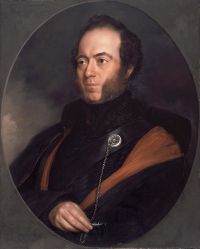 T. L. Mitchell,
Three Expeditions into the Interior of Eastern Australia…
“ The yarra is certainly a pleasing object in various respects; its shining bark and lofty height inform the traveller of a distant probability of water, or at least of the bed of a river or lake; and being visible over all other trees it usually marks the course of rivers so well that, in travelling along the Darling and Lachlan, I could with ease trace the general course of the river without approaching its banks until I wished to encamp. The nature and character of several other species of the genus eucalyptus were nevertheless very different and peculiar. ”
G. Christopher Davies, The Handbook to the Rivers and Broads of Norfolk & Suffolk
“ It is not deep enough, however, for yachts or laden wherries. The Broad is largely affected by the tide, which sometimes leaves its shallows exposed. The river, as I should have said, is tidal up to Norwich, and the force of the tide increases with every deepening of Yarmouth Haven. We rowed up the dyke which leads on to the Broad, a small sheet of water, overgrown with weeds and very shallow, but a capital nursery for fish and fowl. The fishing upon it is preserved. Rowing across it, we entered another dyke, and emerged into the river again, and caught up the yacht. ”
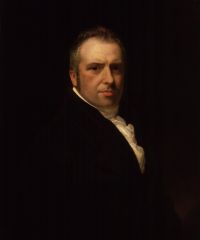 William Hone,
The Every-day Book and Table Book…
“ At the end of the six miles, the road turns over a bridge across the Wye, leading through the dale (Matlock) to the Bath. The river here rolls darkly along, its progress swifter and its depth greater; the same rocky barrier that encloses all the dales in this county uplifting its huge masses of rocks on either side. The margin of the river is thickly studded with large trees, close copse-woods clothe the slopes at the bottom, and ascend part of the cliffs’ sides—wild shrubs branch from the clefts above, whence innumerable jackdaws whirl their flights, and make incessant monotonous noise. ”
 John MacGregor,
The Voyage Alone in the Yawl "Rob Roy"
“ Pushing on again, still up the river, the Rob Roy had to beat against an east wind all through the densely packed brigs and barges in the narrow bend at Rochester, where the difficulty of working her added zest to the journey, and now and then a resounding crash from some great barge drifting down against other vessels, told me that not every one of the craft was as fortunate in navigation as the yawl. Before us is the Cathedral, but it is far too stiff in its sharp outline to arrest the eye for a moment. ”