Roguin

Definition and stakes

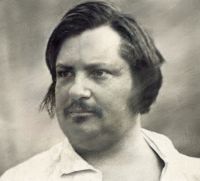
Portrait of Honoré de Balzac Honoré de Balzac,  The Rise and Fall of Cesar Birotteau (1837)

“ In times gone by, Roguin—a large stout man, with a pimpled face, a very bald forehead, and black hair—had not been wanting in a certain force of character and countenance. He had once been young and daring; beginning as a mere clerk, he had risen to be a notary; but at this period his face showed, to the eyes of an observer, certain haggard lines, and an expression of weariness in the pursuit of pleasure. When a man plunges into the mire of excesses it is seldom that his face shows no trace of it. ”
Source: Wikisource

Portrait of Honoré de Balzac Honoré de Balzac,  Rise and Fall of Cesar Birotteau

“ I spent two hours at the Bourse this afternoon. You have not one farthing’s credit; every one is talking of your disaster, of your attempts to renew, of your appeals to various bankers, of their refusals, of your follies,—going up six flights of stairs to beg a gossiping landlord, who chatters like a magpie, to renew a note of twelve hundred francs!—your ball, given to conceal your embarrassments. They have gone so far as to say you had no property in Roguin’s hands; according to your enemies, Roguin is only a blind. ”
Source: Gutenberg

Portrait of Anatole Cerfberr Anatole Cerfberr,  Repertory of the Comedie Humaine (1902)

“ ROGUIN (Madame) , born Chevrel between the years 1770 and 1780; only daughter of Chevrel, the banker; wife of the preceding; cousin of Madame Guillaume of The Cat and Racket, and fifteen years her junior; aided her relative's daughter, Augustine, in her love affair with the painter, Sommervieux; pretty and coquettish; for a long time the mistress of Tillet, the banker; was present with her husband at the famous ball given by Cesar Birotteau, December 17, 1818. She had a country-house at Nogent-sur-Marne, in which she lived with her lover after Roguin's departure. ”
Source: Wikisource

Get perspective with Kwize: daily news enlightened by great literature