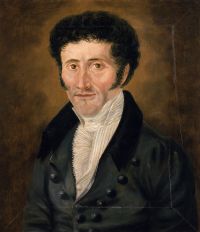
Salvator Rosa

Definition and stakes

A Popular Handbook to the National Gallery…

“ What says he of himself? 'Despiser of wealth and of death.' Two grand scorns: but, oh, condemned Salvator! the question is not for man what he can scorn, but what he can love." At the "opposite poles of art are Fra Angelico and Salvator Rosa; of whom the one was a man who smiled seldom, wept often, prayed constantly, and never harboured an impure thought. His pictures are simply so many pieces of jewellery, the colour of the draperies being perfectly pure, as various as those of a painted window, chastened only by paleness, and relieved upon a gold ground. ”
Source: Gutenberg

William Hazlitt,  The Collected Works of William Hazlitt…

“ There is not in Salvator’s scenes the luxuriant beauty and divine harmony of Claude, nor the amplitude of Nicolas Poussin, nor the gorgeous richness of Titian—but there is a deeper seclusion, a more abrupt and total escape from society, more savage wildness and grotesqueness of form, a more earthy texture, a fresher atmosphere, and a more obstinate resistance to all the effeminate refinements of art. Salvator Rosa then is, beyond all question, the most romantic of landscape painters ”
Source: Gutenberg

Shearjashub Spooner,  Anecdotes of Painters, Engravers…

“ From the Pincio, Salvator Rosa was generally accompanied home by the most distinguished persons, both for talent and rank; and while the frugal Poussin was lighting out some reverend prelate or antiquarian with one sorry taper, Salvator, the prodigal Salvator, was passing the evening in his elegant gallery, in the midst of princes, nobles, and men of wit and science, where he made new claims on their admiration, both as an artist and as an improvisatore; for till within a few years of his death he continued to recite his own poetry, and sing his own compositions to the harpsichord or lute. ”
Source: Gutenberg

Get perspective with Kwize: daily news enlightened by great literature