Sia

Definition and stakes

Richard Wilhelm,  Chinese Fairy Book (1921)

“ The servants, full of joy, hurried to the parents to acquaint them with the good news. And when they heard it they did not wait for the young people to come to them, but hastened themselves to their son's rooms, took the princess by the hand and wept. Young Sia, too, had become more settled by this time, and was no longer so mischievous. So he and his wife grew to love each other more sincerely day by day. ”
Source: Wikisource

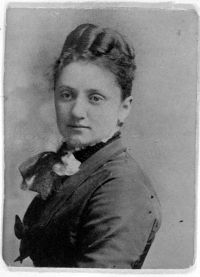
Portrait of Matilda Coxe Stevenson Matilda Coxe Stevenson,  The Sia

“ It is the paramount occupation of their life; all other desirable things come through its practice. It is the foundation of their moral and social laws. Children are taught from infancy that in order to please the pantheon of their mythical beings they must speak with one tongue as straight as the line of prayer over which these beings pass to enter the images of themselves.
It will be understood from the cosmogony that the Sia did not derive their clan names from animal ancestors, nor do they believe that their people evolved from animals, other than the Sia themselves.
”
Source: Gutenberg

Portrait of Matilda Coxe Stevenson Matilda Coxe Stevenson,  The Sia

“ There are two rudely carved stone animals at the ruined village supposed to have been visited by Po ́shaiyänne. These the Sia always speak of as the cougar, but they say, “In reality they are not the cougar, but the lynx, for the cougar remained at the white-house in the north.”
This cosmogony exhibits a chapter of the Sia philosophy, and though this philosophy is fraught with absurdities and contradictions, as is the case with all aboriginal reasoning, it scintillates with poetic conceptions. They continue:
“The hour is too solemn for spoken words; a new life is to be given to us.”
”
Source: Gutenberg

Get perspective with Kwize: daily news enlightened by great literature