Supreme Court of Missouri

Definition and stakes

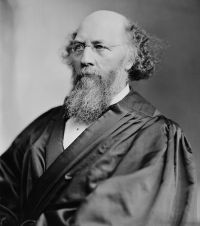
Horace Gray A Legal Review of the Case of Dred Scott (1857)

The most striking argument against allowing any binding force to the decision of the supreme court of Missouri is, that, as that decision was expressly founded on a refusal to allow any effect to rights secured by an act of congress admitted by that court to be valid, if the supreme court of the United States should hold itself bound by the decision, it would give effect, in a spirit of comity, to a decision which was arrived at only by refusing a like comity to the laws of the United States.
Source: Wikisource

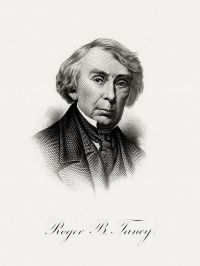
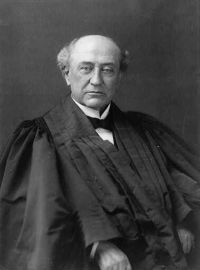
Benjamin C. Howard Report of the Decision of the Supreme Court of the United States…

And if, in the language of the Supreme Court of Missouri, the master, by taking his slave to Illinois, and employing him there as a slave, emancipates him as effectually as by a deed of emancipation, is it possible that such an act is not matter for adjudication in any slave State where the master may take him? Does not the master assent to the law, when he places himself under it in a free State?
Source: Gutenberg

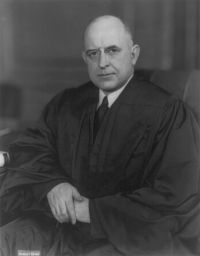
Portrait of William O. Douglas William O. Douglas Williams v. Kaiser — Opinion of the Court

And when we search for an independent state ground to support the denial, we find none. The Attorney General of Missouri only goes so far as to say that the petition did not state facts sufficient to justify the appointment of counsel under the Missouri statute. But as we have seen, the allegations in the petition seem sufficient under the rule laid down by the Supreme Court of Missouri in State v. Williams, supra. And Missouri suggests no other state ground which might be the basis of the decision.
Source: Wikisource

Get perspective with Kwize: daily news enlightened by great literature