Supreme Court of South Carolina

Definition and stakes

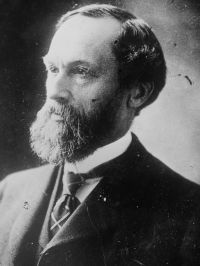
David Hackett Souter Yates v. Evatt — Opinion of the Court

In light of the fact that the Supreme Court of South Carolina has approved the trial judge's jury instructions, we will accept his charge on malice as the proper statement of South Carolina law on the subject. The trial judge told the jury that malice is the equivalent of an "intention to kill," without legal justification or excuse. [13] There is no question that either presumption on malice could have been employed by the jury in reaching its verdict.
Source: Wikisource

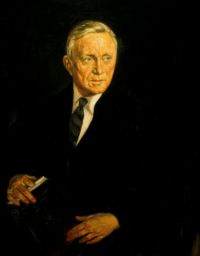
Portrait of William R. Day William R. Day Franklin v. South Carolina — Opinion of the Court

The statute simply provides for an exercise of judgment in attemping to secure competent jurors of proper qualifications. Murray v. Louisiana, 163 U.S. 101, 108, 41 L. ed. 87, 90, 16 Sup. Ct. Rep. 990; Gibson v. Mississippi, 162 U.S. 565, 589, 40 L. ed. 1075, 1081, 16 Sup. Ct. Rep. 904.
Under this statute, the supreme court of South Carolina held that the jury commissioners were only required to select men of good moral character, and that competent colored men were equally eligible with others for such service. We find no denial of Federal rights in this provision of the statute.
Source: Wikisource

American Eloquence, Volume 1

In fact, the advocates of this bill refute their own argument. They tell us that the ordinance is unconstitutional; that it infracts the constitution of South Carolina, although, to me, the objection appears absurd, as it was adopted by the very authority which adopted the constitution itself. They also tell us that the Supreme Court is the appointed arbiter of all controversies between a State and the General Government. Why, then, do they not leave this controversy to that tribunal?
Source: Gutenberg

Get perspective with Kwize: daily news enlightened by great literature