Sutter's Fort

Definition and stakes

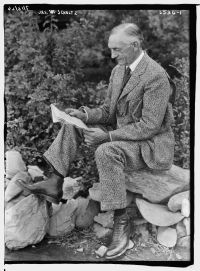
Portrait of Hamlin Garland Hamlin Garland,  The pioneer West (1923)

“ Sutter’s Fort soon became the rendezvous for all the trappers, hunters and wandering people of all sorts in the surrounding territory, besides the emigrants that all the time came from the East over the Oregon trail, the fort being its terminal.
When the territory came under the Stars and Stripes, Sutter swore allegiance to the flag and anglicized his name, becoming John Augustus Sutter. By 1847 his colony had developed wonderfully. He had a thousand acres of land growing wheat; he owned 8,000 head of cattle, 2,000 horses and mules, 2,000 sheep and 1,000 hogs.
”
Source: Gutenberg

Daniel B. Woods,  Sixteen months at the gold diggings (1852)

“ The city is every day newly filled, then emptied but to be filled again. The crowd ever presses on, elate with hope, excited by expectations, which it would be impossible to define or realize. The world-renowned Sutter’s Fort, which is two miles from the landing, is a rude structure made of sun-dried bricks, about five hundred feet long and two hundred wide. ”
Source: Gutenberg

Samuel Nelson,  The Sutter Case — Opinion of the Court

“ This accompanying sketch is part of the grant itself. No other map or sketch can possibly have any just influence in determining the boundaries of the title.
Sutter, it is true, had a place called his fort, which was on the south side of the American River; and there he had workshops and servants, a distillery, mill, tannery, and what not. He cultivated there a large quantity of land, and had many horses and cattle. But he did not ask for a title which would cover the land occupied by him there. On the contrary, he had made improvements on the Feather River many miles higher up the valley.
”
Source: Wikisource

Get perspective with Kwize: daily news enlightened by great literature