Taiping Rebellion

Definition and stakes

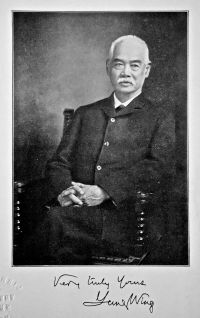
Portrait of Yung Wing Yung Wing,  My life in China and America (1909)

“ The Taiping Rebellion differs from its predecessors in that in its embryo stage it had taken onto itself the religious element, which became the vital force that carried it from the defiles and wilds of Kwangsi province in the southwest to the city of Nanking in the northeast, and made it for a period of fifteen years a constantly impending danger to the Manchu Dynasty, whose corruption, weakness and maladministration were the main causes that evoked the existence of this great rebellion. ”
Source: Wikisource

William James Hail,  Tsêng Kuo-fan and the Taiping Rebellion (1927)

“ ORGANISATION OF THE GOD-WORSHIPPERS.
When we seek the causes for such a mighty upheaval as the Taiping rebellion, many points of weakness in the government suggest themselves at once. But those causes were inherent in the organisation of the military and civil services, and we are compelled to examine more closely into the particular circumstances which prevailed in the southern part of China if we would attempt to understand the movement.
”
Source: Wikisource

Alexander Michie,  The Englishman in China During the Victorian Era…

“ The Taiping rebellion had devastated the central and southern provinces many years before the Chinese Government roused itself to a serious effort to resist it. The movement of repression originated with the Governor-General of the Hu provinces, whose chief lieutenant and successor was Tsêng Kwo-fan, Governor-General of Kiangnan at the time of which we now speak. His brother, Tsêng Kwo-chuan, the Governor of Chêkiang province, was the military leader, and Li Hung-chang, the most capable and energetic of them all, was governor of the province of Kiangsu. ”
Source: Gutenberg

Get perspective with Kwize: daily news enlightened by great literature