Telugu people

Definition and stakes

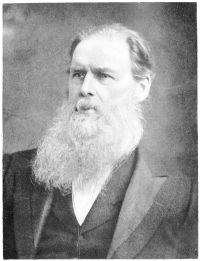
Portrait of Henry Yule Henry Yule,  Hobson-Jobson — G (1903)

“ The reason why the term became thus specifically applied to the Telugu people is probably because, when the Portuguese arrived, the Telugu monarchy of Vijayanagara, or Bijanagar (see BISNAGAR, NARSINGA) was dominant over great part of the Peninsula. The officials were chiefly of Telugu race, and thus the people of this race, as the most important section of the Hindūs, were par excellence the Gentiles, and their language the Gentile language. ”
Source: Wikisource

1911 Encyclopædia Britannica, Volume 26… (1911)

“ The Telugu-speaking peoples are partly subjects of the nizam of Hyderabad and partly under British rule, beginning north of Madras city and extending N.W. to Bellary, where Telugu meets Kanarese, and N.E. to near Orissa. They are taller and fairer than the Tamils, otherwise they are of typical Dravidian features. They are an enterprising people, good farmers and skilful seamen. They formed the greater part of the early Madras or “coast” army, whence sepoys even in Bengal were formerly called telingas. In 1901 the number of speakers of Telugu in all India was nearly twenty one millions. ”
Source: Wikisource

Gurajada Apparao,  Minute of Dissent (2012)

“ J. Ramayya Pantulu suggested after mature deliberation in pages 41 and 42 of his ‘Defence’ do not find a place in the lists prepared by his friends who formed the majority of the Sub-Committee.
218. We stand at the parting of the ways and our decision will affect the future destinies of the Telugu people. It lies with us to chain and starve Telugu literature or to give it liberty and vitality and to make it a great civilizing force. Individual likes and dislikes should not be allowed to sway the decision of problems which affect a whole nation today and who knows, for all time to come.
”
Source: Wikisource

Get perspective with Kwize: daily news enlightened by great literature