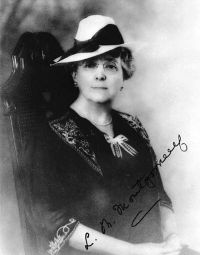
“ By July 19 he had nearly finished a volume of Ivanhoe, which he expected to complete in September. Such enthusiasm of industry, in such circumstances, is without parallel in literary history. The Bride of Lammermoor is a subject which leaves an author no choice; he must make his novel end badly: he cannot avoid the tragic, and tragedy scarcely suits the genius of Scott. He knew the tale of the mysterious death of Stair’s daughter, from tradition in his family, and, after his illness, he remembered the legend as well as ever: of his own handling of the tale he could remember nothing. ”
The Bride of Lammermoor
Definition and stakes
Quotes about “The Bride of Lammermoor”
Leslie Stephen,
Hours in a Library, Volume 1
“ And though many good judges hold the 'Bride of Lammermoor' to be Scott's best performance, in virtue of the loftier passions which animate the chief actors in the tragedy, we are, after all, called upon to sympathise as much with the gentleman of good family who can't ask his friends to dinner without an unworthy device to hide his poverty, as with the passionate lover whose mistress has her heart broken. ”
J. G. Lockhart, Memoirs of the Life of Sir Walter Scott…
“ But even that blemish, for I grant that I think it a serious one, could not disturb the profound interest and pathos of The Bride of Lammermoor—to my fancy the most pure and powerful of all the tragedies that Scott ever penned. The reader will be well pleased, however, to have, in place of any critical observations on this work, the following particulars of its composition from the notes which its printer dictated when stretched on the bed from which he well knew he was never to rise. ”
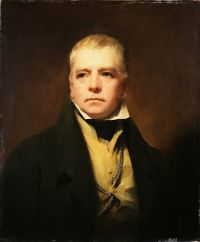
Walter Scott,
The Bride of Lammermoor
“ Female assistance was now hastily summoned; the unhappy bride was overpowered, not without the use of some force. As they carried her over the threshold, she looked down, and uttered the only articulate words that she had yet spoken, saying, with a sort of grinning exultation, “So, you have ta’en up your bonny bridegroom?” She was, by the shuddering assistants, conveyed to another and more retired apartment, where she was secured as her situation required, and closely watched. ”
Agnes Repplier,
Compromises
(1904)
“ Scott did not care to do this thing. The experiment was too painful for his hands. But critics who talk about the subtleties of modern novelists, as compared with Sir Walter’s “frank simplicity,”—patronizing phrase!—have forgotten “The Bride of Lammermoor.” There is nothing more artistic within the whole range of fiction than our introduction to Lucy Ashton, when the doomed girl—as yet unseen—is heard singing those curious and haunting lines which reveal to us at once the struggle that awaits her, and her helplessness to meet and conquer fate. ”
Walter Scott,
The Bride of Lammermoor
“ She regarded what she termed her daughter’s want of spirit as a decided mark that the more plebeian blood of her father predominated in Lucy’s veins, and used to call her in derision her Lammermoor Shepherdess. To dislike so gentle and inoffensive a being was impossible; but Lady Ashton preferred her eldest son, on whom had descended a large portion of her own ambitious and undaunted disposition, to a daughter whose softness of temper seemed allied to feebleness of mind. ”
Walter Scott,
The Bride of Lammermoor
“ But so active were his doubts and fears as altogether to derange his purposed ceremonial for the reception of the Marquis. These feelings of apprehension were not confined to Sir William Ashton. “It is my mother—it is my mother!” said Lucy, turning as pale as ashes, and clasping her hands together as she looked at Ravenswood. “And if it be Lady Ashton,” said her lover to her in a low tone, “what can be the occasion of such alarm? Surely the return of a lady to the family from which she has been so long absent should excite other sensations than those of fear and dismay.” ”
Walter Scott,
The Bride of Lammermoor
“ Let your lot in life be determined—your station and purpose ascertained, before you address my father. I am sure he loves you—I think he will consent; but then my mother——!” She paused, ashamed to express the doubt she felt how far her father dared to form any positive resolution on this most important subject without the consent of his lady. “Your mother, my Lucy!” replied Ravenswood. “She is of the house of Douglas, a house that has intermarried with mine even when its glory and power were at the highest; what could your mother object to my alliance?” ”
Sir Walter Scott,
The Bride of Lammermoor — Volume I
“ The train of little attentions, absolutely necessary to sooth the young lady's mind, and aid her in composing her spirits, necessarily threw the Master of Ravenswood into such an intercourse with her father, as was calculated, for the moment at least, to break down the barrier of feudal enmity which divided them. To express himself churlishly, or even coldly, towards an old man, whose daughter (and such a daughter) lay before them, overpowered with natural terror—and all this under his own roof—the thing was impossible ”
Walter Scott,
The Bride of Lammermoor
“ Let me hope that, having won your friendship hardly, we shall not lose it lightly.” “Lose it, Miss Ashton!” said the Master of Ravenswood. “No; wherever my fortune calls me—whatever she inflicts upon me—it is your friend—your sincere friend, who acts or suffers. But there is a fate on me, and I must go, or I shall add the ruin of others to my own.” “Yet do not go from us, Master,” said Lucy; and she laid her hand, in all simplicity and kindness, upon the skirt of his cloak, as if to detain him. “You shall not part from us. My father is powerful, he has friends that are more so than himself ”
Walter Scott,
The Bride of Lammermoor
“ The marriage guests, on the present occasion, were regaled with a banquet of unbounded profusion, the relics of which, after the domestics had feasted in their turn, were distributed among the shouting crowd, with as many barrels of ale as made the hilarity without correspond to that within the castle. The gentlemen, according to the fashion of the times, indulged, for the most part, in deep draughts of the richest wines, while the ladies, prepared for the ball which always closed a bridal entertainment, impatiently expected their arrival in the state gallery. ”
Walter Scott,
The Bride of Lammermoor
“ In his heart the Lord Keeper rejoiced at having conciliated an adversary so formidable, while, with a mixture of pleasure and anxiety, he anticipated the great things his young companion might achieve, were the breath of court-favour to fill his sails. “What could she desire,” he thought, his mind always conjuring up opposition in the person of Lady Ashton to his new prevailing wish—“what could a woman desire in a match more than the sopiting of a very dangerous claim, and the alliance of a son-in-law, noble, brave, well-gifted, and highly connected ”
Walter Scott,
The Bride of Lammermoor
“ Young women of the higher rank seldom mingled in society until after marriage, and, both in law and fact, were held to be under the strict tutelage of their parents, who were too apt to enforce the views for their settlement in life without paying any regard to the inclination of the parties chiefly interested. On such occasions, the suitor expected little more from his bride than a silent acquiescence in the will of her parents ”
Walter Scott,
The Bride of Lammermoor
“ The bravest news ye ever heard—the Lord Keeper’s up yonder wi’ his fair daughter, just ready to fling her at my lord’s head, if he winna tak her out o’ his arms; and I’se warrant he’ll stitch our auld lands of Ravenswood to her petticoat tail.” “Eh! sirs—ay!—and will hae her? and is she weel-favoured? and what’s the colour o’ her hair? and does she wear a habit or a railly?” were the questions which the females showered upon the butler. “Hout tout! it wad tak a man a day to answer a’ your questions, and I hae hardly a minute. ”
Sir Walter Scott,
The Bride of Lammermoor — Volume II
“ Now, any one could carry the writings; but you will have a little more to do; you must contrive to drop out before my Lady Ashton, just as if it were a matter of little consequence, the residence of Ravenswood at her husband's house, and his close intercourse with Miss Ashton; and you may tell her, that all the country talks of a visit from the Marquis of A——, as it is supposed, to make up the match betwixt Ravenswood and her daughter. ”
Sir Walter Scott,
The Bride of Lammermoor — Volume III
“ But it was beyond her power effectually to withstand or elude the constant and unceasing persecution of Lady Ashton, who, laying every other wish aside, had bent the whole efforts of her powerful mind to break her daughter's contract with Ravenswood, and to place a perpetual bar between the lovers, by effecting Lucy's union with Bucklaw. Far more deeply skilled than her husband in the recesses of the human heart, she was aware, that in this way she might strike a blow of deep and decisive vengeance upon one, whom she esteemed as her mortal enemy ”
Sir Walter Scott,
The Bride of Lammermoor — Volume II
“ Folk may let their kindred shift for themsells when they are alive, and can bear the burthen of their ain misdoings; but it is an unnatural thing to let them be buried like dogs, when a' the discredit gangs to the kindred—what kens the dead corse about it?" "You would not have people neglect their relations on a bridal occasion neither," said Ravenswood, who was amused with the professional limitation of the grave-digger's philanthropy. ”
Walter Scott,
The Bride of Lammermoor
“ But I have no engagement with Sir William and Lady Ashton. It is with Miss Ashton alone that I have entered upon the subject, and my conduct in the matter shall be entirely ruled by hers. If she continues to prefer me in my poverty to the wealthier suitors whom her friends recommend, I may well make some sacrifice to her sincere affection: I may well surrender to her the less tangible and less palpable advantages of birth, and the deep-rooted prejudices of family hatred. ”
Sir Walter Scott,
The Bride of Lammermoor — Volume II
“ Bind me by what vows you please; if vows are unnecessary to secure constancy, they may yet prevent suspicion." Ravenswood pleaded, apologized, and even kneeled, to appease her displeasure; and Lucy, as placable as she was single-hearted, readily forgave the offence which his doubts had implied. The dispute thus agitated, however, ended by the lovers going through an emblematic ceremony of their troth-plight of which the vulgar still preserve some traces. They broke betwixt them the thin broad-piece of gold which Alice had refused to receive from Ravenswood. ”
Walter Scott,
The Bride of Lammermoor
“ This bard of milder mood was Andrew Symson, before the Revolution minister of Kirkinner, in Galloway, and after his expulsion as an Episcopalian following the humble occupation of a printer in Edinburgh. He furnished the family of Baldoon, with which he appears to have been intimate, with an elegy on the tragic event in their family. In this piece he treats the mournful occasion of the bride’s death with mysterious solemnity. ”
Walter Scott,
The Bride of Lammermoor
“ Lady Ashton was of a family more distinguished than that of her lord, an advantage which she did not fail to use to the uttermost, in maintaining and extending her husband’s influence over others, and, unless she was greatly belied, her own over him. She had been beautiful, and was stately and majestic in her appearance. Endowed by nature with strong powers and violent passions, experience had taught her to employ the one, and to conceal, if not to moderate, the other. ”
Walter Scott,
The Bride of Lammermoor
“ The lover, in return, declined positively to receive such an answer from any one but his mistress in person; and as she had to deal with a man who was both of a most determined character and of too high condition to be trifled with, Lady Stair was obliged to consent to an interview between Lord Rutherford and her daughter. But she took care to be present in person, and argued the point with the disappointed and incensed lover with pertinacity equal to his own. She particularly insisted on the Levitical law, which declares that a woman shall be free of a vow which her parents dissent from. ”
Sir Walter Scott,
The Bride of Lammermoor — Volume I
“ Lady Ashton regarded the honour of her husband as her own, and was well aware how much that would suffer in the public eye should he appear a vassal to his wife. In all her arguments, his opinion was quoted as infallible; his taste was appealed to, and his sentiments received with the air of deference, which a dutiful wife might seem to owe to a husband of Sir William Ashton's rank and character. ”
Walter Scott,
The Bride of Lammermoor
“ The first lover, a man of very high spirit, then interfered by letter, and insisted on the right he had acquired by his troth plighted with the young lady. Lady Stair sent him for answer, that her daughter, sensible of her undutiful behaviour in entering into a contract unsanctioned by her parents, had retracted her unlawful vow, and now refused to fulfil her engagement with him. ”
Walter Scott,
The Bride of Lammermoor
“ The present object is, at all events, to avoid committing ourselves. The hook is fixed; we will not strain the line too soon: it is as well to reserve the privilege of slipping it loose, if we do not find the fish worth landing.” In this selfish and cruel calculation upon the supposed attachment of Ravenswood to Lucy, he was so far from considering the pain he might give to the former, by thus dallying with his affections, that he even did not think upon the risk of involving his own daughter in the perils of an unfortunate passion ”
Walter Scott,
The Bride of Lammermoor
“ Not so Caleb Balderstone. If worldly profit could have consoled the old man, his age was better provided for than his earlier years had ever been; but life had lost to him its salt and its savour. His whole course of ideas, his feelings, whether of pride or of apprehension, of pleasure or of pain, had all arisen from its close connexion with the family which was now extinguished. He held up his head no longer, forsook all his usual haunts and occupations, and seemed only to find pleasure in moping about those apartments in the old castle which the Master of Ravenswood had last inhabited. ”
Sir Walter Scott,
The Bride of Lammermoor — Volume III
“ Her victim answered in a tremulous and hollow voice—"I have promised to obey you,—but upon one condition." "She means," said Lady Ashton, turning to Bucklaw, "she expects an answer to the demand which she has made upon the man at Vienna, or Ratisbon, or Paris,—or where is he—the restitution of the engagement in which he had the art to involve her. You will not, I am sure, my dear friend, think it is wrong that she should feel much delicacy upon this head; indeed, it concerns us all." ”
Walter Scott,
The Bride of Lammermoor
“ Oh! my dear master, wait but this day; the Marquis of A—— comes to-morrow, and a’ will be remedied.” “You have no longer a master, Caleb,” said Ravenswood, endeavouring to extricate himself; “why, old man, would you cling to a falling tower?” “But I have a master,” cried Caleb, still holding him fast, “while the heir of Ravenswood breathes. I am but a servant; but I was born your father’s—your grandfather’s servant. I was born for the family—I have lived for them—I would die for them! Stay but at home, and all will be well!” ”
Sir Walter Scott,
The Bride of Lammermoor — Volume II
“ Master, Master—you must give Lucy your arm back to the castle, for I cannot give her mine; for Norman is waiting for me, and I am to go with him to make his ring-walk, and I would not stay away for a gold Jacobus, and Lucy is afraid to walk home alone, though all the wild nowt have been shot, and so you must come away directly." Betwixt two scales equally loaded, a feather's weight will turn the scale. "It is impossible for me to leave the young lady in the wood alone," said Ravenswood ”
Sir Walter Scott,
The Bride of Lammermoor — Volume II
“ This chance, however, also disappeared; for Lady Ashton, though insensible to fear, began to see the ridicule of running a race with a visitor of distinction, the goal being the portal of her own castle, and commanded her coachman, as they approached the avenue, to slacken his pace, and allow precedence to the stranger's equipage, a command which he gladly obeyed, as coming in time to save his honour, the horses of the Marquis's carriage being better, or, at least, fresher than his own. ”