Various, Blackwood's Edinburgh Magazine…
“ Thomas Fuller is another instance of a man of deep sympathies and earnest views, who gave expression to these sentiments in what we are accustomed to regard as the most trivial and equivocal of forms. ”
Thomas Fuller (1608–1661) was an English cleric, writer, and historian celebrated for his learning and vivid prose. His works, such as Worthies of England, combine historical storytelling with moral insight, providing a window into 17th-century society. Authors like Maurice Hewlett and Henry A.
Beers emphasized Fuller’s distinctive fusion of antiquarian interest and humor, while others, such as John Andrew Hamilton, recorded his roles within the church and his family connections. Modern sources, including Blackwood’s Magazine and the Encyclopædia Britannica, highlight his importance as a figure linking religious dedication with literary skill, ensuring his reputation through careful historical and biographical analysis.
Various, Blackwood's Edinburgh Magazine…
“ Thomas Fuller is another instance of a man of deep sympathies and earnest views, who gave expression to these sentiments in what we are accustomed to regard as the most trivial and equivocal of forms. ”
1911 Encyclopædia Britannica, Volume 11… (1911)
“ Their eldest child, John, baptized at Broadwindsor by his father, 6th June 1641, was afterwards rector of Sidney Sussex College, edited the Worthies of England, 1662, and became rector of Great Wakering, Essex, where he died in 1687. At Broadwindsor, early in the year 1641, Thomas Fuller, his curate Henry Sanders, the church wardens, and others, nine persons altogether, certified that their parish, represented by 242 grown-up male persons, had taken the Protestation ordered by the speaker of the Long Parliament. ”
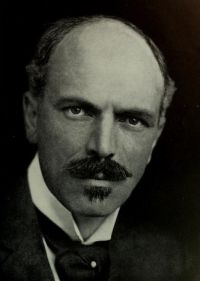 Maurice Hewlett,
Last Essays of Maurice Hewlett
“ It is difficult to read either of them, but of the two I prefer the poet. The present Laureate puts the antiquary first. But when you come to Thomas Fuller, D.D., his Worthies of England, that wordy work, encumbered though it be with texts of divinity, you do at least get your teeth into something upon which to bite. He did not live to finish it, though, and the piety of his son John, “the author’s orphan,” as he described himself, erected it as a monument to his memory in 1672.Fuller, I think, set out with the intention of belauding the human products of our realm. ”