“ In the very old times the Tinguian did not know how to plant and harvest as they now do. For food they had only the things that grew in the forests and fish from the streams. Neither did they know how to cure people who became ill or were injured by evil spirits, and many died who might otherwise have lived.75 Then Kadaklan, the Great Spirit who lives in the sky, saw that the people often were hungry and sick, and he sent one of his servants, Kaboniyan, to the earth to teach them many things. And it happened this way: Dayapan, a woman who lived in Caalang, had been sick for seven years. ”
Quotes about “Tiwanaku”
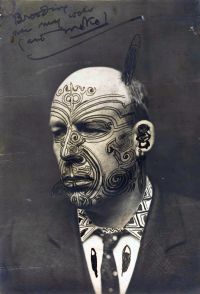 James Cowan,
The adventures of Kimble Bent: A story of wild life in the New Zealand bush
“ Titokowaru, fearfully stern and menacing, addressed the pakehas."Whakarongo mai! Listen to me. If you persist in saying that you wish to return to the white men, it will be your death! I will kill you both with my tomahawk, now, in this house, unless you promise that you will never leave the Maoris! I will slay you, and your bodies will be cooked in the hangi!""Ringiringi," in real fear of his life, made answer that he would remain with the Hauhaus if Titoko would protect him, for he dreaded some of the chief's fiercer followers. ”
Tibetan Tales, Derived from Indian Sources
“ Then in all haste the troop of men who dwelt there, with clenched fists, and armed with bows and arrows and battle-axes, betook themselves to the Tinduka tree and began to cut it down. Fear came upon the monkeys, and they sprang to and fro on the tree. But the chief sat still and did nothing. The monkeys said to him, “O chief, wherefore do you sit there tranquilly, while we are running to and fro in the pangs of intolerable misery?” He replied in a verse— “The busy and the idle are like unto each other. The ends of the tree are many; let food be taken by him who is intent upon his life.” ”
Fay-Cooper Cole, A Study in Tinguian Folk-Lore
“ A survey of the tales brings out boldly the fact that a headhunt was one of the most important events in Tinguian life. To-day stress of circumstances has caused the custom to suffer a rapid decline, but even now heads are occasionally taken, while most of the old men have vivid recollections of the days when they fought "in the towns of their enemies." A spirited account of a head celebration seen in the village of Lagangilang—from which ten of these tales were collected—will be found in the writings of La Gironiere, already referred to. ”
W. Dittmer, Te Tohunga: The ancient legends and traditions of the Maoris
“ A beautiful straight form gave the mass of fire and ashes to Taranaki—but he shook in terrible rage! He tore himself out of the ground, shaking the earth and breaking the lands asunder; he tried to fly at Ruapehu, to kill him with his weight. But Ruapehu made the water of his lake, high up in the snows, boil, and, hurling it down, it filled all the rends Taranaki had made in the earth, and burned all the inside of the earth and of Taranaki himself. ”
James Cowan,
The adventures of Kimble Bent: A story of wild life in the New Zealand bush
“ His body was sacred in Maori eyes, and he was accredited with many a singular supernatural attribute: "Even the winds of heaven are his," said the Hauhaus. When the whakarua, the north-east breeze, blew, it was a fitting time for the war-parties to set out, for the whakarua was the breath of Uenuku, Titoko's deity, and his familiar spirit, and it was an omen of success in battle.Bent gives some curious instances of Titokowaru's mana-tapu. ”
James Cowan,
The adventures of Kimble Bent: A story of wild life in the New Zealand bush
“ Should the Hauhau be so imprudent as to answer "Yes," Titoko would lift his potato-kit and set it on his rival's head. "That for your atua!" It was enough. The other's tapu—if he ever had any—would be immediately destroyed by such an act, for the head of man must not be touched by food, and any self-respecting atua would desert a tapu-less Maori without delay. [Pg 106] But no man dared, by way of retaliation, to try the potato-basket trick on Titokowaru. ”
W. Dittmer, Te Tohunga: The ancient legends and traditions of the Maoris
“ I am a slave till I free my sister Matike; but soon I will show your warriors that they are women, for they fought women!’ And Te-marama spoke: ‘If you are Tihi-o-te-Rangi, truly then you are the best of all warriors, for you lower yourself to a slave to free a woman; but listen, Tihi: Matike is a slave no longer—for her beauty she is taken by the chief Takerangi to share his resting-place and his mana.’ When Tihi heard Te-marama speaking thus, joy entered in his heart and he said: ‘Sweet is it for the eyes to rest upon the Flower of the North, and her words give gladness to my heart! ”
James Cowan,
The old frontier: Te Awamutu, the story of the Waipa Valley
(1922)
“ These were natives under the leadership of the fanatic Te Mahuki, or Manukura, a Ngati-Maniapoto man who had been a follower of Te Whiti at Parihaka, and who had returned to the Rohepotae to found a sect of his own. He called his followers the “Tekau-ma-rua,” or “The Twelve”—although they numbered many more—after the Twelve Apostles. This was a revival of a term of the Hauhau war days. The selected war-parties of the Taranaki fighting chief Titokowaru were called the “Tekau-ma-rua.” These men attacked Hursthouse’s party, and a lively fight followed, although no deadly weapons were used. ”
Bertram Mitford, A Frontier Mystery
“ Incidentally Tyingoza was the chief of a very large native location situated right on the border—and in this connection I have often wondered how it is that with the fear of that awful and bloodthirsty tyrant Cetywayo (see the Blue Books) before their eyes, such a congested native population could have been found to plant itself, of its own free will, right bang within assegai throw of his “manslaying machine” (see again the Blue Books) , that is to say, with only the division afforded by an easily fordable river between it and them. ”
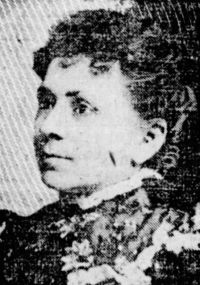 Clara Kern Bayliss,
Philippine Folk-Tales
“ The other class of Buso, however, wants human flesh all of the time. They are the Tigbanua', the chief of whom is Datu of all the Buso. A Tigbanua' lives in his own house, and goes out only to eat the bodies of the dead.The Tagamaling makes his house in trees that have hard wood, and low, broad-spreading branches. His house is almost like gold, and is called "Palimbing," but it is made so that you cannot see it; and, when you pass by, you think, "Oh! what a fine tree with big branches," not dreaming that it is the house of a Tagamaling. ”
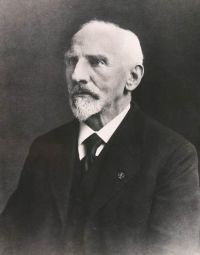 Christiaan Snouck Hurgronje,
The Achehnese
(1906)
“ The statement made by Van Langen in his Atjehsch Staatsbestuur p. 391, that the teungku (who is in charge of the meunasah) is a kind of subordinate village headman, is erroneous. It sometimes occurs indeed, that one gampōng has more than one meunasah (in rare cases as many as four) , but in every case the relation between the teungku and the keuchiʾ within the sphere of each meunasah is indicated by the comparison "the keuchiʾ is the father, the teungku the mother", and each has his own limit of action and his own appointed duties. ”
W. Dittmer, Te Tohunga: The ancient legends and traditions of the Maoris
“ Carved is there Tama-te-Kapua, the great Chief—Tohunga, her ancestor, who came from Hawaiki.Silent is the whare-puni; silent are the carved ancestors; and silent is Ngawai, watching the mist covering the snow-clad mountains in the distance.It is the hour of the fairies and the spells; the hour when the sun hides; and Tawhiri-matea, [81] the God of the Winds, is resting—the happy hour when man forgets his wishes, and the path of his mind is guided by the spirits of his destination: it is the hour when the woman-Rangatira knows that she is a woman, and will be a slave. ”
Fay-Cooper Cole, The Tinguian: Social, Religious…
“ Kalinga predominates north of Balbalasang and along the Gobang river, while the Igorot is dominant in Guina-an, Lubuagan, and Balatok. Tinguian intermarriage has not extended far beyond Balbalasang, but their culture and dress have affected the whole region.2 From this belt there have been extensive migrations into Abra, the newcomers for the most part marrying with the Tinguian, but in the Ikmin river valley emigrants from Balatok formed the towns of Danok, Amti, and Doa-angan, which have remained quite isolated up to the present time. ”
James Cowan,
The adventures of Kimble Bent: A story of wild life in the New Zealand bush
“ When it was slightly scorched he would throw it away; it was tapu to Uenuku. This was an ancient war-custom of the Maoris; Titokowaru adopted it because he believed it would cause the pakehas [Pg 117] to lose strength and courage, and become unnerved in time of battle. After the fight at Papa-tihakehake, in 1868, I saw this man Tihirua cut a white man's body open outside the marae, tear out the bleeding heart, hold lighted matches underneath it until it was singed, and then throw it away." [5] A more frightful scene still that the sun looked down upon in that forest den was a cannibal feast. ”
James Cowan,
The adventures of Kimble Bent: A story of wild life in the New Zealand bush
“ Hauwhenua withdrew his disappointed Tekau-ma-rua, carrying those of their wounded who were unable to walk, and marched back to Te Ngutu-o-te-Manu. The "lion" of Titoko's speech, though sore wounded, had in truth closed his mouth on some of their most daring braves. ”
Christiaan Snouck Hurgronje,
The Achehnese
(1906)
“ Quarrels speedily result in bloodshed. Few give a thought to the families they have left behind. Religion is wholly forgotten. The Teungku describes in an affecting manner the melancholy lot of the women and children whose husbands and fathers often sojourn in the rantòs for years at a time without sending tidings to those at home. At the annual slaughter which precedes the fasting month and the religious feasts, while the husbands of others "bring meat home" [77] , the deserted ones stand by pale with shame; perchance some pitying fellow-villager gives them a small portion of his own share! ”
Henry Scadding, Toronto of Old
“ The Iroquois at Niagara had given the Governor a title, expressive of hospitality—Deyonynhokrawen, "One whose door is always open." They had, moreover, in Council declared his son a chief, and had named him Tioga; or Deyoken, "Between the Two Objects;" and to humour them in return, as Liancourt informs us, the child was occasionally attired in Indian costume. For most men it is well that the future is veiled from them. It happened eventually that a warrior's fate befell the young chieftain Tioga. ”
James Cowan,
The adventures of Kimble Bent: A story of wild life in the New Zealand bush
“ There were two hundred Government men fronting the fort, but the fighting men behind the palisades did not, according to Maori accounts, number many more than half the number.Amongst Titokowaru's men, however, there were some of the most renowned bush scouts and warriors in Taranaki, including—besides Kātené, the wide-awake sentry—such men as the veteran Te Waka-tapa-ruru, Paraone Tuteré, one of the best Hauhau shots, Timoti, the fiercest of the cannibals of Nga-Rauru, and the active young warrior Tutangé Waionui, he who had despatched von Tempsky on the battle-field of Te Ngutu-o-te-Manu. ”
Augustus F. Lindley, Ti-Ping Tien-Kwoh: The History of the Ti-Ping Revolution…
“ Many of the Ti-ping chiefs were popular with the civilians, some were disliked, all were considered better than the Manchoo, but none were so beloved as the Chung-wang. Before the troops had been marched towards Shanghae, a day of thanksgiving was held at Hang-chow; and although the motive of the Ti-ping is that of justice and Christianity, I could not help thinking of the similar practice among Europeans, who never fail to return thanks to God for triumph over their weaker brethren, whether their cause be righteous or quite the reverse. ”
Fay-Cooper Cole, A Study in Tinguian Folk-Lore
“ These, which accompany all the important happenings in their daily life, are conducted by mediums who are fitted for office by long training, and each one of whom is a check on the others if they wilfully or through carelessness deviate from the old forms. The ritual of these ceremonies is very complex and the reason for doing many acts now seems to be entirely lost, yet the one explanation "kadaúyan"—custom—is sufficient to satisfy any Tinguian. Other acts, as well as the possession of certain things, are explained by myths, such as we are considering. ”
Bertram Mitford, A Frontier Mystery
“ The natives were squatting about round the store in groups, conversing in their deep-toned voices. Then suddenly they all sprang to their feet as one man, uttering respectful salutations; and there, to my surprise, advancing leisurely towards us, came Tyingoza himself.“It is the chief,” I explained for the benefit of my companion, “Tyingoza. He has changed his mind.”“Oh, I am so glad,” she said, looking at him with interest. “I shall see him before we start I like the look of him. Why if we had started when Falkner wanted us to we should have missed him.” ”
Alexander Vietts Blake, Anecdotes of the American Indians…
“ To prevent the effusion of blood, the unhappy Indian was delivered up to them: the Sieur Ferrand was charged with the commission. The Indian was called Tichou; he stood upright in the midst of his own people and of his enemies, and said, “I am a true man, that is, I do not fear death; but I pity the fate of a wife and four children, whom I leave behind me very young; and of my father and mother, who are old, and for whom I got subsistence by hunting.” (He was the best hunter in the nation.) ”
Paul P. de La Gironière, Adventures in the Philippine Islands
“ When the fatal sentence has been pronounced, the Tinguian who has merited it must escape, if he wishes to avoid it, and go and live in the forests; for, the old men having spoken, all the inhabitants are bound to perform their orders. Society is divided into two classes, as with the Tagalocs, the chiefs and the commonalty. Whoever possesses and can exhibit to the public a certain number of china vases is considered a chief. These jars constitute all the wealth of the Tinguians. We were still conversing about the natives of the country when we reached Manabo. ”
Fay-Cooper Cole, The Tinguian: Social, Religious…
“ We have in northern Luzon a situation similar to that found throughout the archipelago, namely, that the most flourishing smithies are usually those farthest removed from the coast traders. Where communication is easy and trade unrestricted, the native industry has vanished, or is on the wane. To-day the forges of the Bontoc Igorot, of the Tinguian-Kalinga border villages, and of Apayao, are turning out superior weapons, but elsewhere in the northwestern districts the pagan people have either lost the art, or make only very inferior articles. ”
Fay-Cooper Cole, Traditions of the Tinguian: a Study in Philippine Folk-Lore
“ When they arrived in Sinalang town, they left their raft in the river and went up in the town. When they reached the town, every person went to them to give their regards. Tagápen and his wife with her son stayed in a little house we call balaua; they lived there teaching many dalengs75 and bagayos75 of the Tinguian people. Page 195 1 This dīam is recited by the medium when the spirit house known as balaua is built. ”
Augustus F. Lindley, Ti-Ping Tien-Kwoh: The History of the Ti-Ping Revolution…
“ In the Friend of China, August 16, 1864, appears the following: [777] —"We are still assured by parties who have means of knowing, that our first story of the evacuation of Nankin by its soldiery, before the Imperialists sprung their mine and rushed in, was the correct story; all those 30,000 massacred individuals told of by the Recorder (but not mentioned at the Asiatic Society with the "flushing of a pheasant") being inoffensive men, women, and children."The Chung-wang, it is said, is not dead. He is at Hoo-chow-foo, while the Tien-wang is still in the body." ”
New York State Historical Association. Meeting, Proceedings of the New York Historical Association…
“ Tioga was the Iroquois name for the point of land lying between the Chemung River and the north branch of the Susquehanna. Every name that an Indian gave to a place or a person was descriptive, and had a meaning. Most of these as we find them written are corruptions of the names as they sounded when spoken by an Indian, and therefore we find the same word in different documents spelled in as many ways as it could be spelled by illiterate English, Dutch and French settlers, with a few extra letters thrown in. ”
W. Dittmer, Te Tohunga: The ancient legends and traditions of the Maoris
“ The sixth heaven is the dwelling-place of Tawhaki, and it is from here that he governs the host of inferior gods and atuas who work and shape, and help and hinder, the destinies of Tiki’s children. To these three heavens of Tawhaki are directed most incantations and songs and Karakias of the people; high up into these three heavens also reaches the power of the Tohungas of great Mana, and their incantations often compel the gods to work good or evil according to the will of the Tohunga. ”
