“ The tohunga, or sorcerers, exercised unbounded influence over the minds of the Maori. Their duties on occasion coincided with those of the ariki, and their position, too, was hereditary; but, while men revered, and often loved their chief, their respect for the tohunga was tinctured with fear and, not seldom, with hate. The chief could lay tapu upon a man, which was bad enough; but the tohunga could bewitch him outright, condemning the poor wretch to loss of worldly gear, aches and pains, and even to death itself. ”
Tohunga
Definition and stakes
The theme of “tohunga” has been addressed by authors such as Edward Shortland, W. Dittmer, J. G. Wood, W. Delisle Hay and William Reginald Hodder. It is often associated with terms like tapu, Maori, Tonga, mana and people.
Quotes about “tohunga”
William Reginald Hodder, The daughter of the dawn (1903)
“ The Great Tohungas of the Earth have taught me in my sleep with words like the voice of the wind in the forest trees: ‘O Tohunga of the Great Rock, the mystery of Hinauri is not for the Maori unless thou tell it first to the Sons of the Sea, but know, if thou tell it, thou must die.’ Therefore, Son, I show it to you, for, what though I fear the eye of the fierce Ngaraki, I fear not death. ”
W. Dittmer, Te Tohunga: The ancient legends and traditions of the Maoris
“ Carved is there Tama-te-Kapua, the great Chief—Tohunga, her ancestor, who came from Hawaiki.Silent is the whare-puni; silent are the carved ancestors; and silent is Ngawai, watching the mist covering the snow-clad mountains in the distance.It is the hour of the fairies and the spells; the hour when the sun hides; and Tawhiri-matea, [81] the God of the Winds, is resting—the happy hour when man forgets his wishes, and the path of his mind is guided by the spirits of his destination: it is the hour when the woman-Rangatira knows that she is a woman, and will be a slave. ”
J. G. Wood, The uncivilized races of men in all countries of the world… (1875)
“ They can also hold converse with their friends and relatives, but only through the tohungas. Sometimes, but very rarely, the tohunga sees the spirit; and even then it is only visible as a sunbeam or a shadow. The voice of the spirit is a sort of low whistling sound, like a slight breeze, and is sometimes heard by others beside the tohunga. He, however, is the only one who can understand the mysterious voice and can interpret the wishes of the dead to the living. ”
Edward Shortland, Maori Religion and Mythology (1882)
“ When the husband returned home his wife could not be found. He, however, traced footsteps to the hills where the Fairies dwelt, but saw nothing of his wife. Then he felt sure she had been carried off by the Fairies, and returned sorrowing and thinking of some plan to recover her. At length, having thought of a plan, he summoned the tohunga of the tribe—those skilled in bringing back love—those skilled in makutu—in short all the tohunga. ”
W. Dittmer, Te Tohunga: The ancient legends and traditions of the Maoris
“ To ordinary folk who penetrate the fairy country, those works of the little people are to all appearance mere trees and rocks and beds of ferns. But, if you have the wise eye and the Tohunga’s understanding, you will see that the great rimu pine, with its drooping waterfall of golden foliage, and the lance-like kahikatea, tall and stately, the knotted and gnarled rata, the graceful nikau palm, and the lovely tree-fern, swishing gently its broad feather-fronds, are all part and portion of the Patu-paiarehe dwellings. ”
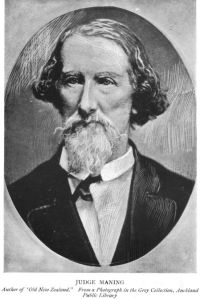 Frederick Edward Maning,
Old New Zealand: A Tale of the Good Old Times
Frederick Edward Maning,
Old New Zealand: A Tale of the Good Old Times
“ This was done by the advice of the tohunga, so that the soldiers having been dried for (p. 256) food they might lose their mana (prestige, good fortune) , and be in consequence less feared.And the scalp had been taken from the head of Philpots to be used by the tohunga in divination to discover the event of the war. This was not done from revenge or ill-will to him, but because, as he was a toa and a chief, his scalp was more desirable for this purpose than that of an ordinary person. ”
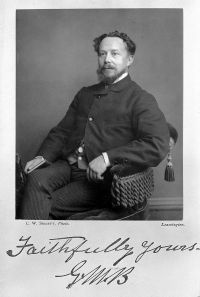 George Matthews Bennett,
Wanderings in New South Wales, Batavia…
(1834)
George Matthews Bennett,
Wanderings in New South Wales, Batavia…
(1834)
“ On the arrival of the Tohunga, he strides over and breathes on the woman, and then, retiring to a short distance, sits down and prays to the spirits; if the labour terminates favourably, it is looked upon as resulting from the influence of the Tohunga in averting the anger of the spirits ”
W. Dittmer, Te Tohunga: The ancient legends and traditions of the Maoris
“ Hupene, the old Tohunga, squats muttering on the floor beside his carved ancestor Tiki.Tiki is a god who in the dim long ago helped to build the world, and whose carved image is now supporting the middle pillar of the house. His eyes of pawa-shell, which once commanded in the ten Heavens and were full of fire and wisdom, glisten out of the silent twilight; they stare far, far into the darkness, which Hine-nui-te-po is slowly spreading over the world, Hine-nui-te-po, the Great Mother of Night, who at one time was young and beautiful, and gave life to Nature. ”
J. G. Wood, The uncivilized races of men in all countries of the world… (1875)
“ The war party then goes home, and a similar ceremony is undergone in the presence of the principal tohunga of their pah, the hands being clapped and the war dance performed. The remainder of the hair is given to the tohunga, who, after reciting his incantation, flings the tuft of hair away, and ends by another incantation, which declares that the tapu is taken away.As a general rule, the tapu can only be taken off by the person who imposed it; but if a man imposed a tapu on anything, another who was very much his superior would not have much scruple in breaking through it. ”
 Rolf Boldrewood,
"War to the Knife;" or, Tangata Maori
Rolf Boldrewood,
"War to the Knife;" or, Tangata Maori
“ There is a mist—a darkness. The future is hidden from me.""A bad omen," said the girl, sadly. "You saw blood, O Tiro-hanga! But I care not for myself, so that he be safe and unharmed.""Such is the woman who loves," mused the tohunga, as he stalked moodily towards the shore of the lake—"of whatever colour or race, in the old days as well as in this present time, when chiefs are falling like withered leaves, and the pakeha drives the tribes to their death, as the wildfowl on the warm lakes. And what cares she if the whole island is delivered to the stranger, and we become his slaves? ”
Edward Shortland, Maori Religion and Mythology (1882)
“ A woman is much vexed when any of the flax scraped by her is stolen, and she consults a tohunga, in order to discover the thief. Whether the flax has been stolen from her house or from the water, the woman's house must be tapu. No one must be allowed to enter it. This is necessary, that the makutu may take effect, and the person who stole the flax be discovered. So when the woman comes to the tohunga he first asks her "Has any one entered your house?" ”
W. Delisle Hay, Brighter Britain! (Volume 2 of 2…
“ At the present day, the rites and ceremonies of the tohunga have entirely given place to Christian observances; and, as is the wont of primitive intelligences, the Maori are most rigorous observers of all outward forms, whatever degree of fervour they may have spiritually attained. In the young days of Christianity here, the converts ascribed to the missionaries a magical mana, such as they had formerly believed to reside in the tohunga. ”
Rolf Boldrewood,
"War to the Knife;" or, Tangata Maori
“ With the dawn the tohunga arrived. This important and mysterious personage, of which one was always to be found in the larger sections of a tribe, combined the offices of priest and sorcerer with the more practical profession of the physician. Unquestionably, his knowledge of simples and general surgery was far from despicable. By incantations and spells, it was thought in the tribe that he had foreknowledge of the death or otherwise of his patients. ”
Edward Shortland, Maori Religion and Mythology (1882)
“ When the child is about a month old, and strives with its hands to reach its mother's breast, the ceremony of Tūa takes place. Two fires are kindled; one fire for the Ariki, one fire for the Atua. The food to be cooked on the fire is fern-root. Then the tohunga takes the child in his arms, and repeats this karakia:— Breathe quick thy lung,A healthy lung. ”
William Reginald Hodder, The daughter of the dawn (1903)
“ Therefore I will simply state that in consequence of my discovery I left Wakatu and sailed across the bay to Riwaka, having as my destination a wild place called Marahau, the Valley of the Mighty Wind, where, on a high cliff by the seashore, so I was informed, stood the pa2 of a certain Te Makawawa. Concerning this aged chief report spoke with awe, for he was more than a mere tohunga, a priest—he was an ariki, an arch-tohunga; and some said that he was more than ariki—he was matakite, a seer. ”
Various, The Wide World Magazine, Vol. 22…
“ To this day the question of how the “tohunga” became aware of our accidental presence on the sacred island remains a mystery. That we were alone there I am certain. Under the circumstances of the storm and the thick mist, it is equally certain our presence was not observed from the shore. The “kainga” was six miles distant, a range of hills intervening. It was a black night; Maoris are chary of being out after dark. Altogether the possibility of our having been seen may be dismissed. Puketawa, of course, leaned to the supernatural. ”
W. Dittmer, Te Tohunga: The ancient legends and traditions of the Maoris
“ Their ancestors built the whare-kura, the sacred Temple, at Hawaiki, and it stood facing the East, at the place of Mua. In the whare-kura assembled the highest chiefs and the Tohungas of all the tribes to communicate with the spirits of the gods, and to repeat and rehearse the names and heroic deeds of their ancestors, that they might take deep root in the hearts of the living, and that they might never forget their descent from the most ancient gods, who dwelled in the Darkness, the Nothing, and the Beginning of All Things! ”
J. G. Wood, The uncivilized races of men in all countries of the world… (1875)
“ The chief even tried to prevent his white visitors from travelling in the direction of the mountain, and only gave his consent after ordering that the sacred Tongariro should not even be looked at. So deeply is this superstition engraven in the heart of the New Zealander, that even the Christian natives are afraid of such a tapu, and will not dare to approach a spot that has thus been made sacred by a tohunga. Reasoning is useless with them; they will agree to all the propositions, admit the inference to be drawn from them, and then decline to run so terrible a risk. ”
W. Dittmer, Te Tohunga: The ancient legends and traditions of the Maoris
“ Slowly is the sun wandering his way in the skies; up to the height of midday he wanders; the shades grow longer, and Rangi-o-mohio, a very old woman, the daughter of the famous Rangatira Te Heu-heu, is still relating:“Listen: A great procession is ascending with much noise and shouting and frolic the [115] barren wilderness around the stone-body of Tongariro—a great procession of Tohungas, warriors, women, and children. ”
Edward Shortland, Maori Religion and Mythology (1882)
“ When, therefore, a person falls sick, and cannot remember that he has himself broken any law of the tapu, he has to consult a matakite (seer) and a tohunga to discover the crime, and use the proper ceremonies to appease the Atua; for there is in practice a method of making a person offend against the laws of tapu without his being aware of it. ”
W. Dittmer, Te Tohunga: The ancient legends and traditions of the Maoris
“ The sixth heaven is the dwelling-place of Tawhaki, and it is from here that he governs the host of inferior gods and atuas who work and shape, and help and hinder, the destinies of Tiki’s children. To these three heavens of Tawhaki are directed most incantations and songs and Karakias of the people; high up into these three heavens also reaches the power of the Tohungas of great Mana, and their incantations often compel the gods to work good or evil according to the will of the Tohunga. ”
Various, Transactions and Proceedings of the New Zealand Institute (1897)
“ I trembled with fear, lest death should come to me also; but the old men said, "Fear not, you are equal in mana to Apanui, your father, and you alone can remove this spell which is destroying Ngatiawa." I then ate the roasted food, and the epidemic ceased. Soon the house was completed, and Wepiha summoned a tohunga called Mohi Taikororeka from Opotiki to perform the ceremonies called "whai kawa"—i.e., making the house "noa," removing the tapu, &c. ”
Edward Shortland, Maori Religion and Mythology (1882)
“ Is the name given to forms of makutu employed to counteract the curse of some other tohunga, or wiseman; for whoever practises makutu, even though he be skilled in the art, may have to yield to the mana of some other wise-man who can command the assistance of a more powerful Atua. ”
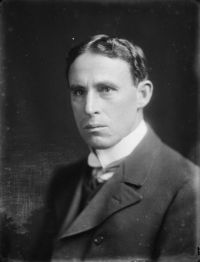 Malcolm Ross,
A climber in New Zealand
(1914)
Malcolm Ross,
A climber in New Zealand
(1914)
“ The cold then, as now, was very bitter,—for the winds blow keen from the adjacent snows,—and it seemed as if the old tohunga would die, when happily the thought occurred to him of sending for some of the sacred fire that was in the keeping of one of his sisters in far-away Hawaiki. She straightway came with the fire. Wherever she halted in her underground travels there fire remained, and where she came to the surface to breathe there appeared boiling pools and geysers. ”
Frederick Edward Maning,
Old New Zealand: Being Incidents of Native Customs and Character in the Old Times
“ Most of these predictions were, however, given—like the oracles of old—in terms which would admit a double meaning and secure the character of the soothsayer, no matter how the event turned out. It is also remarkable that these tohunga did not pretend to divine future events by any knowledge or power existing in themselves; they pretended to be for the time inspired by the familiar spirit, and passive in his hands. This spirit "entered into" them, and, on being questioned, gave a response in a sort of half-whistling half-articulate voice, supposed to be the proper language of spirits ”
W. Delisle Hay, Brighter Britain! (Volume 2 of 2…
“ But to remove the tapu was a wholly different matter. That could not be done so easily. In all cases of importance a whole ritual had to be gone through before the tapu could be lifted. Ceremonies of high import were sometimes necessary, even a sort of propitiatory sacrifice seems occasionally to have been made. The karakia, a kind of invocation or prayer, had to be uttered with due solemnity, and this necessitated the intervention of the tohunga. ”
Ethel Gwendoline Vincent, Forty Thousand Miles Over Land and Water
“ They seem to have little idea of religion, and that is, in its crudest form, mixed up with mythology and legendary heroes, handed down from generation to generation. Nor have they any particular reverence for the Tohunga or priest. They believe in immortality. "The road to their heaven is through Reinga, a cave in a cliff at the North Cape of the island, whence they think that the departed spirits pass to the realms above, using the roots of the Pohutukawa-tree as a ladder." ”
W. Delisle Hay, Brighter Britain! (Volume 2 of 2…
“ There is a little emerald-green lizard in the bush, called by the Maori ngarara. It is dreadfully tapu, and an old warrior would rather die than touch it. It is believed to contain a spirit, some say an evil demon, others the ghost of a wicked man. There is some uncertainty on that point, even among the most learned tohunga. At any rate it is most excessively tapu. It seems that to throw a ngarara at a Maori, or even to bring it near him, or show it to him, is a crime of a very heinous character. Wars were the consequence of such acts, once upon a time. ”
W. Delisle Hay, Brighter Britain! (Volume 2 of 2…
“ Burial places were naturally tapu. A Maori of the olden time would rather die than break their sanctity; and his descendants of the present day have hardly got over the feeling. They were called wahi tapu, and no one dared to enter them. The tohunga and his assistants passed within them to bury the dead, but only with much karakia and ceremony. Spirits of some kind were supposed to keep watch and ward over them, and to wreak terrible vengeance upon trespassers. Water flowing from a wahi tapu was sacred, and whatever it touched became tinctured with the same dread property. ”
David Paul Gooding, Picturesque New Zealand (1913)
“ Some forms of tapu were removable by tohungas, as those existing at the baptism of children and at tattooings. It would seem that tohungas—who, often priests, also were wizards, seers, physicians, tattooers and barbers, and not uncommonly builders of houses and canoes—had enough to do merely in lessening and preventing the results of tapu violations; but it was not so. Much of their time was spent as physicians. As such their services were required for ills both real and imaginary. ”
William Reginald Hodder, The daughter of the dawn (1903)
“ Our ancestors have taught us that a curse heaped upon a man’s image will find that man in the flesh. Many of these Vile Tohungas have returned, but they have never succeeded in their object. He Pakeha! Their heads are hung up in yonder mountain. Others will return, but when they do they will find the curse ready for them if they should stretch forth so much as a hand against the sacred person of Hinauri. ”
