Upper Rhine

Definition and stakes

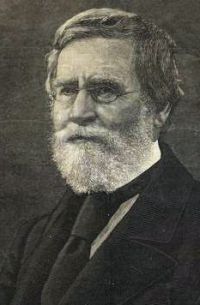
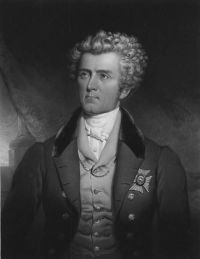
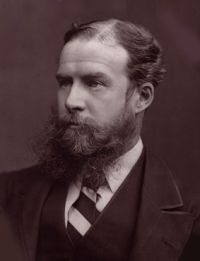
Portrait of Sir John Lubbock Sir John Lubbock,  The Beauties of Nature, and the Wonders of the World We Live In

“ It must not, however, be supposed that these changes in river courses are confined to the lower districts. Mountain streams have also their adventures and vicissitudes, their wars and invasions. Take for instance the Upper Rhine, of which we have a very interesting account by Heim. It is formed of three main branches, the Vorder Rhine, Hinter Rhine, and the Albula. The two latter, after meeting near Thusis, unite with the Vorder Rhine at Reichenau, and run by Chur, Mayenfeld, and Sargans into the Lake of Constance at Rheineck. ”
Source: Gutenberg

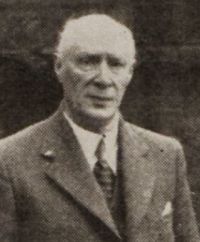
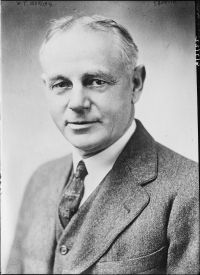
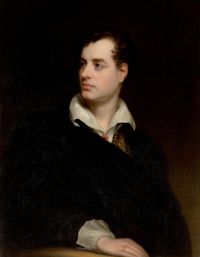
Portrait of Charles Homer Haskins Charles Homer Haskins,  Some Problems of the Peace Conference (1920)

“ Germany binds herself not to derive canals from the Rhine opposite the French frontiers. [34] Henceforth the Rhine is to be harnessed to serve the needs of Alsace.
If participation in the affairs of the upper Rhine was incidental to the recovery of Alsace, the lower course of the river was quite another matter. Between the Rhine and the Franco-Belgian frontier lay a belt of German territory, varying in breadth from fifty to one hundred miles, with an [Pg 124] area of about 10,000 square miles, and a population of five and a half millions.
”
Source: Gutenberg

Wilhelm Ruland,  Legends of the Rhine

“ On his way through the land, Rudolphus set fire to all the strongholds on the upper Rhine. The burning of the castles of Reichenstein, Sooneck, Heimburg and others, was an awful sight to the inhabitants of the valley below. Numerous members of these ancient [Pg 70] noble races met the death of felons, and their bodies were hung up on trees as a warning to others.
Through the gates of Mainz many a robber baron was led as a prisoner by the soldiers of the emperor.
”
Source: Gutenberg

Get perspective with Kwize: daily news enlightened by great literature