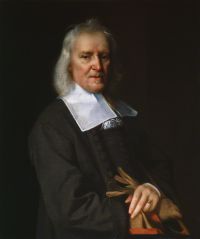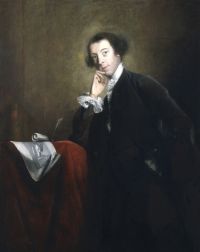
William Herbert, 1st Earl of Pembroke

Definition and stakes

Portrait of Sir Sidney Lee Sir Sidney Lee A Life of William Shakespeare

The Earl of Pembroke known only as Lord Herbert in youth.
The nobleman under consideration succeeded to the earldom of Pembroke on his father’s death on January 19, 1601 (N. S.) , when he was twenty years and nine months old, and from that date it is unquestioned that he was always known by his lawful title. But it has been overlooked that the designation ‘Mr. William Herbert,’ for which the initials ‘Mr. W. H.’ have been long held to stand, could never in the mind of Thomas Thorpe or any other contemporary have denominated the Earl at any moment of his career.
Source: Gutenberg

Dictionary of National Biography… (1904)

Being the eldest son of an earl he was known in all relations of life from the hour of his birth until his father's death as Lord Herbert. When the 'Sonnets,' with this dedication, were published in 1609, Pembroke's rank and dignity rendered it practically impossible that he should be deprived of those customary formalities of Herbert, William, 3rd Earl of Pembroke: address which played a prominent part in all dedications to him which are extant.
Source: Wikisource

Richard Brooke Visits to Fields of Battle, in England…

In 1470, William Herbert, the rival Earl of Pembroke, was captured by the Lancastrians at the battle of Edgecott, in Northamptonshire (usually called the battle of Banbury, from its contiguity to that town) , and was beheaded. Jasper Tudor, who still claimed the title of Earl of Pembroke, landed in the west with George Duke of Clarence (who then sided with the Earl of Warwick in the Lancastrian interest) , and King Edward was driven from his throne and kingdom by the Earl of Warwick.
Source: Gutenberg

Get perspective with Kwize: daily news enlightened by great literature