“ Griselda, who—in order to convey her contempt for official authority and disgust at official insolence—had been pointedly surveying the meeting of hill and horizon, heard a whack and scuffle, a guttural grunt and a gasp; and turned to see William, with a hand to his cheek, lying prone at the feet of his assailant. She rounded on the man like a lion, and perhaps, with her suffragette training behind her, would have landed him a cuff in his turn ”
William Hill
Definition and stakes
The theme of “William Hill” has been addressed by authors such as Mrs. Stuart Menzies, Corra Harris, Lionel Robinson, Harold MacGrath and Sarah A. Myers. It is often associated with terms like university, college, Cambridge, law and Henry.
Quotes about “William Hill”

“ It was night ere the lights of Johnstown glimmered out against the hill-side where, on the hillock called Mount Johnson, the candles in our windows spun little rings of fire in the evening haze.As we passed through the village, the good people turned to smile and to doff their hats to Sir William, thinking not less of him for riding with his flock in the straw-lined wagon, and on they went; I pulling rein at the blacksmith's, as Warlock had cast a shoe on the stony way below. ”
Young Folks Treasury, Volume 3…
“ But did you see William?R. We set out together, but he lagged behind in the lane, so I walked on and left him.Mr. A. That was a pity. He would have been company for you.R. Oh, he is so tedious, always stopping to look at this thing and that! I had rather walk alone. I dare say he is not got home yet.Mr. A. Here he comes. Well, William, where have you been?W. Oh, sir, the pleasantest walk! I went all over Broom-heath, and so up to the mill at the top of the hill, and then down among the green meadows by the side of the river. ”
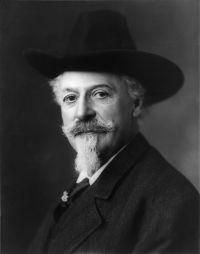 Buffalo Bill,
The Life of Hon. William F. Cody…
“ After crossing Smoky Hill River, I felt comparatively safe as this was the last stream I had to cross. ”
William Hill Brown, The power of sympathy: or, The triumph of nature… (1894)
“ Miss Harriot Fawcetto Miss Myra Harrington. Boston. I HAVE somehow bewitched a new lover, my dear Myra—a smart, clever fellow too—and the youth expresses such fondness and passion that I begin to feel afraid even to pity him—for love will certainly follow. I own to you I esteem him very much, but must I go any farther? ”
A Cyclopaedia of Canadian Biography…
“ Shortly after his arrival he married and began to make for himself a home in the township of Pakenham, in Lanark county. Things succeeding, he commenced the manufacture of square timber, and after a while became a successful lumber manufacturer and exporter. He lived and died in the township in which he first settled. William received his education at the Perth Grammar School, Ontario, at Bishop’s College, Lennoxville, Quebec, and pursued his medical studies at McGill College, Montreal, where he graduated. ”
William Hill Brown, The power of sympathy: or, The triumph of nature… (1894)
“ PERHAPS it was only at this time, that she became fully sensible of her danger; the flattery and dissimulation of Martin might have banished the idea of detection, and glossed over that of criminality; but now she awoke from her dream of insensibility, she was like one who had been deluded by an ignis fatuus to the brink of a precipice, and there abandoned to his reflection to contemplate the horrours of the sea beneath him, into which he was about to plunge. ”
William Hill Brown, The power of sympathy: or, The triumph of nature… (1894)
“ Every calamity severs a string from the heart—until one scene of sorrow on the back of another matures us for eternity—Thus are our affections estranged from this scene of misery. The cord that detains the bird is severed in two—and it flies away. ”
William Hill Brown, The power of sympathy: or, The triumph of nature… (1894)
“ Harrington, I am about to depart—for why should I tarry here? In bitter tears of sorrow do I weep away the night, and the returning day but augments the anguish of my heart, by recalling to view the sad sight of my misfortunes. And have I not cause for this severe anguish, at once sorrow and disgrace of my family?—Alas! my poor mother!—Death shall expiate the crime of thy daughter, nor longer raise the blush of indignation on thy glowing cheek.—Ought I not, therefore, to welcome the hand of death? ”
Appletons' Cyclopædia of American Biography (1892)
“ His father, one of the earliest settlers in western New York, was a farmer, and unable to give his children a classical education. William went to the common school, and at the age of twenty-one removed to Almond, Alleghany co., where he cleared a piece of land for tillage. In the spring of 1824 he was elected constable, and began the study of law to assist him in this office. He was admitted to the bar in 1826, removed to Hornellsville the next year, and practised his profession until his appointment in 1846 as first judge of Steuben county. ”
Various, Harper's Round Table, January 28…
“ He was born in 1857 in the old college town of Cambridge, Massachusetts, where Harvard College is. His father was Charles Theodore Russell, a leading lawyer in the town, and in politics a stanch Democrat. William, or, as he was then called (and as some of his older friends still dare to call him) , "Billy" Russell, was the youngest of seven children, having three brothers and three sisters older than himself; and the traditional luck of a seventh son has followed him accordingly.His father was a man of small income, which his interest in public life kept him from increasing. ”
William Hill Brown, The power of sympathy: or, The triumph of nature… (1894)
“ What labour—what toil—what pain must be endured in traversing the thorny paths that lead to her blessed abode?—And will she not receive me in those happy regions with as much joy—with as sincere a welcome—if I cut short my journey?—And will not the Eternal Dispenser of Good, pardon the awful deed that frees me from this world of misery—the deed by which I obtrude myself into his divine presence? ”
William Hill Brown, The power of sympathy: or, The triumph of nature… (1894)
“ Adieu! 61 LETTER XIII. Worthy to Myra.Belleview. A PEACEFUL, recluse life, is suited to my temper—there is something in the soft breath of Nature—in the delicacy of smiling meadows and cultivated fields—in the sublimity of an aged wood—of broken ROCKS—of rivers pouring along their lucid waves, to which the heart always gives a ready reception—there is something within us congenial to these scenes; they impress the mind with ideas similar to what we feel in beholding one whom we tenderly esteem. ”
William Hill Brown, The power of sympathy: or, The triumph of nature… (1894)
“ BLESSED be that Power who has implanted within us that consciousness of reproach, which springs from gentleness and love!—Hail sensibility! Ye eloquent tears of beauty! that add dignity to human nature by correcting its foibles—it was these that corrected my faults when recrimination would have failed of success—it was these that opened every avenue of contrition in my heart, when words would have damned up every sluice of repentance. ”
Various, The Mirror of Literature, Amusement…
“ As he grew up he excelled the youth of his own age in manly exercises; could thrash all of his own size, when insulted, but never played the tyrant, or the bully. He could make the longest innings at cricket, and as for swimming in all its various branches, none could compare with William. It was finally arranged by a merchant to send William a voyage to Newfoundland, and the news soon spread round the town that William (for he was a general favourite) was to see the world by taking to the sea. ”
William Hill Brown, The power of sympathy: or, The triumph of nature… (1894)
“ How dim is human foresight! We behold the gilded bait of temptation, and know not until taught by experience, that the admission of one errour is but the introduction of calamity. One mistake imperceptibly leads to another—but the consequences of the whole bursting suddenly on the devoted head of an unfortunate wanderer, becomes intolerable. ”
William Hill Brown, The power of sympathy: or, The triumph of nature… (1894)
“ I HOPE you will not permit yourself to grow envious of the beauties of Rhodeisland. Of the force of their charms I am experimentally acquainted. Wherever fortune has thrown me, it has been my happiness to imagine myself in love with some divine creature or other; and after all it is but truth to declare that the passion was seated more in fancy than the heart; and it is justice to acknowledge to you that I am now more provident of my passion, and never suffer the excursion of fancy, except when I am so liberal as to admit the united beauty of the Rhodeisland ladies in competition with yours. ”
William Hill Brown, The power of sympathy: or, The triumph of nature… (1894)
“ Thus are they doomed to be their own tormentors—to pore over their gold with immortal fear, apprehension, and jealousy and to guard their ideal wealth with tears of care, and the eyes of eternal watchfulness. ”
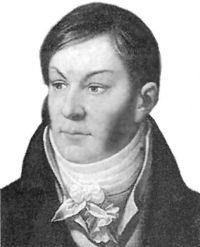 Johann August Apel,
Popular Tales and Romances of the Northern Nations
(1823)
“ It is weak, and childish, to turn back from a business half accomplished; it is folly to renounce the main advantage, having already perhaps risked one’s salvation for a trifle. No: let me go through with it.” He stepped forwards with long strides; the wind drove the agitated clouds, again over the face of the moon; and William plunged into the thickest gloom of the forest. At length he stood upon the cross-way. At length the magic circle was drawn; the skulls were fixed, and the bones were laid round about. ”
“ Once or twice during the first year that William dwelt there the anti-aircraft section grew clamorous on its hills and spat loudly at specks in the blue—which, after a few minutes, receded to the east while the city settled down without injury. The men in the town and quartered in the camps outside it were for the most part office-workers, men of the A.S.C., of Labour companies or Veterinary service; to whom the monotony of daily existence was a deadlier foe than the German. ”
William Hill Brown, The power of sympathy: or, The triumph of nature… (1894)
“ Yes—this is my doctrine—If I behold any child of human nature distressed and forlorn, and in real want of the necessities of life, must I restrain or withhold the hand of charity—must I cease to recall the departing spirit of them that are ready to perish, until I make diligent inquiry into their circumstances and character? Surely, my friend, it is a duty incumbent on us by the ties of humanity and fellow-feeling, and by the duty imposed on us by our holy religion, equally to extend the hand of relief to all the necessitous—however they may be circumstanced in the great family of mankind. ”
William Hill Brown, The power of sympathy: or, The triumph of nature… (1894)
“ I sink, I die, when I reflect—when I find in my Harrington a brother—I am penetrated with inexpressible grief—I experience uncommon sensations—I start with horrour at the idea of incest—of ruin—of perdition. ”
 Leslie Stephen,
Dictionary of National Biography…
(1898)
“ He graduated eighth wrangler in 1787, and in the same year was elected to the fellowship vacated by Sir John Wilson (1741–1793) [q. v.] , judge of common pleas. He proceeded M.A. in 1790. He returned to Liverpool, but in 1793, consequent upon the declaration of war with France, his father's bank failed, and it became necessary for William to earn his living. ”
William Hill Brown, The power of sympathy: or, The triumph of nature… (1894)
“ I indulge, in idea, the recollection of his caresses—of his protestations, and of his truth and sincerity—I become lost in a wilderness, and still I travel on, and find myself no nearer an escape. I cherish the dear idea of a lover—I see the danger and do not wish to shun it, because to avoid it, is to forget it—And can I, at one stroke, erase from my mind the remembrances of all in which my heart used to delight? ”
Sarah A. Myers, Watch—Work—Wait
“ And he knew, too, that the "eye of the Lord is upon them that fear him, that his ears are open to their cry, and that he is able to succour them, being tempted;" and, therefore, he pondered the matter well in his own heart, and consulted often with his father on the expediency of removing William from the guardianship of Mr. Walters. A conversation with that worthy at last decided the matter. "Bill will never make much of a shoemaker," said he; "the doctor is of opinion that stooping will bring on consumption, and I see he gets very pale if he works steadily. ”
“ The trees were thick with it, and every man's garments were powdered by its uniform grey.More than once their way led them through a village—which might have been always the same village, so alike was its aspect and its doings. Always some of the houses would be closed and some in the act of emptying; in each and all was the same scene of miserable haste, of loading carts, of families, scared and burdened, setting out on their flight to the southward. It was a scene that grew so familiar to William that, staggering with the weight of his own weariness, he hardly turned his head to watch it ”
W. G. Miller, Thirty Years in the Itinerancy
“ Rev. John Hill entered the North Indiana Conference in 1855. His appointments were Elkhart, La Grange, La Grove, Indianapolis, Anderson, Greenfield and Fort Wayne. He came to the Wisconsin Conference by transfer this year, and Cotton Street was his first charge. His next appointment was Summerfield, Milwaukee, and the last was Bay View. Here he was thrown from a wagon by the sudden starting of the horse, and, falling upon his head, received a severe injury, from which he died in twenty-four hours.Brother Hill was a man of small frame, but a large brain and a generous heart. ”
 Harold MacGrath,
The Luck of the Irish
(1917)
“ Nature demands that they shall take the law into their own hands and be accountable to God alone. The thought of burying his two hands into the flesh of those men did much toward keeping William's mental balance from toppling. The doctor followed him about a good deal, but never attempted to calm or soothe him when he burst forth into these frenzied flights. The doctor was wise, and he had a fairly good idea of the hell William was passing through. The night before arriving at Hong-Kong he spoke decidedly to the captain, who had gone over to the majority with his opinion. ”
William Hill Brown, The power of sympathy: or, The triumph of nature… (1894)
“ I dwell with rapture on what fancy has represented; but is the choice regulated by virtue? Is it prompted by reason? I recollect myself, and endeavour to rouse my prudence and fortitude; I abhor my conduct, and wish for obscurity and forgetfulness. Who can bear the torment of fluctuating passion? How deplorable is the contest? The head and the heart are at variance, but when Nature pleads how feeble is the voice of Reason? Yet, when Reason is heard in her turn, how criminal appears every wish of my heart? What remorse do I experience? What horrours surround me? ”
1911 Encyclopædia Britannica (1911)
“ It was truly tragic that his doom should have come at the moment when he had once more drawn together a great alliance in Europe, and when he possessed a popularity in England such as he had never before enjoyed. In viewing William’s character as a whole one is struck by its entire absence of ostentation, a circumstance which reveals his mind and policy more clearly than would otherwise be the case. No one can doubt his real belief in religion in spite of many moral failings or weaknesses. ”
John Joseph Knight, Dictionary of National Biography… (1899)
“ In his ‘Brief Supplement’ Tony Aston disparages Underhill, saying that he knows Underhill was much cried up in his time, but he (Aston) is so stupid as not to know why. Underhill was, he says, ‘about fifty years of age the latter end of King William's reign, about six foot high, long and broad faced,’ and something inclined to corpulence. ”
Various, Harper's Round Table, March 10…
“ Swinging himself down by the branches of the oak, William found himself in possession of the very things that he most needed. In their unaccountable flight the strange party had left behind them a rough blanket and a blue woollen cape, and a huge flint-lock pistol, whose dark butt protruded from the snow, where it had been dropped, like some new growth of the forest.A short distance away was a placid-looking horse who had commenced again to gnaw the trunk of a white birch."Refuse not the gifts the gods provide," quoted William. ”
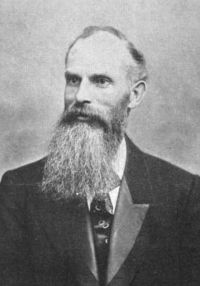 Silas K. Hocking,
The Squire's Daughter
“ As William drove away from Hillside an idea, or a suggestion, shot through his brain that made him gasp. Before he got to the village of Veryan he was trembling on his seat. It seemed almost like a suggestion from the Evil One, so subtle was the temptation. He had tried all his life to do the thing that was right. He had never, as far as he knew, taken an unfair advantage of anyone. He had aimed strictly to do what was just and honourable between man and man. But if he bought Hillside Farm, would it be fair dealing? Would it be fair to his Cousin Sam? Would it be fair to Ruth? ”